Friday, February 26, 2021

Becoming Duchess Goldblatt: A Memoir by Anonymous, reviewed by Jennifer Reichow

Becoming Duchess Goldblatt: A Memoir, Anonymous2020, Houghton Mifflin Harcourt, Boston. Available from Chapters here or through your local independent bookstore here.

I first heard of this anonymously written book in my writers’ group. We discussed how it might be possible to publish a book anonymously in the 21st century. We leaned towards it being the work of an established author trying to write in a different genre.

It couldn’t be a first-time author. In our social media driven culture, agents and publishers actively seek first-time authors with established platforms with a significant following. It’s difficult to evolve a potential book buying audience by producing fresh and regular content while trying to research, write, edit, rewrite, edit some more, query agents and work a day job. 

In previous centuries, authors such as Jane Austen and Mary Shelley published anonymously, though perhaps not by choice. Society discouraged women of certain class from working. If the public knew a woman wrote the book, they disregarded it. Some believed Shelley’s husband authored her seminal novel Frankenstein. More recently politicos who write tell-all books publish anonymously so they can keep their day jobs.

In Becoming Duchess Goldblatt, Anonymous relates how her life turns upside down when her husband abruptly leaves her, taking most of their friends with him in the divorce fallout. Loneliness propels her to connect with others, but she’s fearful of making new friends, dreading the pain of being dumped. Thus Anonymous turns to social media and created @duchessgoldblat.

Derived from the name of a friend’s dog and her mother’s maiden name, Duchess Goldblatt exists only on Twitter. The Duchess, (addressed as Your Grace or more simply, YG by her followers) lives in a made-up town and has a make-believe daughter. Her Twitter bio shows she is the author of several imaginary books such as Feasting on the Carcasses of My Enemies: A Love Story. She uses the gently smiling, neck ruffled face of Frans Hals’s ‘Portrait of an Elderly Lady’ painted circa 1633 as her avatar and book cover. 
The Duchess tweets regularly, attempting to bring a bit of lightness into the sometimes depressing world of social media. She replies to her followers, which endears her to them even more. A fan of Lyle Lovett, she mentions him often, and he takes notice of her amusing tweets. He invites the real-life author to concerts and encourages her to write a book. Interspersed among the details of her fictional Twitter personality, the author reveals her personal history, the hard life that led her to create, live and take comfort through the fictional Duchess Goldblatt.

I knew nothing of the actual @duchessgoldblat when I first read this novel. I believed it to be a fiendishly clever work of fiction; it seemed breathtakingly prescient to set up a Twitter account in order to write a book eight years later. Actually, writing a book wasn’t in Anonymous’s mind in 2012. Her creation of a Twitter persona was a genuine effort to find friendship. 

Log into Twitter and you’ll find that the Duchess is fictionally alive and well and tweeting witticisms such as The only way to be reliably sure that the hero gets the girl at the end of the story is to be both the hero and the girl yourself. Her followers, numbered in the tens of thousands even before the book, are now a few hundred south of 50k. And yes, Lyle Lovett is a follower along with several Pulitzer winners, a White House advisor, and the Presidency of the Italian Republic.

It didn’t hurt Anonymous being published in the year of COVID, guaranteeing that her publisher couldn’t demand any in-person book tours or talk shows even if she’d been so inclined. Her marketing amounted to a virtual book tour where she chatted via Zoom and Crowdcast behind her Duchess avatar. Lyle Lovett even made a supportive appearance.

Becoming Duchess Goldblatt is fun. The author’s real life is often poignant but led to a fictional Twitter personality that helped Anonymous make a lot of new friends and meet her celebrity crush. You’ll log into Twitter and become a follower, I know you will. You’ll be glad you did. 

***

Note: Quick Brown Fox welcomes your book reviews – or any kind of review of anything, of anywhere or of anybody. If you want to review your favourite coffee shops or libraries, babysitters or lovers (no real names please), go for it. See examples of book reviews here (and scroll down); other reviews here (and scroll down). Read about how to write a book review here.

QBF also welcomes essays about a favourite book or about your experience of reading or writing. To get a taste of what other writers have done, see here and scroll down).

Submit to: brianhenry@sympatico.ca

Include a short bio at the end of your piece and attach a photo of yourself if you have one that’s okay. 

Jennifer Reichow knew as a child she was going to university and be a writer. As so often happens, life interrupted her plan. But now that she’s just retired from a fulfilling nursing career, she’s realizing her dream of becoming a writer. It feels like coming home.

See Brian Henry’s schedule hereincluding online and in-person writing workshops, weekly writing classes, and weekend retreats in Algonquin Park, Alliston, Bolton, Barrie, Brampton, Burlington, Caledon, Collingwood, Georgetown, Georgina, Guelph, Hamilton, Jackson’s Point, Kingston, Kitchener-Waterloo, London, Midland, Mississauga, Oakville, Ottawa, Peterborough, St. Catharines, Southampton, Sudbury, Toronto, Windsor, Woodstock, Halton, Muskoka, Peel, Simcoe, York Region, the GTA, Ontario and beyond.

Friday, January 15, 2021

Two books about writing reviewed by Jennifer Reichow

Thrill Me: Essays on Fiction, Benjamin Percy, 2010 Graywolf Press, Minneapolis. Available from Indigo here.

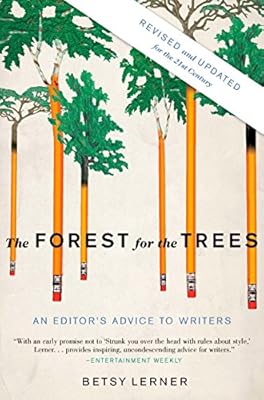
The Forest for the Trees: An Editor’s Advice to Writers, Betsy Lerner, 2010, Riverhead Books, New York. Available from Indigo here.

Back on June 13, 2020, Quick Brown Fox published my review of Stephen King’s On Writing. In that review I said that I had heard on a podcast never to read a book about writing by an author you’d never heard of. It seemed reasonable. However, I'd barely begun learning the craft of writing. With hindsight being 20/20, I was naïve to be agreeing with such a presumptuous statement. I can imagine my creative writing instructor smirking as he thought how I would, in time, come to rue those words.

Most of the books I have read on the craft of writing since then have been inspirational or nuts and bolts how-to. Thrill Me: Essays on Fiction by Benjamin Percy dabbles in both areas. Percy's first essay is biographical, highlighting his journey towards becoming a writer. He grew up binging on genre writers and lived for sci-fi and fantasy until he discovered literary fiction in college. Of his own personal inspirations, he cites King and Ray Bradbury among others. My review of Bradbury’s Zen in the Art of Writing is here. Percy is a voracious reader and mentions so many authors and titles (both genre and literary) that I wonder when he has time to write his own material. 

Over the next several essays he discusses plot, using backstory (don’t need it), and creating urgency and suspense. He references specific works, and then breaks it down easily to reveal the writing element. In one essay he mentions that he could have used the movie Jaws to explain the entire craft of storytelling, “Books and movies share many characteristics, but because film structure is usually tidier, the screen is sometimes easier to study,” Percy states. His essays are eager yet informative, thrilling the reader to pick up their storytelling tools.

When Betsy Lerner finished her English degree, she had a vague idea about graduate school and an even vaguer idea about working. However, she’d left her grad school application too late and so ventured out into the workforce, beginning her 30-year publishing career. Along the way, she got her MFA. 

Her book, The Forest for the Trees: An Editor’s Advice to Writers is not about the craft of writing (“Nor will I Strunk you over the head with rules about style”); instead it’s about living the writer’s life and how manuscripts progress from a blank piece of paper to a published book. 

Lerner divides her book into two parts: Part I Writing, is about the personality and psychology of writers, and Part II Publishing, pulls back the curtain of the publishing world.

In Part I, Lerner defines six categories of writers: ambivalent, natural, wicked child, self-promoter, neurotic and touching fire. It’s based on her decades-long association with writers in various capacities (editor, author, agent) and leaves the reader trying to decide which category is relevant. Maybe it's a bit of all of them. With many fascinating anecdotes, the reader will find some insights into what drives them as a writer and hopefully some motivations on how to be a better writer.

Part II begins with obtaining an agent, dealing with rejection, and then the practical aspects of what happens once you’ve signed a contract to sell your book. Updated and revised in 2010, Lerner includes some information about social media but in our fast-paced culture and increased indie publishing. Some of this is out of date. For those seeking traditional publishing, The Forest for the Trees will be an uplifting and exhilarating read. Seeing behind the scenes of the publishing world was incentive enough to get my creative juices flowing.

Reconsidering the advice never to read a book about writing by an author you’ve never heard of, I’d say, learn from those who’ve already accomplished what you want to achieve. In my case, that’s a published author. From there, I’ll take the advice that works for me and leave the rest behind.

Looking for books? There’s a great bookstore near you. For starters, see here.

Note: Quick Brown Fox welcomes your book reviews – or any kind of review of anything, of anywhere or of anybody. If you want to review your favourite coffee shops or libraries, babysitters or lovers (no real names please), go for it. See examples of book reviews here (and scroll down); other reviews here (and scroll down). Read about how to write a book review here.

QBF also welcomes essays about a favourite book or about your experience of reading or writing. To get a taste of what other writers have done, see here and scroll down).

Submit to: brianhenry@sympatico.ca

Include a short bio at the end of your piece and attach a photo of yourself if you have one that’s okay. 

Jennifer Reichow knew as a child she was going to university and be a writer. As so often happens, life interrupted her plan. But now that she’s just retired from a fulfilling nursing career, she’s realizing her dream of becoming a writer. It feels like coming home.

See Brian Henry’s schedule hereincluding online and in-person writing workshops, weekly writing classes, and weekend retreats in Algonquin Park, Alliston, Bolton, Barrie, Brampton, Burlington, Caledon, Collingwood, Georgetown, Georgina, Guelph, Hamilton, Jackson’s Point, Kingston, Kitchener-Waterloo, London, Midland, Mississauga, Oakville, Ottawa, Peterborough, St. Catharines, Southampton, Sudbury, Toronto, Windsor, Woodstock, Halton, Muskoka, Peel, Simcoe, York Region, the GTA, Ontario and beyond.

Monday, December 21, 2020

Two books about writing reviewed by Jennifer Reichow

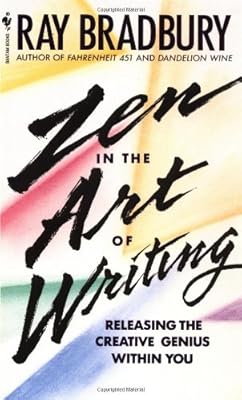
Noble’s Book of Writing Blunders by William Noble (Writer’s Digest Books, Cincinnati, 2006 – available here) and Zen in the Art of Writing by Ray Bradbury  (Joshua Odell Editions, Santa Barbara, 1994 – Available from book stores)

Here’s the question I woke up to on Facebook: What motivates you when, as an aspiring author, you have the feeling that your work is irrelevant and it’s all a waste of time? 

Unthinkingly and with the honesty that occurs with no filters, I replied that all beginning writers write a lot of trivial nonsense that will never see the light of day.  The odds of winning the lottery are better than achieving JK Rowling’s status as a first-time author.  Then, I finished my coffee and sat to write. Sure.

A little worm burrowed its way into my brain and left in its slimy trails: Maybe my work is irrelevant. Maybe I am wasting my time. 

Note to self, don’t look at Facebook first thing in the morning.

I was too bummed out to write, so I picked up one of the books about writing I’d borrowed from the library, Noble’s Book of Writing Blunders.  If I wasn’t able to write at least I was doing something educational. 

The book highlights 29 common writing blunders and methods to avoid them, each in a short essay written in easy to understand and often amusing language.  His first blunder is Don’t Write for Your Eighth-Grade Teacher.  I’m sure all of us will remember those torturous years of diagraming sentences and memorizing the rules of grammar.  Noble gives us permission to break many of those rules but notes that it’s important to learn them first so the writer will know which rules to break and when.  Avoiding the rules and formulas allows for the development of individual style and attitude.

This book contains friendly advice for all writers, beginners especially, working to find their rhythm.

While a valuable book, Noble’s Writing Blunders, didn’t make me rush back to my laptop.  After getting another cup of coffee, I moved onto my next book, Zen in the Art of Writing. 

This is a collection of essays written over many years by prolific author Ray Bradbury. It is not a practical book of writing advice; it is not about grammar rules or even about style. It’s about the inspiration and motivation that energized him to write.  

Bradbury found his passion to write at a young age.  He was a seat-of-the- pants writer. He’d collect lists of nouns, which for him were a shortcut to the subconscious and to all his best stories.  

A voracious observer of everything going on around him, he’d note everyday events, his nightmares, and movies {as a child he watched an outrageous number}. He’d also read poetry even when he didn’t understand it. The poetry and his observations stimulated him to write 1,000 to 2,000 words every day.

His advice for entering the creative unconscious: write, relax, don’t think.

Bradbury’s book will not be for the writer looking for common sense how-to advice.  Read Noble’s Book of Writing Blunders for do’s and don’ts. But Zen in the Art of Writing helped me find what I lack when I face my keyboard. My work may never travel further than my laptop, but I’m not wasting my time if I write with zest and gusto.  These, according to Bradbury, are “the most important items in the writer’s make-up, the things that shape his material and rush him along the road to where he wants to go.”

I’m returning to that Facebook question, hoping I can be as eloquent as Bradbury.

*** 

Looking for books? There’s a great bookstore near you. For starters, see here.

Note: Quick Brown Fox welcomes your book reviews – or any kind of review of anything, of anywhere or of anybody. If you want to review your favourite coffee shops or libraries, babysitters or lovers (no real names please), go for it. See examples of book reviews here (and scroll down); other reviews here (and scroll down). Read about how to write a book review here.

QBF also welcomes essays about a favourite book or about your experience of reading or writing. To get a taste of what other writers have done, see here and scroll down).

Submit to: brianhenry@sympatico.ca

Include a short bio at the end of your piece and attach a photo of yourself if you have one that’s okay. 

Jennifer Reichow knew as a child she was going to university and be a writer. As so often happens, life interrupted her plan. But now that she’s just retired from a fulfilling nursing career, she’s realizing her dream of becoming a writer. It feels like coming home.

See Brian Henry’s schedule hereincluding online and in-person writing workshops, weekly writing classes, and weekend retreats in Algonquin Park, Alliston, Bolton, Barrie, Brampton, Burlington, Caledon, Collingwood, Georgetown, Georgina, Guelph, Hamilton, Jackson’s Point, Kingston, Kitchener-Waterloo, London, Midland, Mississauga, Oakville, Ottawa, Peterborough, St. Catharines, Southampton, Sudbury, Toronto, Windsor, Woodstock, Halton, Muskoka, Peel, Simcoe, York Region, the GTA, Ontario and beyond.

Friday, August 7, 2020

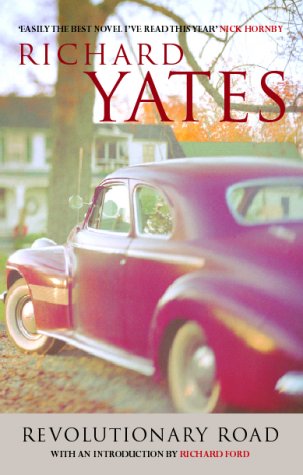
Revolutionary Road by Robert Yates reviewed by Jennifer Reichow


Little, Brown & Co., Boston, 1961. Paperback available at Chapters/Indigo, $19.27, here.  

Great literature is always relevant.  The oldest known fictional story, created 4,700 years ago, is an adventure-filled mythic poem centred on a king, Glilgamesh, who goes on a classic hero’s journey. It's worthy of any bestsellers list. As long as it’s a good, there will always be readers, no matter a story’s age or origins.
We are story-loving creatures.  Long before there were computers that allowed a writer to spell-check a whole manuscript in minutes, there were cave dwellers recording their lives on cave walls.   People told stories around the hearths, handing down stories from generation to generation. Ancient Greeks and Egyptians carved their stories into their buildings. 
As time marched on, we developed better ways to write and circulate writing to the public.  We still love the stories of the ancients and handed-down tales that are the basis of our modern fairy tales.  The themes and characters of those stories engage the imagination just as easily today as they did thousands of years ago.  The epic poems of Homer, The Iliad and The Odyssey, still inspire readers and writers today, as do the works of Shakespeare, Cervantes, Dickens, Twain, Austen, and Dostoyevsky, to name a few. 
It doesn’t always follow that a classic story will appeal to every reader, but there’s a reason they became classic.
In this spirit, I read the Revolutionary  Road by Robert Yates.  First published in 1961, the novel was adapted into a two-thumbs up film in 2008, starring movie power couple Kate Winslet and Leonardo DiCaprio.  The movie propelled the novel into renewed fame.  I found it on Stephen King’s book list.  
I hadn’t seen the movie, so I could approach the novel with no preconceived ideas other than the expectation of it being educational, entertaining and influential, as recommended by King.
A few pages into the book and I tossed it aside, doubting King’s taste. The primary characters, April and Frank Wheeler, were unsympathetic and immature.  I continued reading only because I enjoyed Yate’s use of language.  It sure wasn’t because of the characters.  Further on into the book, it felt like a typical soap opera.  Melodrama at its finest with love/hate relationships, arguments, unrequited love, sexual tension, extensive alcohol intake, an inmate from a mental hospital, adultery, and misunderstandings the average child could resolve.  
Then it grew uncomfortable. Yates found my soft underbelly.  I am no different from the characters in Revolutionary Road. 
Robert Yates in 1960
In the novel, April Wheeler desires to escape her empty, hollow suburban life and reinvent her family by moving to Paris.  While not as miserable as April, I too once felt as if I were running on a hamster wheel, everything the same and no expectation of change.  It took a lot of courage and time, but unlike the Wheelers, I fulfilled my dream of reinvention. I quit my job and moved across the country to begin the next phase of my life.
With this realization, I discovered I had sympathy for the characters and could easily empathize with their misery. Most readers will commiserate with the Wheelers, just as we can understand Achilles’ anger and pride in The Iliad, the sorrow and guilt of Friar Lawrence in Romeo and Juliet or Robert Langdon’s search for the truth in The DaVinci Code.
I am inspired now to return to novels I read years ago and did not appreciate. It’s likely that I needed some maturity to understand those stories. I will continue on with suggested readings whether the recommended book this week’s #1 New York Times bestseller list or the 400-year-old Don Quixote. What drives humanity hasn’t changed in all the years we’ve been telling stories. A well-written book will always be worth reading. 
***
Note: Quick Brown Fox welcomes your book reviews – or any kind of review of anything, of anywhere or of anybody. If you want to review your favourite coffee shops or libraries, babysitters or lovers (no real names please), go for it. See examples of book reviews here (and scroll down); other reviews here (and scroll down). Read about how to write a book review here.
QBF also welcomes essays about a favourite book or about your experience of reading or writing. To get a taste of what other writers have done, see here and scroll down).
Include a short bio at the end of your piece and attach a photo of yourself if you have one that’s okay. 

Jennifer Reichow knew as a child she was going to university and be a writer. As so often happens, life interrupted her plan. But now that she’s just retired from a fulfilling nursing career, she’s realizing her dream of becoming a writer. It feels like coming home.

See Brian Henry's schedule hereincluding writing workshops, weekly online writing classes, and weekend retreats in Alliston, Bolton, Barrie, Brampton, Burlington, Caledon, Collingwood, Georgetown, Georgina, Guelph, Hamilton, Jackson’s Point, Kingston, Kitchener-Waterloo, London, Midland, Mississauga, Oakville, Ottawa, Peterborough, St. Catharines, Southampton, Sudbury, Toronto, Windsor, Woodstock, Halton, Muskoka, Peel, Simcoe, York Region, the GTA, Ontario and beyond.


Saturday, June 13, 2020

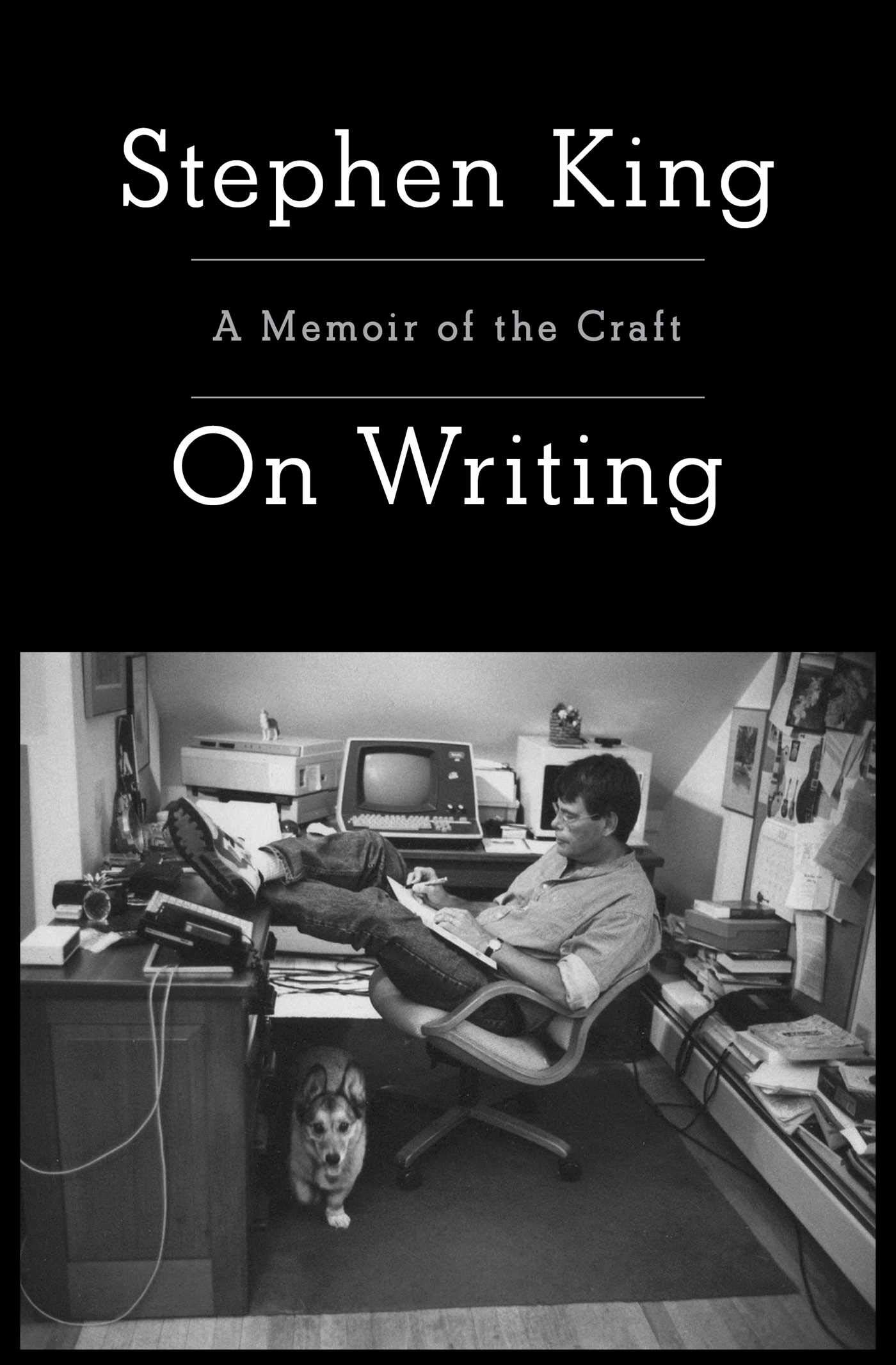
On Writing, A Memoir of the Craft by Stephen King reviewed by Jennifer Reichow


Scribner, New York, 2000. Available wherever books are sold {start here}.

I’m thrifty. I don’t buy books; I borrow them from libraries. Today I strolled out of a bookstore having paid full price for Stephen King’s book On Writing. I’m glad I did.
I’m a novice author, taking a creative writing course, researching online resources, and listening to podcasts. On a podcast, someone suggested to never read a book on writing from an author you’d never heard of, which made sense to me. I’d read several of Stephen King’s novels and was a fan of his writing, and book On Writing mentioned in podcasts and listed online as a must-read. So I reserved the ebook from the library. There were several reserves ahead of me; an encouraging sign. I could wait. But during a quick visit to the bookstore to buy a magazine, I scanned the shelves for On Writing – just out of interest, you know. I read the first few pages, then conceded defeat and bought it.
On Writing, A Memoir of the Craft is part memoir, part master class. It begins with an autobiographical section describing King’s poverty-stricken, fatherless childhood, and how he started writing at a young age. It follows him along the path of learning his craft, recounting the highs (his first big sale) and the lows (his addictions). It merges into the more practical features of composing, written with detail and clarity, in King’s novel style which makes it entertaining.
The first section is titled CV. King relates the vivid memories that he believes formed him as a writer. He wrote a series of original stories at age 7 and submitted his first story for magazine publication at age 13. Rejected but not discouraged, he persevered, amassing an impressive number of rejection slips. King describes his varied writing experiences, low paying menial jobs, and marrying his college sweetheart.
A poignant scene in the book recounts his first big book sale. He paints a dramatic portrait of the hardship his family endured in the 1970s living in a dingy apartment, with a broken-down car and worried about affording medicine for a sick child. When he sold his first novel, Carrie, for $400,000, it was like winning the lottery. The scene brought tears to my eyes – that’s the kind of raw honesty and authenticity King brings to his writing.
Steven King
Next is the toolbox section. King describes the tools every writer needs: vocabulary, grammar, style, and form. He discusses how the adverb is not your ally and how fear is the root of most poor writing. Fearfulness leads to grasping at passive verbs and adverbs. Letting go of that fear and choosing the right tools from your toolbox will make you a better writer. Fundamental grammar lessons sound skip-head-worthy, but King writes in a droll, witty style, educating the reader much better than any textbook.
King reveals his methods of taking writing tools and putting them to use. Above all else, a writer must do two things: read a lot and write a lot. King says he reads 70 to 80 books a year. He provides a list of the books he has read over the past few years that he found entertaining, educational, and influential.
With many personal experiences and reminiscences, King examines the nuts and bolts of writing, where he writes, and his working schedule. He describes his theory of how stories are fossils in the ground; it’s his job to bring them to light. King discusses language, description, dialogue, and character-building as the basic aspects of good storytelling. He explains plot, theme, symbolism, imagery in a fashion that makes you wish he’d been your high school English teacher. He gives his formula for revising (2nd draft = 1st draft - 10%).
Very important is having an Ideal Reader. Lucky for him, his Ideal Reader is his wife Tabby. He wraps up the section with the educational story of an aspiring author named Frank on the route to publication (aka how to get an agent and get published).
King’s first postscript narrates the life-threatening accident in 1999 when a van struck him while walking on the side of the road near his home. His later surgeries, hospital stays, and physical therapy all but derailed his writing. But with the help of his wife, he discovered he had more to say. A second postscript is an editorial example that is a full creative writing lesson.
This book relates how Stephen King learned to tell a great story. He hopes the aspiring writer can learn to do it better. I concur that it’s a must-read for the novice writer. It is, as well I suspect, an inspiration for the most experienced writer. On Writing is a book I will read often, knowing every time I will come away with new insight and appreciation for the craft of writing.


Jennifer Reichow knew as a child she was going to university and be a writer. As so often happens, life interrupted her plan. But now that she’s just retired from a fulfilling nursing career, she’s realizing her dream of becoming a writer. It feels like coming home.

See Brian Henry's schedule hereincluding writing workshops, weekly online writing classes, and weekend retreats in, Alliston, Bolton, Barrie, Brampton, Burlington, Caledon, Collingwood, Georgetown, Georgina, Guelph, Hamilton, Jackson’s Point, Kingston, Kitchener-Waterloo, London, Midland, Mississauga, Oakville, Ottawa, Peterborough, St. Catharines, Southampton, Sudbury, Toronto, Windsor, Woodstock, Halton, Muskoka, Peel, Simcoe, York Region, the GTA, Ontario and beyond.