Sunday, July 19, 2026

“The Lost Art of Writing Letters” by Leslie Steves

Imagine you have received a letter – not a bill or an invite to increase your credit limit – but an actual letter. A letter from a loved one, a friend, or a distant relative.

The excitement builds as you break the seal on the envelope and pull out the finely decorated stationery. The flow of the elegant handwriting draws your attention and time stands still as you read all the gentle messages. Upon reading the closing statement. “hope to hear from you,” you smile – you now have an entry into a letter writing sequence.

At this point some would be thrilled for the opportunity to write and mail a letter, whereas others who have lost, or abandoned, the true art of letter writing would simply send an email.

We’ve become so accustomed to the fast world of “type, correct, click” that many of us would see the effort of physically writing a letter, finding an envelope, and sticking a stamp on it as an unpleasant burden.

But I am willing to face this more disciplined journey.

I saw how, in the past, letter writing helped my family keep in touch. We often received letters from far away relatives. Unlike a short phone call, letters could be passed around and reread for days after. They often included photos or postcards, and some relatives even took to including small side-sketches as part of their letters.

Some would argue that emails serve the same purpose and are a more efficient way of communicating. True. But in my mind, nothing compares to that moment when you hold a letter in your hand – especially one you didn’t expect!

I had many of these moments in my university days.

My mother would always, send a “do your best, we love you” letter. Whereas my dad’s would have more of a “you’re smart, don’t quit” theme.

Either way I was tickled and always wrote back to them – not to just to reassure them that I was still taking classes and studying hard, also to keep our relationship flowing.

During this time, I also wrote to my grandmother and great aunt. That was a challenge! Not only did my handwriting need to be legible, but there was no room for any error in my grammar or spelling, or their next letter would include a lesson!

They enjoyed hearing of the goings-on in my young life, so I was happy to describe my university adventures – sticking mainly to academics and only cautiously mentioning “social outings” (a.k.a. pub crawls).

Their letters gave me insight into in their lives. Like when “a young rascal” took grandma’s favorite seat on a bus and when the priest in Aunt Charlotte’s church mispronounced a word during a sermon. I always got a chuckle out of their descriptions of these “serious” moments.

Set in a conversation these stories may have been forgotten, but with a handwritten letter, they can be revisited numerous times. And for that reason, many people keep the letters, as my grandmother did. After her passing, we found all the letters I had sent her neatly organized in a drawer.

I am also reluctant to part with the ones I’ve kept. I don’t want to lose the chance to reread them and to hold something that was written just for me. My father’s pointed handwriting and my mom’s gardening instructions still speak to me.

Once when I expressed my dismay at the lost art of letter writing, someone called me an old-school boomer and said I needed to get with the times and just send emails.

And I do. The boring simplicity and trivial effort of sending emails is my usual form of communication.

But on occasion I still rise to the challenge of getting my thoughts in order and executing flawless handwriting on some finely decorated stationery.

Perhaps others will join my crusade and revive this lost art so people can have an “I got a letter!” moment. So much better than “another email to open” task.

***

Leslie Steves is a retired teacher. She enjoys having the time to continue the tradition of hand writing letters to loved ones. Her other writing endeavors include short stories, children’s stories and the occasional poem – often inspired during quiet time in the garden or daily walks with her dog.

For more short stories, poetry, and essays by you fellow writers see here (and scroll down).

See Brian Henry's upcoming weekly writing classes, one-day workshops, and four-day retreats here.


Monday, March 20, 2023

“The Bad Librarian” by Leslie Steeves

Based on true events.

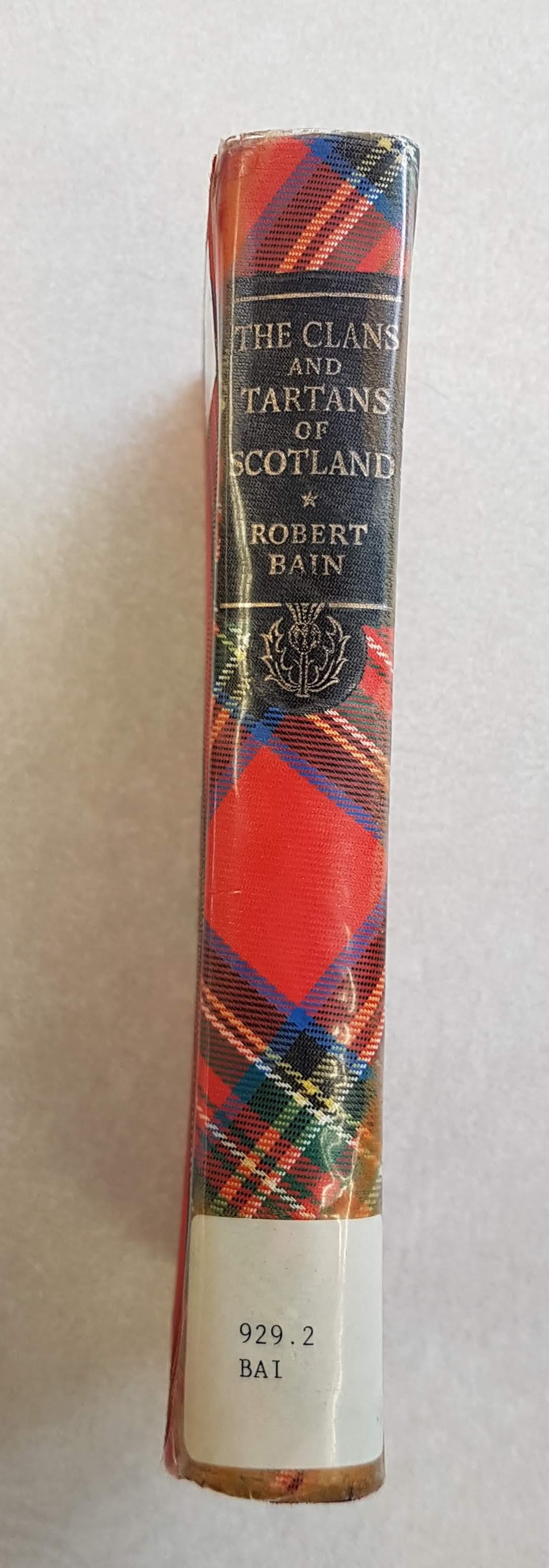
The book’s height was a whisper compared to the tall, imposing books on either side of it and yet its deep rich, red plaid spine caught the eye of the librarian.

Before she reached for it, she thought of the usual procedure to clean-up the library’s collection. The objective was to have a healthy collection of books. Books that were current, in good condition and had a history of frequent check-outs was the goal. Those that do not meet these criteria were to be discarded.

No one could argue a case for a severely damaged book but those with a worn quality or a long shelf life created an unsettling debate of worthiness for the librarian.

Determining the value of a book was not a favourable role. Was a slightly damaged book unreadable? Was an older book unworthy?

Knowing any further action on her part would require a decision, she attempted to not touch it, but its uniqueness called to her and she could not resist holding it in her hands.

The librarian carefully pulled it off the shelf and was relieved to find herself holding a solid book which showed no obvious signs of damage. Sensing an odd feel to the cover, she looked closer and confirmed that it was a fabric dust jacket. This was not surprising given the title on the spine was The Clans and Tartans of Scotland.

There was no need to look at the publishing date to know this was most likely a reprint of a pre-1950 published book. And given its age, the subject matter would be rather exclusive. This was confirmed as the librarian opened the book saw a number of vivid colour plates of tartans and thorough descriptions of various clans.

The librarian surmised that this was a book she would enjoy reading, but she knew she was obligated to assess its condition, and relevance, to the library collection.

It was time to examine the book as scientist.

The librarian inspected the cover. For the most part it was secure but there was some frayed fabric at the bottom of the spine which would no doubt increase over time.

Closing the book, she ran her hand along the top fore-edge of the book. Its gold edge gilding was smooth. The bottom fore-edge was the same, but the side fore-edge had some uneven portions. It was obvious that one of the pages had stepped out of line and was about to escape the confines of the body.

The spine creaked as the librarian opened the book. The pages were humbly discoloured. The darkness around the edges served as a frame to the splendid writing or image on each page.

One section of the book easily opened to a 180-degree angle exposing a dry and cracked interior spine. In time the adjacent pages would separate from the spine and any attempts to correct this would be futile.

Given its vulnerable condition and age, the book was absolutely, positively a candidate for discard.

This revelation caused the librarian to tighten her hold on the book as in her mind the book deserved more respect.

Old, worn books – were they not the warmth of a library?

A well-read book should be coveted. Their worn pages, dogged-eared corners, even subtle coffee stains are earmarks of a superb book. The dreams of authors are filled with visions of their well-read books pushed to the point of exhaustion.

Older books are treasures of history. Their storyline or subject matter is rarely reproduced. What are the chances a newly published book would be about tartans? And have such superb colour plates?

Being responsible for discarding a unique book weighed heavily on the librarian’s mind, so in one last attempt to determine the book’s fate she turned to the front of the book to establish the actual publication date. There she came across a poem opposite the introductory page. The last 4 lines caught her eye.

                             Heroes fought for it.

                             Honour the name of it,

                             Drink to the fame of it –

                                              The TARTAN!

                                                     Murdoch Maclean 

Such stirring words, yet her obligation was to dispose of this book. She carried it to the circulation desk and entered her password to activate the computer. As the software loaded, she looked up and took in the familiar view of the library. She noted the parallel lines of shelves spanning out. Shelves filled with books. Books of all sizes, subjects and popularity.

The librarian lay her hand on the cover of the book. With one scan this book could be discarded.

With the beep of the ready computer, the librarian began her task. A few quick taps on the keyboard was all it took to confirm that the book had few check-outs.

She then wiped the barcode on the back of the book with a cloth. It was still viable.

The librarian stood the book upright alongside her computer by the check-out counter and resumed her duties until she was interrupted by a patron who had approached the desk to check-out her chosen books.

“Ooh! Look at this,” said the patron noticing the book on tartans. “Can I take this out?”

“Certainly,” said the librarian smiling to herself.

Score one for the bad librarian!

***

Leslie Steeves began writing to encourage the children in her class to write. In no time, writing became her passion, and now retired, she writes daily. Her work has been recognized by the WFNB (Writers Federation of New Brunswick) as I won 2nd place in a Kidlit contest and honourable mention for a short story. Two of her articles have appeared in Our Canada magazine.

Note: For information on submitting to Our Canada, see here.

See Brian Henry’s upcoming weekly writing classes, one-day workshops, and weekend retreats here.