Sunday, November 28, 2021

The Wistful and the Good, Chapter One, by Mark Baker {an excerpt}

Dickens and Dumas serialized their novels. This classic approach to publication is becoming popular again with writers such as Salman Rushdie and Fight Club author Chuck Palahniuk signing up with Substack to serialize their next projects. Mark Baker is taking the same route with his Anglo-Saxon period historical novel series,  Cuthbert's People. 

Serialization of the first volume  The Wistful and the Good, begins today. Read the opening below, and to read the rest of the chapter and to subscribe to receive a new chapter weekly, visit here.

Chapter 1, The Ship

Elswyth sat on the clifftop looking out over the bright sea. There was a steady onshore breeze blowing, stinging her eyes and tossing her hair out behind her. She refused to wear the wimple that should have covered her head and neck, for young men’s eyes would follow her hair as it bounced and swayed and danced. Young men’s eyes were a novelty and a delight. Not so long ago a child’s smock had hung from narrow shoulders straight downward to the ground. But now a woman’s dress flowed over curves like the tide flowing over smooth stones. Young men’s eyes followed the curves. Whenever she walked through the village, the young men would pause in their tasks, like seagulls hanging on the wind, eyes hungry for something beneath the surface of the wave.

Nor was she shy about looking at the young men. In the autumn, when the harvest had called every able body, man, woman, child, noble, free, and slave, into the fields from dawn till dusk, she had gloried in their broad backs, the flow of their muscles under the skin, the salt sweat of their tanned faces. And in the quiet of the evenings, she had found herself delighting in the thought of lying beside this one or that in the soft new-cut grass, and of the rasp of a calloused hand upon soft flesh.

But she was not for them. She was a thegn’s daughter, and promised long since to an ealdorman’s son. Young men’s eyes had no right to follow her. Her thoughts had no right to stray to hard hands or soft grass. There could be no starlit tryst on new-mown hay for her.

But the eyes of the young men were not her only delight. From where she sat, her eyes could follow the great curve of the horizon, the restless boundary between sea and sand below, the roll and swell of the tide, the curve of the sea grass, bent before the wind. These too were a delight, though the same blustering wind tried to tear her embroidery frame from her fingers and whisk away her threads to catch among the bracken and the gorse.

For the hundredth time she glanced upward, and this time, at last, she saw it. A flash of white, far out in the band of haze between sea and sky. A sail. Her frame and her needle fell into her lap as her eyes yearned outward toward a horizon that was empty once again.

This is how it is when you first see a sail. It will appear for a moment when the ship crests a swell and the light catches the sail just so. And then it will be gone, perhaps not to be seen again for minutes, or perhaps never again. Few eyes would have caught that first flash, or known it for what it was. But Elswyth knew, and in that moment of recognition her breath grew still and her heart raced as the world grew large around her.

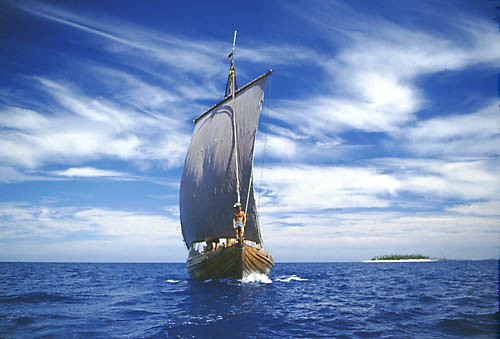
Elswyth loved ships, every rope and spar, every plank and sail. She loved the smell of the pitch that lined the seams. Her eyes followed the curves of a ship. Her hands longed to touch, to follow the rise of the curving prow, the round fullness of the stern. She loved the way a ship cleaves to the swelling of the waves, its urgent energy under the force of wind or oar, its rise and fall as it mounted and drove from crest to trough of the ocean swell.
And she loved the young men who sailed in ships, with their strange voices, their hard, strong hands, their red sea-weathered faces, their sheepskin jackets stiff with salt and smelling of both land and sea and the marriage of both.

She loved the tales they told, of wild rocky northlands with their soaring peaks and deep fjords, of the sun-scarred south, where winters were green and summers brown, and men and women rested on the great verandas of stone-built palaces in the heat of the day. Everywhere they travelled, it seemed, was sharper, more vivid, more extreme than Northumbria, the soft country she was born to with its low hills, cool summers, and damp winters.

Once, as a child, she asked why they came here at all, to which the answer was, “For trade, my darling, and to see the pretty girls.” At which she had pouted and said, “But you always leave us behind!” And they always would leave her behind, for her fate lay elsewhere, in the ealdorman’s hall in Bamburgh. As the wife of Drefan of Bamburgh, she would rule over a great hall and host kings at her table. And yet, one glimpse of a sail and her heart was soaring, over the horizon and away.

Again a flash of white. She rose, letting her embroidery frame fall into the work basket at her feet. She shaded her eyes as she strained at the horizon. A square white dot danced into view along the line between sea and sky. She took an anxious step forward, careless of the nearness of the cliff edge. Her right foot caught her work basket and sent it tumbling over the cliff face toward the distant sands below, threads of green and gold and blue scattering to the winds.

What was it? Anglish, Pict, Norsk? It was a Norsk ship she longed for. But it was also Norsk ships her father feared. The ship she longed for was a knarr, a broad-bellied trade ship. The ships her father dreaded were longships, ships of war. Nothing but a knarr had ever come to their beach. Elswyth had never seen a longship. But the news was that a dozen Norsk longships had raided the holy island of Lindisfarne two weeks since, murdering dozens and carrying off much treasure and many slaves. Her home in Twyford was only a day’s ride south of Lindisfarne and her father, like every coastal thegn kept anxious watch for Norsk ships, though no other made his daughter his sentinel.

She longed for a knarr, for not only would a knarr bring wine and gemstones and silver—to trade for the dull necessities produced by her father’s manor—it would also bring new songs, old friends, and tales of Spain.

Ah, Spain! Her heart was full of the young men who sailed to Spain, who got drunk on the wines of Spain, who lounged on verandas with the dark girls of Spain. Was this a ship that had been, that would go, to Spain? Did it carry men who had been, who would go, to Spain? For a moment, all the longing in her heart was fixed on Spain.

The sail was plainer now, no longer disappearing into the haze along the horizon, and sometimes she could glimpse the line of the hull. Whether it was longship or knarr, she still could not be sure. But she was certain of its course now. By the quarter it came from and the line it sailed, it was coming from Norway, and it was heading for their beach. ...

… To finish reading the first chapter of The Wistful and the Good, and to subscribe to receive a new chapter weekly, visit https://gmbaker.substack.com/p/wag1 and click the Subscribe button.

Mark Baker recently moved to Bridgewater, Nova Scotia. One of Brian's students for several years, he is now serializing his historical novel, The Wistful and the Good, on Substack under the pen name G. M. Baker. Mark has also published three nonfiction books as well as stories in a number of journals including: Dappled Things, The Rockford Review, Storyteller, Solander, Our Family, New England's Coastal Journal, and Fantasy Book. Find him as G. M. Baker on Facebook here. Subscribe to his newsletter here. 

 See Brian Henry’s upcoming weekly writing classes, one-day workshops, and weekend retreats here.

Tuesday, August 31, 2021

Excerpt from Peacekeeper’s Daughter by Tanya Bellehumeur-Allatt

Peacekeeper’s Daughter is Tanya Bellehumeur-Allatt’s memoir of when, as a 12-year-old child, her family was stationed in Israel and Lebanon in 1982-1983, just following Israel’s invasion of Lebanon and in the midst of Lebanese Civil War. It’s a coming-of-age story, as well as an exploration of family dynamics, the shattering effects of violence and war – and the power of memory itself to reconcile us to our past selves, to the extraordinary places we have been and sights we have seen.

It will be published September 30 by Thistledown Press. Pre-order your copy now from the publisher here, Chapters here, or order it through your local bookstore here.

Excerpt – Beirut, 1983.

At school that Monday, I sat in the library after lunch. My grade seven class was in the basement for band practice, but I had a free period. Since I’d only started at the school in January and didn’t play a band instrument, I was exempted from music class. I spent my free time on the top floor in the reading lounge, next to Mr. Thierry’s classroom. After that, I would study advanced French while my class did beginner, baby French in our regular classroom downstairs. At dinner time at home, I took perverse pleasure in imitating the way they counted to ten with their thick accents.

Suddenly, there was a deafening boom, a sound louder than I’d ever heard before. Everything shook. The room went black. Books fell off the shelves. The chairs next to me rolled over. A window cracked and split, sending shards flying.

After the huge sound of the blast, there was a thick quiet. I sat alone in the darkened library, assessing the damage. What just happened? Was it an earthquake? What should I do?

A light shone around me. “C’est l’heure du français,” Monsieur Thierry announced. I stood up, eyes blinking, and followed his flashlight beam into the classroom adjacent to the library. For the next hour, we conjugated French verbs by candlelight. “Que je puisse, que tu puisses.” Monsieur Thierry’s lips pushed forward when he spoke, as if all the words were teetering on the edge of his mouth, ready to dribble out. I thought of Richie and how puisse sounded like the English word kiss.

Whether Monsieur Thierry had forgotten about the blast that had just shaken our school or decided that his curriculum was more important, we carried on covering the board with our white-chalked declensions made visible by the candles on the teacher’s desk and the shafts of faint afternoon light coming in from the upper casement windows.

We were a small group, our numbers at the American Community School greatly reduced by both the civil war and the war with Israel. As tensions in the city escalated, most diplomats packed up their families and returned to their own countries. The only new influx of expats to the city were fifteen hundred U.S. Marines sent by President Reagan to man the five U.S. warships anchored a few kilometres offshore.

Tanya Bellehumer-Allatt by Louise Abbott

After Advanced French, I joined my class on the first floor for grade seven English. Mr. Turner examined us with his one good eye, while his glass eye stared straight ahead. Its fixed look unnerved me. It was like staring at a camera. I imagined it photographing my secret thoughts—a bionic eye with special powers.

“A bomb has exploded nearby, at the American Embassy,” Mr. Turner informed the class once we had taken our seats. “Fortunately for us, our school remains unscathed.” He paused, but only for a breath. “Please take out your copies of Twain’s The Prince and the Pauper. We will read aloud, beginning at Chapter Three.”

My hands picked up the paperback and flipped mechanically to the correct page while my mind wrestled to process this new information. I raised my hand. “How close did we come to being hit?”

 Mr. Turner’s glass eye stared at a distant spot behind my head while his good eye looked out the window. “We’ll find out soon enough,” he said.

It was a relief to get lost in the story of a faraway place and forget about what was going on in the city around us.

 “Be careful on the way home,” Mr. Turner said before dismissing the class for the day. “See you tomorrow.”

Our regular route through the campus was blocked off by red tape marked DANGER. We were shepherded into two lines and made to show our identity cards and hand our schoolbags over for inspection by armed French military police at three different makeshift checkpoints inside the gate, before finally being given permission to exit onto the street. Sirens blared nearby, and traffic on the main street was barred. The empty street was an eerie sight compared to the usual noisy tangle of cars and pedestrians.

My brother walked a few paces ahead of me. “Did you hear it?” I asked him. I watched the back of his head nod yes.

“I was in art,” he mumbled. It was hard to hear from behind. I got as close to him as I could, but the passage was only wide enough to walk single file.

“We left class and went there.” He stepped onto the street to avoid a pile of garbage on the sidewalk. In the absence of waste removal services, the citizens of Beirut piled their garbage in huge stinking mounds on the sidewalk. Those nearest to the beach threw it into the Mediterranean. After almost ten years of anarchy and civil war, the city resembled a massive dump.

“What do you mean? Where did you go?” Our school never went on field trips of any kind; it was too dangerous to leave the gated compound.

“Mrs. Gunthrey wanted to see what had happened. Her husband works at the embassy, and she needed to make sure he was all right. So she took us there.”

“Was he okay?” I kicked at an empty sardine can, shuffling it back and forth between my feet like a soccer ball.

“Took a while, but we found him. He was all white. Covered in dust. He thought his arm might be broken. He was holding onto a woman whose face was cut up. Her eyes were full of blood.”

After that, my brother was quiet for a long time. I kept my head down and followed his footsteps exactly, walking in the street to sidestep more garbage and a car parked on the sidewalk, also a common occurrence in this city without traffic lights or police surveillance.

“I saw a car wrapped around a telephone pole,” my brother said in a voice so low I thought maybe I hadn’t heard him properly.

 “What? How?”

“It’s the force of the blast,” he said. “It picks up anything in its way.”

 ***

Tanya Bellehumeur-Allatt’s stories, poems and essays have been published in Best Canadian Essays 2019 and Best Canadian Essays 2015, The Antigonish Review, Grain, EVENT, Prairie Fire, Malahat Review, subTerrain, carte blanche, Room, Crux, The Centrifugal Eye, Qarrtsiluni, The Occupy Anthology and Water Lines: New Writing from the Eastern Townships of Quebec.

Tanya has been nominated for a National Magazine Award as well as a Western Magazine Award and received a Canada Council Grant for her manuscript of Peacekeeper’s Daughter. She holds an MA from McGill and an MFA in Creative Writing from UBC.

Read more about Tanya and her writing here.

Pre-order your copy of Peacekeeper’s Daughter from the publisher, Thistedown Press here, from Chapters here, or order it through your local bookstore here.

For information about submitting to Thistledown Press, see here.

See Brian Henry’s upcoming weekly writing classes, one-day workshops, and weekend retreats here. 

Wednesday, June 23, 2021

“Stars of the Sea” by Robyn Thomas

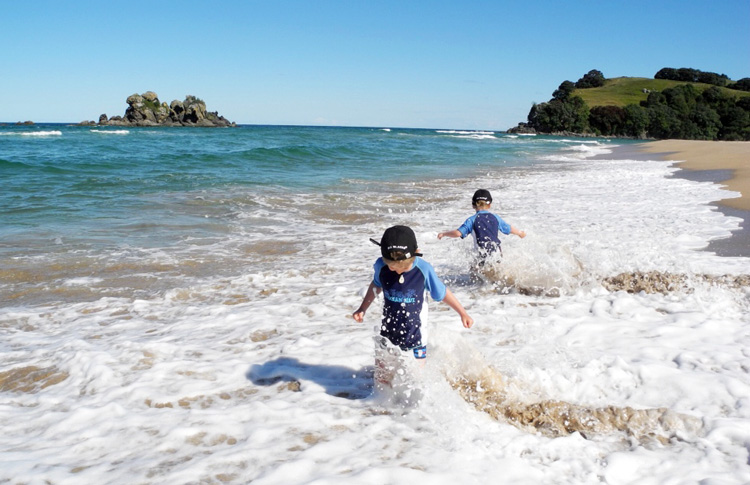
Beyond the screeching gulls and surfer boys riding breakers, an azure sky dipped into the deep green sea.

My brother rolled along the sand until he saw two starfish stranded by the tide. He ran soft fingers over the spiny orange back of the smallest starfish. The larger one was comet-shaped with two long arms and three stumps. Simon was as fascinated by the stars of the sea as I was by the stars in the sky.

“Alice, did you know that starfish grow a new arm if one falls off?” He dusted sand from its pink underbelly. “Can we grow new arms?”

“No silly,” I said. “We’re not starfish.”

He carried the starfish in cupped hands to the edge of a rock pool. “They need water or they’ll die.” 

Simon released them into the pool. We squatted to watch. They sank to the bottom. We both held our breath. Soon the comet starfish shuttled on its two good arms to the shadowy refuge of a rock. 

Bums wet, we waited, willing the little one to move. Simon nudged it, stirred the sand with his fingers but it lay still on a bed of broken pipi shells. Sticking our faces close to the water, we peered in. Death peered back.

Simon shuddered then, a long shudder not unlike the aftershock of an eye-jiggling, tooth-rattling earthquake. Before I could say a word he ran to Mum who lolled on a picnic blanket. She reminded me of the film star Grace Kelly, her blonde hair blowing around her face as she flipped through pages of the ‘New Zealand Women’s weekly.’ Putting the magazine aside, Mum folded her long brown legs and drew Simon onto her lap.

“You’re freezing love.” She wrapped him in a thick towel. “Let’s warm you up before you go for a swim, eh?” Simon huddled in her arms. The wind ruffled his hair, scattered sand across his feet.

“Stay between the flags,” Mum warned when we headed for the water. The red flags alerted us to tidal rips and other dangers hidden below the surface.

Salt spray stung our lips, our cheeks. Simon slid sleek as a dolphin under the waves. He was a strong swimmer for a seven-year-old. Floating on the swell, I cast my thoughts adrift.

Katie and Em squealed as they helped Dad net whitebait near a tumble of driftwood where a stream ran into the ocean. It was early November and the tender tiddlers were plentiful. Whitebait fritters were a spring delicacy at our house. I always shut my eyes before I ate the first mouthful. I didn’t want to see those googly eyes staring at me when I bit off their heads.

“Shark, shark!” Cries rang out along the beach.

Sirens wailed at the Lifesaving Club. Raising my head to see what the fuss was about, I noticed a grey dorsal fin near the periphery of the shallows not too far from my brother and me. Aargh. “Simon, Simon!” But he didn’t hear me and dove beneath the surface. Oblivious to the danger, Simon was a beacon for the shark. His thrashing arms and legs had caught its attention. The shark’s dorsal fin changed direction.

Lunging at Simon, I grabbed him by the swim trunks. “Let go of me,” he wriggled away.

“Shark!” I screamed making another grab at him.

“Liar, liar.” He splashed water in my face and slid underwater.

“No!” I yelled.

Waves rose and fell in bursts of white foam. I lost sight of my brother. Time stood still. I became the watcher, distant and invisible as a star in daylight. Then, Simon surfaced. “Boo!”

I yanked him to me, held him tight. Sensing my fear, he turned his head, saw the dorsal fin. He froze. Neck-deep in the sea and terrified to look back, I tugged my brother toward shore until a breaker bowled us over. Tumbling like a seashell, Simon slipped from my grasp.

Familiar hands pulled me upright as I spat saltwater and sand. Mum had already hoisted Simon onto her back. He clung to her while she propelled us to safety past lifeguards and parents plucking howling kids, from the water. 

Within minutes the sea emptied. Toes dug into the sand, everyone lined the beach. “That was a close call.”

Mum hugged Simon and me. “You’re a brave girl, Alice.” I felt her heart thud as hard as mine. But Mum was wrong. I wasn’t brave.

I was afraid, so afraid Simon might have been eaten by the shark, I could taste it.

Speculation rippled thru’ the crowd. “Mako,” said a surfer boy, a cool boy.

“Nah bro, it’s just a school shark. Been a few sightings near Papamoa,” his curly-haired friend said. Curly winked at me, jostled his mate. I blushed.

Taking its time, the creature circled the empty shallows then pointed its snout seaward and swam out of the bay.  

In the distance, dark clouds bumped across the sky. Lightning flashed. I felt the air crackle.

“There’s a storm brewing.” Mum squinted at the disappearing sun. “Alice run and get your father and the twins. It’s time to head home.”

That night when we climbed into our beds, I said to Simon, “I’m sorry about the starfish.”

“It’s all right, Alice. At least we saved one. Grandpa Jim says everything dies. But I wish it wasn’t true. He says a big fish will eat the little starfish and a bigger fish will eat that fish. Grandpa will catch the biggest one of all and it’ll end up as fish ’n chips for dinner.” Simon yawned. “What if something big and scary like that shark eats me?”

“I won’t let it,” I said.

***            

Robyn Thomas lives in a forest in Ontario’s beautiful Haliburton Highlands. Family, wildlife and a deep appreciation for her natural surroundings, born of her “kiwi” beginnings, offer daily inspiration that informs Robyn’s writing, story-telling, mediumship and photography. "Stars of the Sea" is an excerpt from her novel in progress.

See all Brian Henry’s upcoming weekly writing classes, one-day workshops, and weekend retreats here. 

Wednesday, July 18, 2018

“The Hermit of Carmel” by Gregory Phipps


“Damn it, Rob! I mean Paul. You might have mentioned this before we drove six hours to come up here.”
Robert Das, who'd written his bestseller under the pseudonym Paul Thebét, was having second thoughts about this public book reading. His agent, Murray Levitt, was losing his patience. Levitt continued his rant. “What the hell am I supposed to do now? Seriously. I could have gone golfing today. And it’s sunny back in LA. I’m here to support you instead. And now…” He shook his head. “I should have brought my damn reflux pills.”
 “I value my privacy. You know that.”
“And that’s why you created the pseudonym. I get it. Nobody here knows who you really are. You’re Paul Thebét. Relax. By the way, are you supposed to be French-Canadian or like, French-French?”
Robert ignored his sarcastic question. “Just cancel it. Let’s leave. Nobody paid to come. I suspect it’s all locals anyway. We drew, what, a hundred people? I’m sure some folks will buy a book while they’re here. The owner will be happy regardless. Tell her I have food poisoning or something. You’re a good liar.”
Levitt winced. “No. We’re not. You made a commitment to do some readings. These aren’t easy to get, you know. You’re here in Carmel-by-the-Sea. You love this place! And locals are going nuts for this. You should see the Twitter chatter.”
“I don’t do social media.”
“No shit. That’s another thing. You’re expected to be active on social media to promote the book…. and build your personal brand. Work with me Robert, please. You love to write. Social media is just another form of writing. It doesn’t take a lot to write 140 fucking characters!”
“I’m a storyteller. You can’t tell a story in 140 characters.”
“Bullshit! Hemingway once wrote a short story in six words. Six words! Hemingway was a businessman … and quite content to sell books, or anything, to make a buck. Listen to me, Rob. I am a businessman. I represent writers who tell stories and understand that publishing is a business. Consumer buys book. Retailer makes money. Distributor makes money. Printer makes money. Publisher makes money. Writer gets paid. Agent gets paid. It’s simple. Think of it as one of those circle-of-life things. Like the forest and all its adorable creatures.”
“You mean the ones that kill each other?” asked Robert.
“No, the ones that live symbiotically. Like the birds who knock pine cones off trees so the squirrels can eat the seeds.”
“Birds don’t do that at all. The owls in those woods out there,” he said, motioning with his head, “kill and eat squirrels and even other birds. You mean that circle of life?”
“Great. You’re a wildlife naturalist now. Be a writer for one hour … please.  Look, I know you hate public speaking. But do this one reading and we’ll reconsider the others. Better yet, jump on that revolutionary new social media thing and you might never have to leave the comfort of your home again.” Levitt opened the stockroom door and pointed to the throng that had gathered on this rainy Saturday afternoon. “Look. There’s a bunch of successful business people, artists and even a few celebs. It’s crazy out there! ” Levitt tried to walk his comment back. “I mean… in a good way.”
“I should have returned to law,” Robert sighed.
Levitt attempted to redeem himself. “People hate lawyers. Lawyers only take. You give.”
“But writers can’t hide anymore.”
“Truth,” conceded Levitt. “But don’t do the delicate genius thing.”
“I am neither.”
Levitt motioned to the room. “He probably doesn’t do social media either, but Clint-fucking-Eastwood is out there. I’m sure it’s him. Geez, he got old. He used to be the frickin’ mayor here. He’s a living legend in Carmel. If all those people tweet about this, thousands of followers — readers — will hear about the book. This is business Robert. Please, as your agent, I’m begging you to do this. You’re a local hero.”
“I live in Los Angeles, Murray.”
“Whatever. You know what I meant.”
Levitt grabbed Robert by the shoulders and manhandled him out of the stockroom — like a football coach might a losing quarterback onto the field for the final quarter. They had been sequestered in the cramped and stale-smelling room for the last twenty minutes. He spoke into Robert’s ear, so he could be heard over the background noise, as they entered the bookstore proper.
“You crafted a great story, Robert. Write yourself a convincing one now. You’re an entertaining and confident speaker who loves his adoring fans and is equally loved by them. Play that character for just an hour.”
Robert looked grim. The bookstore owner saw them exit the stockroom, her cue to read an introduction for Thebét. The sound of restrained applause replaced the muffled sounds of a hundred private conversations. His heart raced as he shuffled onto the bookstore floor.
#

Robert appeared uncomfortable standing before the group of locals. The throng filled every square foot of floor space in the modest bookstore. The number of people likely exceeded the allowable limit defined by local fire regulations. If the storeowner cared, it didn’t show. She looked ecstatic. Thebét was a local celebrity and known to be reclusive, making the event a bit of a coup. The proprietor of the store, a tiny woman of about sixty, waited patiently like everyone else for him to begin.
Robert fumed silently. He swayed nervously before the crowd, dressed in grey jeans and a black cashmere sweater – head adorned by a duckbill cap he’d neglected to remove. It represented the very last barrier behind which he could hide. Shifting his weight between feet, he looked as if he might’ve had to pee. He had no reason to be anxious, really. The crowd had come to see and hear him, the writer they so admired. Breathing deeply, he tried to calm his nerves enough to get started. The crowd looked increasingly impatient as he stood fidgeting with a copy of the book, fashioning dog ears on its cover. If they had had any idea how personal the book was, they might have empathized more. They didn’t.
The guests also couldn’t be privy to the frantic deliberation in Robert’s head. How much should I reveal? The Hermit deserves his privacy. While he wished to respect that, Robert felt the book needed to be written. He felt pride in the work, sure, but more importantly, Robert hoped it would speak to readers, particularly those with exposure to grief and depression — their own, or that suffered by friends or family.
Robert lifted his cap, ran his hand through his hair, and looked back at the crowd to gauge their level of restlessness — another stall tactic. Scanning the room, he spied a striking woman standing near the back of the store. She looked at Robert without blinking and gave him a warm and knowing smile, crow’s feet framing her kind eyes. The innocuous gesture was the catalyst he needed. Robert’s chest rose as he gathered a breath. He began.
“Thank you all for coming here today. The weather didn’t cooperate, and I’m not doing much better.” His voice crackled, but he gained confidence once he saw a few smiles. “I am grateful that you took the time to join us here. I presume you’ve bought and read my book already. If you did,” he added, “then by my rough calculation, I’ve broken even on the cost of gas to travel up here today.” Subdued laughter at a volume appropriate to a library, or its retail equal, filled the bookstore. “This is the first time I’ve read The Hermit of Carmel aloud, and I’m a little apprehensive. I’ve dreamed of doing this though, right here in Carmel, for a while. Thank you for making it a reality. I’m humbled and honored.”
Robert dipped his head – a deferential bow to the crowd. From the corner of his eye, he noticed Levitt grin, color returning to his face. He paused, took a sip of water, and glanced at his wrist without consciously noting the time. More than anything, he was checking to ensure his watch was still there. He had lost it once and wouldn’t allow it to happen a second time.
Levitt waved his hand and mouthed the words, “Take off your hat.”
Robert removed his cap and continued: “For those who don’t already know, this is a true story. Narrative nonfiction, publishers call it. Some folks living in the area might know parts of the story. You might have even caught a glimpse of the Hermit. I’m quite sure that none of you truly knew him, though. I’m uncertain that anyone really did. He was a complicated man who meant well but had been hobbled by sadness and a profound sense of loss.
“You know,” he continued, “I try not to be judgmental. People process grief in sometimes unproductive ways. The Hermit’s loss triggered a deep depression, which drove him into the woods. In the quiet of the forest, he battled his private demons, the physical elements, and a few locals. It’s hard to say what saved him – his inner strength, or the game of golf. Perhaps a little of both.”
Holding the copy of his book slightly aloft, as a preacher might a Bible, Robert spoke with equal reverence. “This is his story.” He paused, unintentionally adding to the dramatic effect. “I’m not sure what you folks want from this afternoon. Was there a section or chapter you’d like me to read, or would you rather hear small excerpts from a few different chapters?” He looked around the room, hoping for a response.
After a moment of uncomfortable quiet, a speaker, unseen by the author, broke the silence. “Just read, please,” she said, in a restrained and respectful way. All heads nodded in agreement. And he did, from the start, in his best narrative voice. The room became quiet again and Robert perceived that the crowd collectively leaned in – just a bit.

Gregory Phipps was a venture capitalist but has now turned his attention to writing full time. This piece is an excerpt from his debut novel, The Hermit of Carmel. His second novel, Oak, was originally written as a screenplay and was awarded semi-finalist status at the Landlocked Film Festival. Gregory now lives in London, Ontario, with his wife Lyndsey and their dog Pippi: a sheepadoodle (yes, there's such a thing). He can be reached at:  phipps.gregory@gmail.com

See Brian Henry’s schedule here, including writing workshops, weekly writing classes, and weekend retreats in Algonquin Park, Bolton, Barrie, Brampton, Burlington, Caledon, Collingwood, Cambridge, Georgetown, Guelph, Hamilton, Kingston, Kitchener-Waterloo, London, Midland, Mississauga, Oakville, Ottawa, Peterborough, St. Catharines, Saint John, NB, Sudbury, Toronto, Windsor, Woodstock, Halton, Muskoka, Peel, Simcoe, York Region, the GTA, Ontario and beyond.

Sunday, June 19, 2016

An excerpt from Time After Time by Hannah McKinnon


Time After Time by Hannah McKinnon (HarperCollins UK, available for download from Amazon for only $2 here.)

Chapter 4
Any Second Now

‘Chris?’ Hayley repeated as she got up from the floor slowly, all the while staring at the guy in the bed two feet away. ‘What the …’
She watched as he opened his eyes even further to give her an incredulous stare. ‘And who else would it be? Let me sleep or get me a cuppa.’
It is him. It’s Chris. Chris Jenkins. But how? When?
An older Chris, definitely, but he still had thick, dark hair. From what Hayley could make out in the dimly lit room, his face had aged and he’d put on some weight around the middle, but he hadn’t lost his striking looks. Perhaps they were even better than when she’d last seen him. Her eyes travelled over his chest and she swallowed.
What’s going on?
She relaxed for a second.
Hah! Bad dream. Nightmare.
Her hollow laugh filled the room and Chris furrowed his brow.
Any second I’ll be back at home, in my bed, next to Rick. Any second now …
Nothing happened, so she pinched her hand.
‘Ouch.’
You don’t feel pain in dreams.
‘I need a piss.’ Chris got out of bed and Hayley recoiled, hitting the chest of drawers with her bum.
Argh! He’s stark bollock naked.
Hannah McKinnon, author of
Time After Time
He gave his left bum cheek a good scratch as he walked out of the room, his semi-flaccid penis bobbing along in front of him.
At that point Hayley looked down at herself. ‘God!’ Her hands instinctively flew up to cover her breasts.
Chris Jenkins saw me in the buff! IN THE BUFF!
In an attempt to hold on to the last shreds of her dignity, Hayley grabbed a black satin dressing gown hanging on the back of the bedroom door and flung it on, wrapping it tightly around her body.
Where am I? What am I doing here? Where’s Rick? The kids?
Hayley opened the bedroom door, stuck her head out and looked left and right, surveying the enemy territory. Then it hit her. Mrs. Jenkins’ house in Ealing.
How? What? Christ!
She’d been there countless times when she and Chris dated, and she immediately recognised the hall and the door on her left that led to another bedroom. Chris had disappeared into the bathroom Hayley remembered was on the right, so she rushed down the narrow staircase, instinctively avoiding the third step from the top because it creaked. She half expected Chris’ mother to appear, demanding Hayley explain her presence immediately. It would have been a difficult thing to do.
Clothes! Where are my clothes? My bag? What the fuck am I doing here?
Hayley charged into the kitchen. For a second, she felt a rush of vertigo. The cabinets had her favourite maple facings and the walls the exact off-white of her own kitchen. At first glance, it looked a bit like her house in Chiswick. Her eyes travelled round the room and came to rest on a Union Jack teapot displayed in one of the glass-fronted cabinets. It stopped her cold.
Her mum had given her a limited edition teapot exactly like it on her eighteenth birthday. Two days later Hayley had dropped the lid. You could still see the join where she’d clumsily glued it back together. She walked over to the cabinet and peered at the teapot, her eyes seeing the uneven edges of the do-it-yourself job, her brain trying to understand the implications.
It’s mine. But mine’s at home. Does Chris have one too? With the same break in it?
Hayley rubbed her head again.
That can’t be right. But I didn’t give him my teapot.
She blinked quickly half a dozen times.
Let’s replay this.
She remembered leaving Ellen’s the night before. Recalled paying the driver when he pulled up in front of her house. She was sure she remembered going to bed at home. Almost sure. Blood drained from her face and a shiver travelled down her spine inch by inch. Then it went all the way back up again.
Surely I didn’t ask the driver to take me to Chris’ place? I’m not that stupid. Am I?
She hadn’t even known that he still lived here and yet, somehow, she’d ended up in his house, with him upstairs. Naked. Unclothed. Birthday suited.
She fumbled around for a chair to steady herself and her stomach turned.
Oh fucking hell, no. I’ve cheated on Rick!

You can read a review of Time After Time here. Download it from Amazon.ca for only $2 here from HarperCollins UK here. or from Amazon.com (US) here.

See Brian Henry’s schedule here, including writing workshops and creative writing courses in Algonquin Park, Bolton, Barrie, Brampton, Burlington, Caledon, Georgetown, Guelph, Hamilton, Ingersoll, Kingston, Kitchener, London, Midland, Mississauga, Newmarket, Orillia, Oakville, Ottawa, Peterborough, St. Catharines, St. John, NB, Sudbury, Thessalon, Toronto, Windsor, Halton, Ingersoll, Kitchener-Waterloo, Muskoka, Peel, Simcoe, York, the GTA, Ontario and beyond.