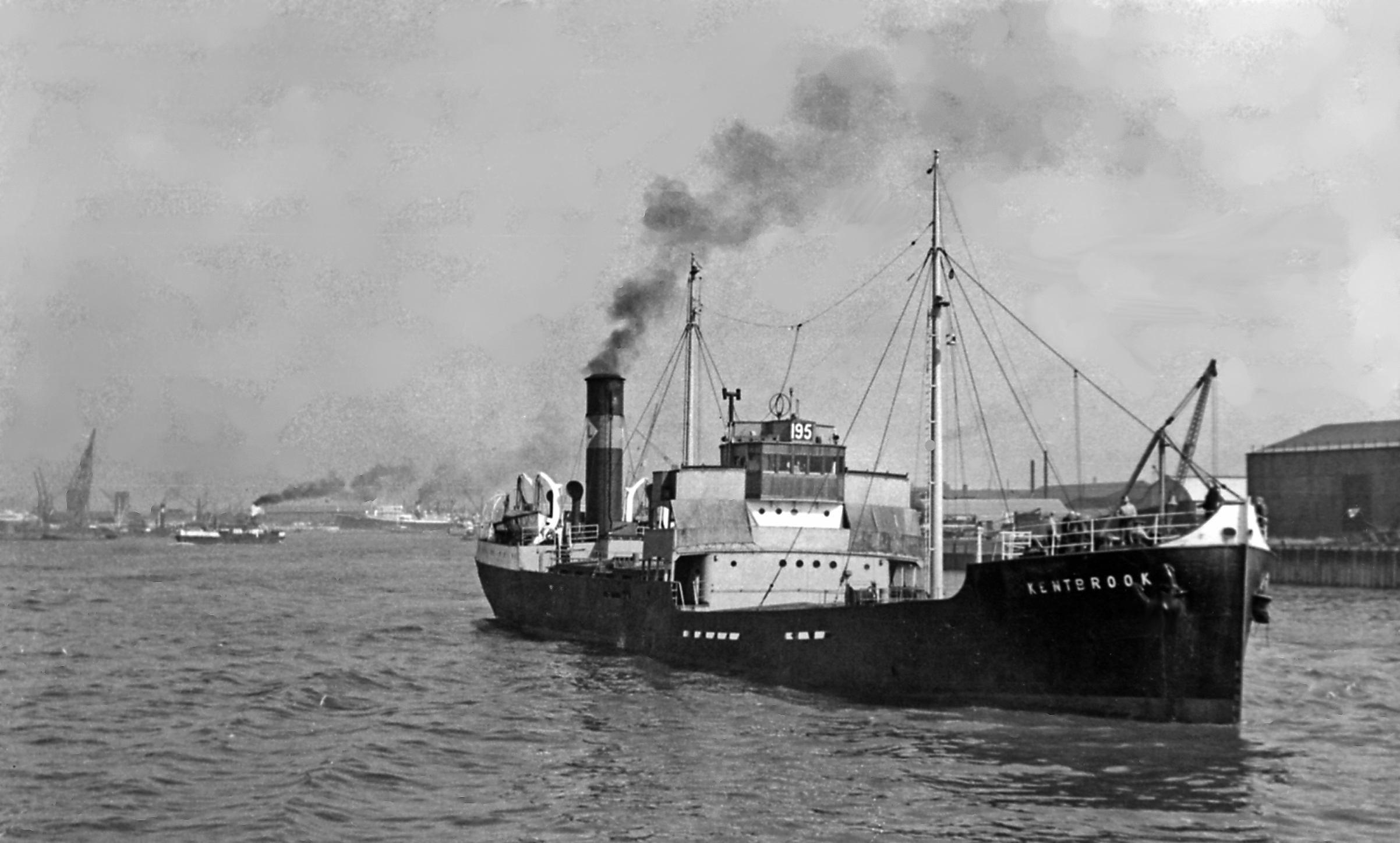
The
ship’s horn sounds, deadening the
air. Life cowers and stops its ears. The sound spreads out across the water and
bears down, crushing bone and mud beneath its awful weight. Mountains quiver
and their boulders stir in agony. It is the sound of the unstoppable force. It
does not plead for passage. It declares itself: I come. The ship nears
with terrible stillness, slow, implacable, sheer iron, iron limbed, rusting yet
impervious. The frail earth cannot impede it. All must be ground down by its
passage: water, rock, vegetation, flesh – it is all alike to the ship.
On the wharf,
Liz waits. She wears new stockings. She has come from work; her smock is brown
and smells of sugar, grease, and burnt coffee. She has long legs and a short
skirt. She shivers. On fair summer nights she waited here, when the light
lingered and the air was warm. Through autumn’s dwindling days she watched, unwavering.
Now she arrives in darkness, shudders in the damp and bitter wind that blows in
from the bay, but waits always as before, until the last man departs, the steel
gates close, and the dogs are let loose to prowl.
The man at
the gate knows her. At first he flirted with her, followed her with hungry eyes.
But somehow she has become like a daughter to him – a distant wayward daughter,
long past saving, sunk in reckless independence. But still, a daughter. He
calls out to her cheerfully as she enters, and when she passes, weeps for her.
She stands alone
before the implacable ship. The water surges as the gap narrows, stirring a
stew of old oil and effluent. It will rise up and overwhelm her. The dock will
crumble. She will fall amid the rubble and be crushed, like a cockroach
underneath a heel; a squirt of red, a smear of bones and flesh. Yet still she
waits.
The ship
relents. Even in its monstrous heart, the sight of her elicits pity. It cannot
save her, but, like the man upon the gate, it cannot bear to sate its appetite
on her. Ropes are thrown. Subdued, the ship dribbles forth her crew down the
companionways. Liz stamps her numbed feet and watches them descend.
He never gave
her a photograph, and sometimes she struggles to recall his face. Men pass in
ones and twos through the gloom and glare of the dockyard and for a moment she
recognizes him in each of them. Her heart flutters with brief hope, while her
hands tremble for fear that he who is half forgotten will return to her half
known, that they will stare with lidded eyes, touch with cold uncertain
fingers, stammer foolish distant words as if their parting had been brief and
their meeting happenchance.

A group of
Russian sailors approaches her. One puts his hands on her. She squirms away
from him.
“You do it
with me,” he says.
“No,” she
says, pushing away his cold hands.
“I have
American dollars,” he says, persisting. “I give you thirty American dollars to
do it with me.”
His comrades
laugh at him.
“She doesn’t
want your American dollars, Dimitri,” one says.
“What do you
want then?” the sailor asks her, grabbing her wrists and pulling her close to
him.
“Let me go.”
Her voice is a helpless bleat. She has no power of resistance; only hope.
“Leave her,
Dimitri,” another man says, an older man. “She’s not here for that. Here they
all dress like whores.”
Dimitri is
persuaded to move on. She fades to nothingness behind him. The great town waits
for him, full of flesh.
Other men
call out to her. Some simply stare, or say things to their friends they think she
cannot hear, and laugh. But they do not linger. They are too eager to find a
warm place, a place of music and bright light, or else their beds. After a
while they come no more. You cannot call her feeling disappointment. She is too
resigned for that. Her hope is faithful, not expectant. She comes because she
must, hopes because she must. It is her faith, her beatitude, her love. The icy
wind disturbs her hair and she raises a numbed hand to smooth it. On the
gangway one last figure appears. He must be an old man, for he moves slowly.
His hand grasps the rail as if he fears he may stumble down the steep gangway.
She waits to see his face, for her hope is as well invested in him as in any
other man. She dare not go and leave one face unseen. In her dreams it will be
him, and he will find her and rebuke her faithlessness. She waits.
The man
reaches the wharf and turns to walk towards her. He is not as old as she had
thought him. There is strength in the way he tosses his duffle bag over his
shoulder. But he walks with a limp. Her heart goes out to him as if he were a
crippled child left behind by his playmates as they ran to the playground. Her
eyes cannot leave him as he limps from one pool of yellow light to another. His
face is deeply bearded. He has a watch cap pulled low over his brow. He wears
glasses; the heavy old fashioned kind with black plastic rims.
He limps past
her. She knows he is the last. She does not want to walk beside him to the
gate. She could easily overtake him and reach the gate before him, but it seems
cruel to do so, to leave him limping solitary in the frigid gloom. She will
wait until he has gone, then follow and go home alone.
He stops and turns
back to her.
“You look
cold,” he says.
“I’m okay,”
she says, turning away. She knows better than to meet his eye.
“Waiting for
someone?”
“I’ll be
fine.”
“I’m the last
off. There’s no one else aboard, except the old man.” His voice is strange. It
is low and seems to be forced from the bottom of his throat.

“I’m okay,” she
says, hoping he will move on.
He turns and limps
toward her.
“You’re not
waiting for the Skipper?”
“No.”
“There’s no
one else.”
“I’m fine.”
“The gate
will be closing soon.”
“I know.”
He is beside
her now. She still feels pity for him, but if he touches her, if he even lets
his sleeve brush against her arm, she will run.
“He’s a lucky
man.”
“Who?”
“The man you
are waiting for.”
There is
something in his eyes that touches her. A word is not too much to give.
“His name is Jack,”
she says.
“Jack who?”
“Jack Irwin,”
she says. She hates to speak his name, for every time it passes her lips some
part of her small treasure of hope flies out of her mouth and is lost in the
frosty air.
“Oh.” He pauses,
as if some sadness weighs upon him. “You must be Liz,” he says.
She stares at
him. Hopes and cautions flurry round her. For a moment she is uncertain if she
should admit to her name. She stammers, “You know him?” Her hand darts out and
lights on his arm. He looks at her, as if her touch somehow offends him. She
withdraws her hand. Her heart is trembling in her breast, from coldness and
from hope. “You know him?” she repeats.
“Come on,” he
says, “I’ll buy you a drink.”
“Is he okay?
Is he coming back?”
“You’re
freezing,” he says. He is dressed in a heavy sea-coat, but he does not offer it
to her.
“Was he on
the ship?”
“Come on.
We’ll talk inside.”
He turns and
begins to limp on toward the gate. She teeters after him on numbed legs. She
stammers questions at him, but he is silent. Soon she drops into silence also.
Dread settles over her heart. She sees he does not wish to give his news, does
not want to be alone to comfort her.
The man at
the gate sees them leave together. He gives her a friendly wave, but, when they
have passed, he is pierced with fear for her. Some part of him thinks that he
should follow them, to keep her safe. But he is expected elsewhere – and how
could he explain? Her life, he tells himself. Nothing he can do about it.
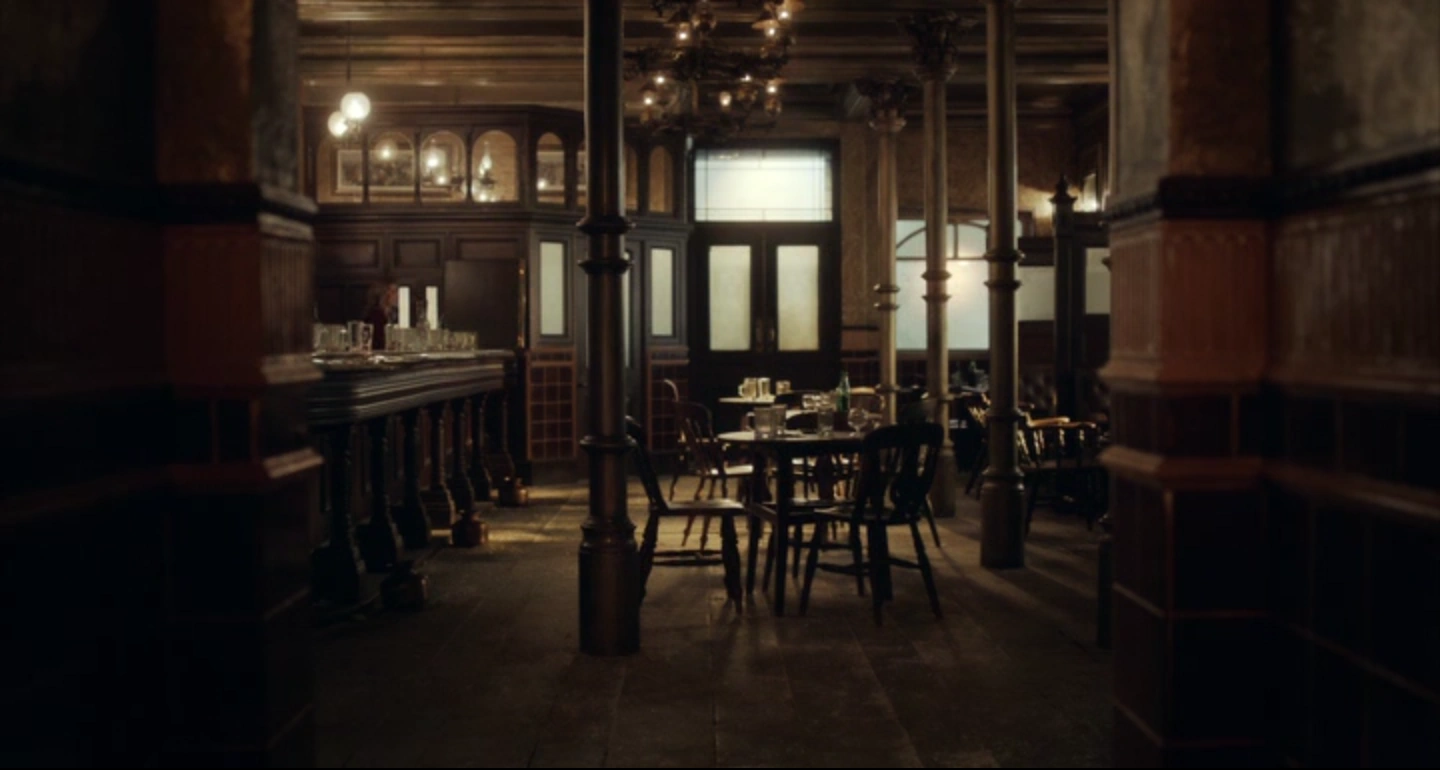
They stumble into a bar
he lame, she numb. The place is empty. The man behind the bar gives them a
sullen look. The sailor slides into a booth. The bulb is burned out in the lamp
that hangs above the table, but Liz has not the heart to ask him to get up again
and move to a different table. She slides in opposite to him, her stockings
catching on the broken vinyl.
He shouts an order for beer. The bartender twists
the caps off two bottles, puts them on the counter, and turns again to watch
the TV behind the bar. Liz rises and crosses the room to fetch the bottles to
the table. The bartender does not look up at her. There is a half empty bowl of
peanuts on the bar. She looks at the sailor, slumped in darkness. She wonders
when he last ate, and picks up the peanuts to bring to him.
He receives
her without thanks, scoops the peanuts into his mouth, and sucks on the beer
bottle.
“Were you
tight?” he growls.
She does not
know what he means. Her cheeks flush.
“You and Jack?
Steady?”
“Yes.”
“Anyone
else?” He is belligerent, as if he suspects that she has betrayed his friend.
“No.”
“You waited
for him?”
“Yes?”
“Kept your legs
crossed?”
She blushes
again. The blood burns her chilled skin. Her beer sits untouched. Warmth has
hardly begun to creep into her body.
He sits
forward and glares at her, offended by her silence. “Kept your legs crossed?”
he asks again.
“Yes,” she
says. She slides one knee over the other and tries to tug her skirt down to
cover her thigh.
He sits back
and pulls on his beer bottle. When he speaks again there is a kind of sweetness
in his voice.
“Have you
been together long?” he asks gently.
“A year. But he’s
been at sea six months.”
“What ship?”
“I don’t
know. He changed a lot.”
“Hear from
him much?”
“He sends
postcards. Says he’ll be home soon.”
“You write
back?”
“He always
forgot to give me an address.”
“Did you ask
the company?”

“They said
they didn’t know. They said he must have gone to work for another line. Do you
know him? Have you seen him?”
He nods.
“We were on
the Star of the Sea, out of Lisbon. He used to talk about you. Said how pretty
you are. Said you were waiting for him. Some of the guys used to laugh at him,
said if you were so pretty, you wouldn’t be waiting around for the likes of
him.”
“I waited,”
she says. She corrects herself, “I am waiting.”
“Love him, do
you?”
She looks
down at the table. “Yes,” she says, her voice low.
“He was a
good kid,” the sailor says.
She hears
“was”. Her body begins to shake.
“Companies
don’t care,” he says bitterly.
“Wh-- Wha-”
She cannot even finish the word. If she speaks, she will scream. If the
question passes her lips, she will break down, she will sob out her heart,
while he sits nursing his beer, and the man behind the bar watches his
television.
“Gale,” he
says, “Off the coast of Spain. Containers broke loose from the deck.”
“Nothing…”
she gasps out words in short puffs, clenching her chest between each word, to
keep herself together, “… news … no … wreck … watched … nothing.”
“A wreck
doesn’t make the news unless it dumps oil. Dead birds are news. Not dead men.”
“… dead … no
…”
“It wasn’t a
wreck anyway. Just deck cargo lost. He was checking the chains.”
“… dead …?”
she gasps.
He reaches
out and lays his hand over hers.
“He was
right,” he says, “you are pretty.”
She breaks.
The collapse is sudden and complete. She wails out her sorrow. Her head falls
into her hands. Her sobs come in quick wheezing breaths that convulse her
limbs. The man behind the bar reaches for the remote and bumps the volume up a
notch or two.
Another man
walks into the bar. He looks at no one but heads straight to the back and goes
into the men’s room. The sailor rises, picks up his duffle bag, and follows
him, leaving Liz alone with her grief.
In the men’s
room, the sailor and the stranger exchange no words. The sailor digs into his
duffle bag and pulls out six packages, all neatly wrapped in plastic. The
stranger inspects the seals and finds them intact. He opens one, tastes, and
nods. Money changes hands and the stranger departs.
The sailor
turns to the mirror and looks at himself. He takes off his glasses and his
watch cap and stuffs them in a pocket. Then he takes a shaving kit from his
duffle, coaxes hot water from the mismatched taps, lathers, and begins to
shave. The shave leaves him with a curiously mottled face, for the beard has
kept the sun from his jaw. It is a fresh face, young, full of purpose.
He leans against
the wall – there is nowhere here he wants to sit. He crosses his right leg over
his left knee, undoes the laces of his boot. He pulls off the boot and extracts
a small block of wood from inside the heel. His heel has been chafed almost raw,
and he removes his sock and caresses the sore spot. Then he puts his sock and
his boot on again and stands straight.

He regards
himself in the mirror. The watch cap has left his hair a mess. He runs water
into his hands and slicks it back. Then he takes out a comb and arranges a neat
parting. He is pleased with the image in the mirror.
He returns to
the bar. Liz is still there, weeping. The TV is blaring. “Turn it down,” he
says, slapping two twenties on the bar. The bartender looks up at him, sees the
money, takes it, flicks the TV off, and disappears into the back.
The sailor
strides across to the table where she sits. There is no sign of a limp now. He
puts a hand on her shoulder.
“Liz,” he
says. He speaks in his natural voice.
She jumps as
if she had been stung. She turns and looks him in the face. For a moment she
gapes at him without comprehension, sobs still shaking her frame. Then she
shrieks and leaps up from the table to throw her arms around him.
She cries his
name, “Jack!”
“It’s me,
babe,” he says, raising her off her feet as he embraces her.
He puts her
down. She looks at him, unbelieving. At first she does not understand. “He told
me you …” She sees that he wears the same coat, the same shirt. There is a
fleck of shaving cream below his right ear. She steps back. “You…” she says,
“you…”
He grins at
her. “It was me, baby. Thought maybe you’d forgotten me.”
“I waited for
you,” she says, she is cold again and her hands tremble.
“You could
have been waiting for anyone,” he tells her. “I’ve seen girls on the docks
didn’t care who they went home with.”
“No,” she
cries. “It was for you. I waited for you.”
“I know,
babe,” he says. “I had to be sure.”
Her heart is
thumping. There are tears in her eyes. Her feet move uncertainly. Her arms hang
down, her hands shaking from side to side. Her mind is half made up to run. He
steps forward and pulls her to him. His mouth closes on hers. She remembers
him.
It is spring time, and
small flowers stand on the leggy stalks that grow in the cracked concrete. The
sky is flushed, yet still the city sleeps. The dockyard noises stand out with
peculiar and individual clarity, for the city has not yet resumed its daily drone.
“You’ll wait
for me,” he says.
She nods,
tears in her eyes. She wears a new spring dress, and she is cold in the morning
air. “You’ll write…”
“You know I
will, babe.”
Men move
around them, but they are alone.
He squeezes
her, then hauls his half-empty duffle bag over his shoulder and joins the line
of men climbing the gang plank. Lines are cast off. The ship’s horn blares out
its agony to the sleeping world. Liz stops her ears. In the town, people stir
in their beds, curse the commerce that sustains them, and turn again to sleep.
The ship shudders. The seagulls sound their harsh and mournful protests as they
choke on the cloud of heavy oil smoke that pours from her stacks. Liz waves to
the ship, waves to its sheer iron sides, for no face shows at the rail.
The man on the gate sees
her coming, the newly-risen sun pulling out the highlights in her hair and
glistening on her wet cheeks.
“Hey, Liz,”
he calls to her. He cannot remember how he came to know her name.
She looks up
and smiles at him, grateful to be recognized.
“Seeing him
off?” he asks.
She nods.
She is
shivering, and he wants to ask her into his hut where he has a small electric
heater running. He wants nothing from her in return. But how could he explain?
“I switched
to days in December,” he tells her, eager to explain his presence, to prove the
innocence of his motives. “It’s less money, but I get to see my kids.”
“That’s great,” she tells him.
Don’t come
back, he wants to say to her. But how could he explain? She passes through the
gate and hurries across the road to a lonely bus stop. He watches her while she
waits. A dozen times he forms the resolve to cross the street and plead with
her. The bus comes, and his chance is gone. Some evening, he knows, she will
return again, and every evening after that. But he will not see her. He will be
at home, waiting for his daughter to return, spying through the curtains to see
if the boy is clean. But Liz will be here, shivering on the docks. She is
constant. It is her peculiar virtue. She will wait for Jack.

Mark Baker is a writer living in Kitchener. His stories have appeared in The
Rockford Review, Storyteller, Solander, Our
Family, New England's Coastal Journal, Fantasy Book,
and The Atlantic Advocate. He is the author of several non-fiction
books and is working on a novel (or two). “On Claudy Banks” was originally published in Storyteller, Canada’s Fiction Magazine,
Vol 12, Issue 3. And Mark read an excerpt from it to an appreciative audience at our recent Authors’ Night at the Jitterbug Café.
The story
is based on the English ballad “Claudy Banks.” Check out the lyrics here or hear it sung here.
See
Brian Henry’s schedule here, including
writing workshops and creative writing courses in Algonquin
Park, Bolton, Barrie, Brampton, Burlington, Caledon, Georgetown,
Guelph, Hamilton, Ingersoll, Kingston, Kitchener, London, Midland, Mississauga,
Newmarket, Oakville, Ottawa, Peterborough, St. Catharines, St. John, NB,
Sudbury, Thessalon, Toronto, Windsor, Halton, Kitchener-Waterloo, Muskoka,
Peel, Simcoe, York, the GTA, Ontario and beyond.