Sunday, January 24, 2016

“More than a Mountain” by Adrienne Zoe


I teetered on the angled rock face of Mount Kinabalu, a rock face that seemed to go on forever. If I ever slipped and fell, I knew I would keep tumbling down; there was nothing to stop me. But oddly, I didn’t give a damn. Like a drunk, my mind was a fog and all instincts for self-preservation seemed to have deserted me. I was fifteen, on the climb with my high school friends, all of us struggling in the altitude and numbing cold. I only wanted to make it to the top and didn’t care if I died doing it.

Memories of Mount Kinabalu returned to me in the comfort of my Canadian home in the summer of 2015 when I read the news regarding foreigners stripping naked on its peak – the prize of Mount Kinabalu National Park, a world heritage site. Who’d want to do that? I thought about Sabah, the Malaysian state where Mount Kinabalu is located, and its people who love this mountain. Was there another mountain more loved than this one, I wondered. Somehow I doubted there was.

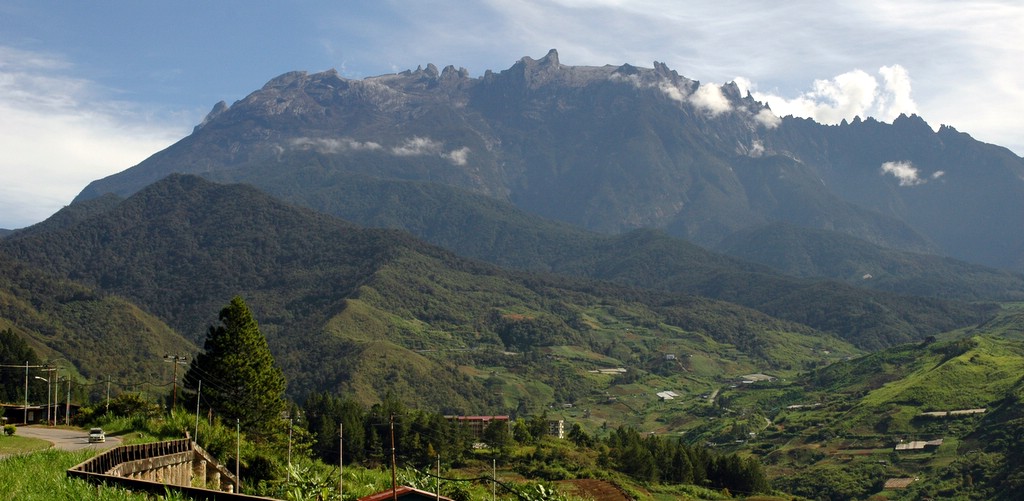
I was born on Borneo Island and grew up with a clear line of sight of Mount Kinabalu from my home in Kota Kinabalu. Our veranda was where I usually saw our guests’ jaws drop open, floored by the panoramic view of Mount Kinabalu and the surrounding landscape that included the Crocker Range and the South China Sea. I always got a kick out of their reactions. My early artwork often included the outline of Mount Kinabalu, along with a stick-ray drawing of the sun. Everything I could see from my home became extensions of the walls around me, my sense of security tied to it all.

When I was eight, my parents, my brother and I, visited the Mount Kinabalu National Park. It was 1972, and getting there entailed a day-long bone-shattering ride on a dirt road. At lower elevation, the narrow interior road was full of switchbacks that hung precipitously off the mountainside, but higher up the road became a hair-raising roller coaster ride going up and down the rubbly back of the mountain.

There were no safety rails, and luckily we didn’t fall to the scary ravines and valleys below. Meanwhile logging trucks terrorized us, thundering by at breakneck speed in billowing clouds of dust. Nowadays, the same trip only takes two hours by highway, a journey not nearly as thrilling.

Our vehicle was a borrowed beat-up jeep from the survey department since my father was a civil engineer. Instead of a proper roof it had a corrugated zinc sheet. Each bump in the road caused the metal roof to clang over our heads.

Having heard our cymbal-and-gong approach for miles, the Kadazan Dusun natives living on the mountain hurried out to watch us pass by. Perhaps they talked about us for days after; there couldn’t have been much excitement for them living in huts and small farms up on the mountain where they grew pineapples, tapioca, potatoes, and other rural crops. Weathered and hardy, they scaled the mountain slopes barefooted, and carried loads on their backs in woven baskets that were either strapped on their shoulders or around their foreheads. It was hard to imagine these peaceful people were among the former headhunters of Borneo.

If as a child I’d become emotionally attached to Mount Kinabalu, imagine what it meant to these natives who lived around it for millennia. They revered the mountain, and believed it was the resting ground for the spirits of their deceased. They believed an offering consisting of things like chicken, rice, and betel nut, was crucial to ensure a safe climb. Or one might not return alive. Now Christian and Muslim converts, they still retain their tradition by performing a yearly ritual offering.

By the time we arrived at the park we were covered from head to toe in orange dust, looking more Caucasian than Chinese! Being in the tropics, it was a novelty to see out our breath condensing in the chilly air. While our parents registered, my brother and I went to a lookout point at the parking lot.

I stared into another world. The Mount Kinabalu National Park, a huge reserve of lush wilderness about the size of Singapore, seemed like a mysterious world shrouded in shifting clouds, the faint call of wild birds occasionally emerging from it. 

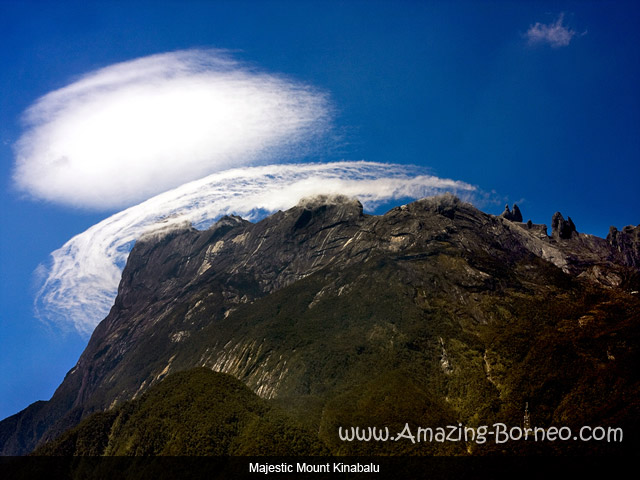
The peak of Mount Kinabalu reached for the sky, but a swirling vortex of clouds hid it and we had no clue it was right in front of us.

The next morning, the clouds cleared and we found ourselves staring at the massive granite peak, a sky-ward facing monster, baring a mouth full of jagged teeth. Nothing could grow up there because of the freezing temperature and lack of soil on the bare rocks, my mother explained. At Mount Kinabalu’s foot in the distance below us, the tightly packed rain forest formed an unbroken cauliflower surface in shades of green, brown, and red.

We discovered the summit trail, but to my disappointment my parents refused to go. Instead we walked trails through rain forest with towering hardwood trees. I scanned the forest floor for the rare Rafflesia, the largest single flower in the world, big as a car tire and a stunning bright red with white spots. I sniffed hard for its carrion smell, but had no luck.

We gawked when we came across carnivorous pitcher plants with mug-sized traps, ferns as tall as coconut trees, and unusual wild orchids. My brother and I played with a giant millipede, the first we’d ever seen, until it coil up into a tea-coaster-sized circle. We also had fun with a giant pill millipede, the only one we ever saw, and marveled when it rolled up to the size of a golf ball. It was as if we’d wandered into prehistoric times with gigantic insects and plants, so different from where we lived by the coast, and I felt proud that Mount Kinabalu supported such amazing nature.

I eventually climbed Mount Kinabalu with my high school friends in 1979. The first leg started in the morning from the park office and ended at 4pm at the mid-way destination. The vegetation changed with elevation as we passed through a few climatic zones, so that at first we saw tall tropical trees and towards the end we encountered dwarf alpine plants. Unfortunately, our guide had given us poor advice not to drink too much. I arrived dehydrated, exhausted, and too sick to keep down any food.
Our zinc shack crackled under the biting wind, and was cold as an iceberg. My classmate shared her sleeping bag with me. Somehow, we squeezed our bodies into the one-person mummy bag without bursting it. 

Gazing out the window, I wondered what that strange disc of light was, moving behind the mountain. Addled from the shortage of oxygen, it took me half an hour to discern it was the moon and not a UFO.

At 2 a.m., our native guide led us to the top. Hiking in the tunnel vision of my flashlight, I was struck by the stillness. Nothing moved or made sounds on the mountain except us. I heard myself gasping the thin air. I’d never been so cold or so tired; every few steps up the sheer mountain required me to stop and rest. Using all my will, I moved my log-heavy limbs and crawled to the 4,095-metre summit where we awaited sunrise.

When the first sun rays lit the rocks in a crown around us, I could’ve cried. I’d done it. Savouring this fixture in my life up-close and enjoying the top-of-the-world view it provided, I felt more connected than ever to the land of my birth. In body I was half-dead, yet in spirit I was soaring.

Snapping out of my memories back in my home in the western hemisphere, I shook my head over the controversy surrounding the Mount Kinabalu nudists. Did they cause the earthquake that happened days after they posed naked? The natives believe the mountain’s spirit was angered and many locals blamed the visitors for the quake which stranded over a hundred and fifty climbers and killed eighteen, including a few native mountain guides.

The local outcry was revealing of the deep emotions Sabahans have towards their mountain, and I paused to examine my own. I didn’t share the same beliefs or cast any blame, but I did feel Mount Kinabalu should be respected.

More than just a mountain, it unites Sabahans and is a symbol of where I come from. It conjures in my mind the scenic landscape of Sabah, the many faces of the multicultural groups and their values, and the rich fauna and flora with endemic species only to be found there. It is a beacon I search for whenever I visit this part of the world, my stay incomplete until I have caught sight of it.

Considering the furor they caused these nude visitors got away easily. At the same time I hope they didn’t only bring home the memory of their consequent troubles, but also plenty of this mountain’s wonder.

Adrienne Zoe was born in the Sabah, a state of Malaysia on the Island of Borneo, but is now a resident of Waterloo, Ontario.  She is currently writing a memoir of what is was like growing up in Borneo, and maintains a Facebook writer’s page hereA mother of two, she is a fine art photographer and an avid tennis player.   She is one of the artists of Uptown Gallery of Waterloo, and her artist information can be found at her website here, on her public Facebook page here, and the gallery website here.

See Brian Henry’s schedule here, including writing workshops and creative writing courses in Algonquin Park, Alton, Barrie, Bracebridge, Brampton, Burlington, Caledon, Collingwood, Georgetown, Guelph, Hamilton, Ingersoll, Kingston, Kitchener, London, Midland, Mississauga, Newmarket, Orillia, Oakville, Ottawa, Peterborough, St. Catharines, Saint John, NB, Sudbury, Thessalon, Toronto, Windsor, Halton, Kitchener-Waterloo, Muskoka, Peel, Simcoe, York, the GTA, Ontario and beyond.

Saturday, January 23, 2016

Fifteen Dogs by André Alexis, reviewed by Gail M. Murray

Winner of the 2015 Giller Prize. Coach House Books, 171 pages, Trade paperback $10.77, Kobo $12.79. Available from Chapters/Indigo here.

André Alexis has written a modern allegory set in Toronto’s Beach and High Park neighbourhoods. The story begins with a wager between Apollo and Hermes.

   - I wonder, said Hermes, what it would be like if animals had human intelligence.

   - I wonder if they’d be as unhappy as humans, Apollo answered.

   - Their intelligence is a difficult gift.

   - I’ll wager a year’s servitude, said Apollo, that animals – any animal you choose – would be even more unhappy than humans are, if they had human intelligence.

So this gift is visited upon dogs in a veterinary clinic.

André Alexis 
We’re reminded of Eve’s loss of innocence and expulsion from the garden once she has knowledge. This book begs to be read by book clubs and placed on secondary school English curriculums. Similar to William Goldings’ Lord of the Flies, it depicts savagery and the dark side of humanity.  

Animals kill for survival with no evil intent. When human nature is overlaid on animals, it perverts their true nature. The majority of the dogs are obsessed with finding their old life as dogs, not the hybrids they’ve become, and set out to destroy those dogs who embrace the new language and thinking.

It’s disheartening to think intelligence causes creatures to behave with malice but human history is scattered with war, greed, and domination along with the great works of art, music and literature.

Despite finding the brutal cold-blooded murders and death upon death disturbing I did find this book gripping, and thought-provoking.

The only hope given to the reader comes in the character of Majnoun, the black poodle, who is so viciously attacked by the pack, left for dead, and then cared for by humans.

Prince, the heroic mutt who creates poetry, is the idealist, who never loses his optimism.  The others are purebred. Is this mutt our everyman? What man could be capable of? Or is he a Christ-like figure who never loses faith in spite of the cruelty inflicted upon him by Apollo?

“Even in his worst days, the lake buoyed his spirits.” Prince is grateful for the beauty of language.

* * *

Quick Brown Fox welcomes your reviews of books and movies or whatever else catches your eye. Details hereRead how to write a book review (or any kind of review) here.


Gail M. Murray is a poet and freelance writer. Like Keats, she seeks to capture the moment. Her poems have been published in Wordscape , Arborealis, and CommuterLit, and her creative nonfiction in NOW Magazine, Renaissance Magazine, Trellis, and The Globe and Mail.

See Brian Henry’s schedule here, including writing workshops and creative writing courses in Algonquin Park, Alton, Barrie, Bracebridge, Brampton, Burlington, Caledon, Collingwood, Georgetown, Guelph, Hamilton, Ingersoll, Kingston, Kitchener, London, Midland, Mississauga, Newmarket, Orillia, Oakville, Ottawa, Peterborough, St. Catharines, St. John, NB, Sudbury, Thessalon, Toronto, Windsor, Halton, Ingersoll, Kitchener-Waterloo, Muskoka, Peel, Simcoe, York, the GTA, Ontario and beyond.

Friday, January 22, 2016

Intermediate Creative Writing class, Thurs evenings, April 14 – June 23, in Georgetown

Intermediate Creative Writing
Spring is coming
11 weeks of creative growth
Thursday evenings, 6:45 – 9:00 p.m.
April 14 – June 16 
(though we may extend the course by a week if it fills up). First pieces emailed April 14.
St. Alban's Church, 537 Main Street, Georgetown, Ontario (in the village of Glen Williams (Map here.)

This course isn't for beginners; it's for people who have been writing for a while or who have done a course or two before and are working on their own projects. Over the ten weeks of classes, you’ll be asked to bring in five pieces of your writing for detailed feedback. All your pieces may be from the same work, such as a novel in progress, or they may be stand alone pieces. You bring whatever you want to work on.

Besides critiquing pieces, the instructor will give short lectures at the start of class, addressing the needs of the group, and in addition to learning how to critique your own work and receiving constructive suggestions about your writing, you’ll discover that the greatest benefits come from seeing how your classmates approach and critique a piece of writing and how they write and re-write. This is a supportive group and a rewarding class.

Instructor Brian Henry has been a book editor and creative writing instructor for more than 25 years. He publishes Quick Brown Fox, Canada’s most popular blog for writers, teaches creative writing at Ryerson University and has led workshops everywhere from Boston to Buffalo and from Sarnia to Charlottetown. But his proudest boast is that he has helped many of his students get published. 
See details of all six classes starting this spring hereRead reviews of Brian’s courses and workshops here

Fee: $184.96 plus hst = 209.  
To reserve your spot now, email: brianhenry@sympatico.ca

Note: I start working out the schedule for when participants are due to bring in a piece of their writing three weeks before our start date, so please try to sign up well by March 24. In any case, these courses fill up, so enroll early to avoid disappointment.

See Brian’s full schedule here, including writing workshops and creative writing courses in Algonquin Park, Alton, Barrie, Bracebridge, Brampton, Burlington, Caledon, Collingwood, Georgetown, Guelph, Hamilton, Ingersoll, Kingston, Kitchener, London, Midland, Mississauga, Newmarket, Orillia, Oakville, Ottawa, Peterborough, St. Catharines, St. John, NB, Sudbury, Thessalon, Toronto, Windsor, Halton, Ingersoll, Kitchener-Waterloo, Muskoka, Peel, Simcoe, York, the GTA, Ontario and beyond.

Don't ever miss a post on Quick Brown Fox. Fill in your email in the box to the right under my bio, and get each post delivered to your Inbox. Also, if you’re not yet on my newsletter, send me an email, including your locale, to: brianhenry@sympatico.ca ~ Brian

Thursday, January 21, 2016

Great Plains publications seeks literary novels, short story collections, and teen fiction

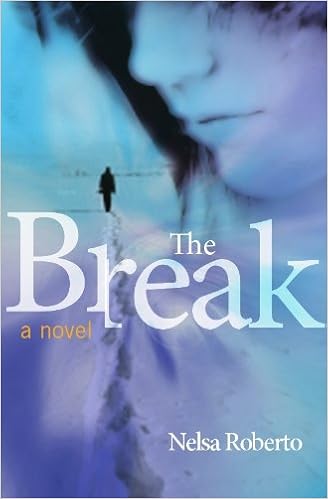
The Break by Nelsa Roberto,
published by Great Plains Teen Fiction
Great Plains Publications
233 Garfield Street South
Winnipeg, Manitoba R3G 2M

Great Plains Publications is a non-fiction publisher specializing in Prairie history and biography. Their mandate is to publish books that are written by Prairie authors (Note: their other imprints are open to authors from across Canada). .

Enfield & Wizenty is a literary imprint that publishes original novels and short story collections by Canadian writers at all career stages. Before submitting a manuscript, check out their backlist to decide if your work is likely to fit with our publishing program. While you may query by email, (info@greatplains.ma.ca), they do not accept email submissions of full manuscripts except by invitation; attachments should be in doc format only. 


Great Plains Teen Fiction primarily publishes contemporary and historical fiction from Canadian authors for readers age 14 to 16, and 15 to 18. Humour is appreciated, as is romance. Stories can be set anywhere, though they prefer stories set on this world, present or past. If you have been previously published by a traditional book publisher, you may query by email (info@greatplains.ma.ca) with a synopsis of your story, a short bio with your previous publications, and one to three chapters of your novel as a Word attachment. If you are an emerging author or self-published author, please send by standard mail a cover letter, synopsis, and the first one to three chapters of your book. 

Author Jennifer Mook-Sang
Brian Henry will lead How to Get Published workshops on Saturday, Feb 20, in Kitchener, with literary agent Olga Filina of The Rights Factory (see here) and on Saturday, Feb 27, in Brampton with Martha Webb of the McDermid Agency (see here).

Also, Brian will lead Writing for Children & for Young Adults workshops on Saturday, March 5, in Burlington, with literary agent Monica Pacheco and author Jennifer Mook-Sang (see here), on Saturday, Apr 2, in Barrie, with literary agency Rachel Letofsky (see here), on Saturday, April 30, in Guelph, with Yasemin Uçar, senior editor, Kids Can Press and authors Jennifer Mook-Sang and Kira Vermond (see here), and Sunday, May 29, in Ottawa with acclaimed author Alan Cumyn (see here).

Other upcoming workshops include How to Build Your Story, Saturday, Jan 30 in Toronto (see here), Writing With Style, Saturday, March 12, in Oakville (see here), and Writing Your Life, Saturday, March 16, in Caledon (see here).

For more information or to register, email: brianhenry@sympatico.ca

But the best way to grow as a writer or to get your manuscript ready for publication may be with a weekly class. This winter, Brian is offering a full range of courses for beginning to experienced writers (details of all five classes here). Two classes still have space:

Brian Henry
Welcome to Creative Writing, Thursday afternoons, Jan 28 – March 31, (no class March 17), in Burlington. (See details of this class here.)

Writing Personal Stories, Tuesday afternoons, Feb 2 – March 29, (no class March 15) in Burlington (see here.)

Courses coming this spring:
“Exploring Creative Writing,” Tuesday afternoons, April 19 – June 21, in Burlington
“Writing Personal Stories,” Wednesday mornings, April 27 – June 15, in Mississauga
“Next Step in Creative Writing,” Wednesday evenings, April 13 June, in Burlington
“Next Step in Creative Writing,” Thursday afternoons, April 21 June 23, in Oakville (see here)
“Intermediate Creative Writing,” Thursday evenings, April 14 June 23, in Georgetown
“Intensive Creative Writing,” Wednesday afternoons, March 30 June 15, in Burlington

For information about spring courses, or to reserve a spot, email: brianhenry@sympatico.ca

Read reviews of Brian’s courses and workshops here.
To register or for more information for any class or workshop, email brianhenry@sympatico.ca

See Brian’s full schedule here, including writing workshops and creative writing courses in Algonquin Park, Alton, Barrie, Bracebridge, Brampton, Burlington, Caledon, Collingwood, Georgetown, Guelph, Hamilton, Ingersoll, Kingston, Kitchener, London, Midland, Mississauga, Newmarket, Orillia, Oakville, Ottawa, Peterborough, St. Catharines, St. John, NB, Sudbury, Thessalon, Toronto, Windsor, Halton, Ingersoll, Kitchener-Waterloo, Muskoka, Peel, Simcoe, York, the GTA, Ontario and beyond.

Wednesday, January 20, 2016

New book: Poor Man's Galapagos, a novel by Christopher Canniff

Hi, Brian. 
As a student of yours and current (outgoing) President of the Canadian Authors Association Toronto Branch, I wanted to let you know that my novel Poor Man's Galapagos is now available here.
Thanks so much, and all the best to you and your students!
Sincerely,
Christopher Canniff
                 
Poor Man's Galapagos 
Tómas Harvey is an engineering student living on a small, impoverished island in Ecuador. He is conscripted into military service in the border war with Peru where he is certain he will die a senseless death. His father, a renowned British travel writer, is accused of embezzling government funds and suddenly leaves the island. While searching for answers, Tómas embarks on a journey of discovery that may lead him closer to his father and to his biological mother who abandoned him at birth, and away from his home country for the first time in his life…
The novel explores how duty shapes a family over generations, the struggle for self-discovery, and how the abandonment of selfish obligations in favour of altruism can lead to a renewed faith in humanity, and ultimately, in ourselves.

See Brian Henry’s schedule here, including writing workshops and creative writing courses in Algonquin Park, Alton, Barrie, Bracebridge, Brampton, Burlington, Caledon, Collingwood, Georgetown, Guelph, Hamilton, Ingersoll, Kingston, Kitchener, London, Midland, Mississauga, Newmarket, Orillia, Oakville, Ottawa, Peterborough, St. Catharines, St. John, NB, Sudbury, Thessalon, Toronto, Windsor, Halton, Ingersoll, Kitchener-Waterloo, Muskoka, Peel, Simcoe, York, the GTA, Ontario and beyond.

Tuesday, January 19, 2016

Next Step in Creative Writing class, Thursday afternoons, April 21 – June 23, in Oakville

The Next Step in Creative Writing
10 weeks of creative growth
Thursday afternoon, 12:30  2:45 p.m.
April 21 – June 23 
St Cuthbert's Anglican Church, 1541 Oakhill Drive, Oakville, Ontario (Map here.)

The Next Step in Creative Writing will challenge you to take a step up in your writing. Over the ten weeks of classes, you’ll be asked to bring in five pieces of your writing for detailed feedback. All your pieces may be from the same work, such as a novel in progress, or they may be stand alone pieces. You bring whatever you want to work on.

Besides critiquing pieces, the instructor will give short lectures at the start of class, addressing the needs of the group. In addition to learning how to critique your own work and receiving constructive suggestions about your writing, you’ll discover that your greatest growth as a writer comes from critiquing other people’s work and form seeing how your classmates approach and critique a piece of writing and how they write and re-write. This is a supportive group and a rewarding class.

Check out two reviews of the Next Step course hereAnd see more reviews of Brian’s courses and workshops here.

Instructor Brian Henry has been a book editor and creative writing instructor for more than 25 years. He publishes Quick Brown Fox, Canada’s most popular blog for writers, teaches creative writing at Ryerson University and has led workshops everywhere from Boston to Buffalo and from Sarnia to Saint John. But his proudest boast is that he has helped many of his students get their first book published and launch their careers as authors. 

Fee: 176.11 + 13% hst = 199.  
To reserve your spot now, email: brianhenry@sympatico.ca

See details of all six classes starting this spring here.

See Brian’s full schedule here, including writing workshops and creative writing courses in Algonquin Park, Alton, Barrie, Bracebridge, Brampton, Burlington, Caledon, Collingwood, Georgetown, Guelph, Hamilton, Ingersoll, Kingston, Kitchener, London, Midland, Mississauga, Newmarket, Orillia, Oakville, Ottawa, Peterborough, St. Catharines, St. John, NB, Sudbury, Thessalon, Toronto, Windsor, Halton, Ingersoll, Kitchener-Waterloo, Muskoka, Peel, Simcoe, York, the GTA, Ontario and beyond.

Don't ever miss a post on Quick Brown Fox. Fill in your email in the box to the right under my bio, and get each post delivered to your Inbox. Also, if you’re not yet on my newsletter, send me an email, including your locale, to: brianhenry@sympatico.ca ~ Brian