Sunday, August 19, 2018

A New Book: The Lottery Winner by Rob Kelley

Hi, Brian:
I’ve published my latest book.
The Lottery Winner is the second novel in a cozy mystery series set in Chelsea, Vermont, where the staff of a County Sheriff's Office is overwhelmed with problems following the death of one its own townfolk.
Felix Callahan, a seventy-two-year-old widower wins the biggest jackpot ever offered by The Powerball Lottery. A week after his picture appears in his home town newspaper, Felix is found murdered. Over the next couple of days, several people are caught breaking into Felix’s home, all with a personal motive for murder.
When two mobile television production crews arrive in town and begin asking questions, the simple, small-town murder case becomes the county Sheriff’s career-threatening nightmare, and Las Vegas bookies are laying odds on the outcome.
Available from Amazon.com here and Amazon.ca here in paperback and ebook.
All the best,
Rob Kelley

Hey, do you have a book you want to promote? I’m always glad to help by posting an announcement on Quick Brown Fox (though sometimes it may take a while). Just send me an email that I can post to: brianhenry@sympatico.ca


See Brian Henry’s schedule hereincluding writing workshops, weekly writing classes, and weekend retreats in Algonquin Park, Alliston, Bolton, Barrie, Brampton, Burlington, Caledon, Collingwood, Georgetown, Georgina, Guelph, Hamilton, Jackson’s Point, Kitchener-Waterloo, London, Midland, Mississauga, New Tecumseth, Oakville, Ottawa, Peterborough, St. Catharines, Sudbury, Toronto, Windsor, Woodstock, Halton, Muskoka, Peel, Simcoe, York Region, the GTA, Ontario and beyond.

Friday, August 17, 2018

22 markets (most of them pay) and one contest for your essays and also for other nonfiction, poetry and short fiction


Note: Don't ever miss a post on Quick Brown Fox. Fill in your email in the box to the right under my bio, and get each post delivered to your Inbox, and if you’re not yet on my newsletter list, send me an email, including your locale to brianhenry@sympatico.ca ~Brian

Alaska Quarterly Review is a literary journal devoted to contemporary literary art, publishing fiction, short plays, poetry, photo essays, and literary nonfiction in traditional and experimental styles. It is published by the University of Alaska Anchorage in partnership with the Center for the Narrative and Lyric Arts. The editors encourage new and emerging writers, while continuing to publish award winning and established writers. Pays $50-$200 for prose; $10-$50 for poetry. 
The reading period for unsolicited submissions is Aug 15 – May 15. Guidelines here.

Agni
 online literary journal (an extension of the Agni print journal – all submissions are considered for both). Publishes short fiction, poetry, and essays. “We see literature and the arts as part of a broad, ongoing cultural conversation that every society needs to remain vibrant and alive. We look for the honest voice, the idiosyncratic signature, experimental where necessary but not willfully so. Writing that grows from a vision, a perspective, and a passion will interest us, regardless of structure or approach.”
Pays $10 per page for prose and $20 per page for poetry, with a $300 maximum, plus a year’s subscription, for both the print and online editions.
Submission period: Sept 1 – May 31. Full guidelines here.

Bennington Review is published twice a year in print form, Spring/Summer and Fall/Winter. The review aims “to stake out a distinctive space for innovative, intelligent, and moving fiction, creative nonfiction, poetry, film writing, and cross-genre work. In the spirit of poet Dean Young’s dictum that poets should be ‘making birds, not birdcages,’ we are particularly taken with writing that is simultaneously graceful and reckless.
Pays $100–$200 for prose, $20 per poem. 
Next submission period: Nov 1, 2018 – May 15, 2019. Guidelines here.

Confrontation Magazine seeks fiction, poetry and nonfiction, including personal, cultural and political essays and self-contained sections of memoirs. Pays $175-$250 for fiction, $75-$100 per work for poetry, $100-$150 for nonfiction, more for commissioned work. 
Guidelines here.

The Feminine Collective welcomes articles, interviews, creative nonfiction (personal essays), poetry, flash fiction and short stories for our online magazine. Here’s what they have to say:
Feminine Collective Aesthetic: Raw and unfiltered is what we publish. We want you to write like you talk; your submission should reach out and grab us by the throat. Language is important. Whether your work is dark or light, blunt or subtle, serious or humorous, it should be in the deep voice. Make us care. Make us feel. Make us laugh. Make us cry. Make us angry. Make us want to stand up and fight for you. Give us something to sink our teeth into.
Poetry: Please send up to 6 poems, and load them into our Submittable system as one entry. Poems submitted separately will be rejected unread. We should only see your name in our system once, one document with all poems, one submission. Thank you. Poems should be single-spaced and no longer than two pages each. We adore prose poems without complicated formatting as this complicates things for our volunteer editors. We love narrative poems. Edgy for the sake of being edgy is not our thing.
Flash Fiction: We accept flash fiction up to 1,000 words in length. Must have a beginning, middle and an end. The idea: Tell a rich, complex story is as little words as possible. Flash fiction can be on any subject but we prefer stories on women, families, and relationships. Keep in mind relationships is a broad category. We accept up to three flash pieces at one time. Please load them into our Submittable system as ONE ENTRY.
Short Stories: Submit one short story up to 5,000 words in length. No novel excerpts, please.
Creative Nonfiction: Submit one personal essay up to 5,000 words in length. Please read Feminine Collective Aesthetic before submitting. All work should be written in deep voice, first person.
Articles, Interviews, Op/Eds: Feminine Collective accepts articles, interviews, and opinion pieces. Articles and Interviews should be completed works. Articles should be well-researched, journalistic style. Op/Eds should be a strong opinion on a current topic. Articles, Interviews and Op/Eds should be 1,000 – 2,500 words. For Time Sensitive Op/Ed works please select appropriate category in our Submittable system.
Pitch a Column: If you are a successful blogger, essayist or journalist able to produce 2 – 3 articles per month, we’d love to hear from you. Send a 1,500–2,000 word sample along with a one-page pitch.
Full submission guidelines here.

The Globe and Mail wants your first person essays
Illustration for "Life Support"
by Barbara Baker
We want you to write for us! The daily First Person essay (formerly called Facts & Arguments) is a great forum for you to share your own experiences, viewpoints and writing flair with other Globe readers. Whether you are young or old, female or male, newly arrived in Canada or deeply rooted here, we want to be inspired by your unique perspective.
A few things we look for are an original voice; an unexpected view; an unfamiliar perspective; humour; vivid details that show us rather than tell us; anecdotes that illuminate a wider theme.
A successful First Person essay may be funny, surprising, touching or enlightening – or all of these. It may present a slice of life or a powerful experience that changed you in some way. It may be a meditation on something that matters to you. It goes beyond a rant, and it is deft in moving from the particular to the universal.
Above all, an essay should be personal rather than political. It must be true, not fictional.
Here are some recent essays we thought were very successful:
·                     My Bionic dog: We had made a pact: 'You take care of me, I'll take care of you' (here)
·                     Before my ADHD diagnosis I was alive, but not living (here)
·                     My bad neighbor made being a jerk into an art form (here)
E-mail your essay to firstperson@globeandmail.com
 In the subject line, be sure to put "essay submission" and the topic (in 2 or 3 words). The topic is especially important if your piece is tied to an event or season.
Please submit your essay in 2 forms – as a Word.doc attachment, and copied and pasted into the body of the e-mail.
Include a contact number where you can be reached during the day.
Essays should be 900 – 1,200 words.
Please don't send a piece that's appeared in any other print or online publication, but feel free to submit an essay on a topic you have blogged about.
Seasonal essays should be submitted a month or more before the event.
There is no payment if your essay is published. The Globe assumes first-print rights and electronic rights for unsolicited submissions; writers retain copyright.
Guidelines here.

Helios Quarterly Magazine publishes fiction (100–1,500 words),poetry (up to 100 lines), essays, narratives and articles that deal with science fiction, fantasy or horror (1,500–5,000 words), reviews of adult science fiction, fantasy or horror – books, TV or films (1,500 words max), and “art that illuminates the darkness.” Pays 3¢ per word (U.S.) for the first 1,500 words then 1¢/word for short stories, 25¢ a line for poetry, $15 for reviews, and $35 for other nonfiction.
Reading period: July 1–15, 2018. Next reading period: Oct 1–15. Guidelines here.

Hippocampus Magazine’s mission is to “entertain, educate, and engage readers and writers of creative nonfiction. Our Books Division is an extension of that goal. Books by Hippocampus seeks to publish compelling, thought-provoking works of creative nonfiction for all types of readers. We want to take a chance on books — memoirs, essay collections, or other personal narratives — that may not yet have found a home because they don’t conform to “traditional” publishing standards, whether in topic, format, voice, or style. We want to publish, as we do in our magazine, memorable creative nonfiction.”
See the guidelines for their book division here. See guidelines for submitting to Hippocampus magazine here. (Note submissions to Hippocampus magazine are closed until March 2018.)

The New Quarterly publishes poetry, fiction, and creative nonfiction, including personal essays. TNQ pays $250 for a short story or nonfiction entry, and $40 per poem or postscript story. They add: “Writing for our blog is another way to introduce yourself to readers. Check out these outstanding posts by emerging writers in our Back Story series. If you have an idea for a blog post, tell us about it.)
Guidelines here.

Ninth Letter Publishes fiction and essays (to 3,500 words) and poetry (up to 3 poems). They want “prose and poetry that experiment with form, narrative, and non-traditional subject matter, as well as more traditional literary work.
 Pays $25 per page. 
Will announce theme for next issue and re-open for submissions on Sept 1, 2018. Guidelines here.

For details of weekly creative writing classes, one-day workshops, and weekend writing retreats, see here.

The Ocotillo Review publishes short Fiction (1,000 – 4,200 words) pays $50U.S., Flash Fiction (500 words or less) pays $25; Poetry (submit up to 5 poems) pays $25, Creative and Narrative Nonfiction, including personal essays, biographies, op-eds, and investigative journalism (800 – 4,000 words). Pays $25.
Guidelines here.

The Penmen Review accepts original poetry, essays, book and script excerpts, and short stories. (Poetry – no more than 3 poems per submission cycle, each submitted as a separate document. All other Review submissions – up to 2,500 words).
Penman also accepts Writing Resources pieces – tips, advice and first-person articles (300-1,500 words) from industry professionals.
Submissions here.

Prairie Fire is a literary quarterly published out of Winnipeg that’s been around for 30 years. It accepts poetry (submit a maximum of six), fiction and creative nonfiction, including editorials, essays and memoir (prose pieces 10,000 words maximum. Pays 10 cents / word for prose to a maximum of $250 and $40 for poems. Full details of payments here.
Guidelines here.

The Puritan is one of Canada's premier literary journals. Based in Toronto, it publishes fiction, poetry, essays, reviews and interviews. Pays $100 Canadian per interviews, $100 per essay, $100 per review, $75per work of fiction, and $20 per poem (or page, capped at $60 for poems running four pages or more). 
Submission guidelines here.

Quick Brown Fox welcomes short essays about reading and writing, about your favourite book(s). I’m also always glad to publish your reviews of books, movies, plays, gallery showings, your favourite bus route, baristas, or whatever else catches your eye.  More hereRead how to write a book review (or any kind of review) here.

Southern Indiana Review publishes plays, short stories, film scripts novellas, novel excerpts, poetry and creative nonfiction. Creative essays may be personal, critical, historical, nostalgic. They may be reviews, profiles, interviews, or discussions regarding social or intellectual history or ideas. For more information about nonfiction submissions, see our nonfiction editor's statement. Pays: $50 – $100 per piece.
Guidelines here.

Sowing Creek Press currently seeks personal essays, 1,200–2,000 words for an anthology titled Nature’s Healing Spirit: Real Life Stories to Nurture the Soul. Deadline Aug 30, 2018. Regularly publishes new anthologies. 
Pays $50 for essays (U.S.); $25 for poems. Deadline: July 15, 2018.
Sowing Creek also publishes books that fit its “intent to plant literary light – to inform, help, and uplift. Nonfiction works may tackle tough topics to help the hurting or take the form of emotionally driven work that’s presented via lighter subject matter. Fiction is soon to come.”
Submission guidelines here.

subTerrain publishes original fiction, poetry, creative nonfiction, essays, and commentary three times a year.  Pays: $50 per poem; and $50 per page for prose. 
Guidelines here.

The first issue of Tin House magazine arrived in the spring of 1999. Publisher Win McCormack said of the effort, “I wanted to create a literary magazine for the many passionate readers who are not necessarily literary academics or publishing professionals.”
Tin House offers an artful and irreverent array of fiction, nonfiction, poetry, and interviews as well as columns on food and drink, out-of-print and under- appreciated books, and Spring and Fall issues built around idiosyncratic themes like sex, evil, and candy. Perhaps most indicative of the magazine’s mission to stake out new territory and showcase not only established, prize-winning authors is its commitment to including work by undiscovered writers.
In 2002, Tin House ventured into the world of book publishing as an imprint with Bloomsbury. In 2005, the independent press Tin House Books was launched. Tin House
Books publishes roughly a dozen titles a year, but accepts submissions only from literary agents.
Tin House Online is a daily blog featuring previously unpublished fiction, nonfiction, poetry, interviews, comics, and more. When Tin House Magazine's current issue is themed, Please submit only one complete story or essay (word count dependent on category), or up to three poems at a time. Please do not submit the same work to Tin House Magazine and to Tin House Online. 
For details of the various categories of submissions Tin House Online accepts and other submission guidelines, see here.
Tin House magazine accepts submissions in the months of September and March. 
Reading period: September 1 – 30, then March 1 – 31. Guidelines here.

Upstreet literary magazine invites submissions of fiction and creative nonfiction for its thirteenth issue. Pieces must be 5,000 words or less. Pays $50 to $250 USD. Each author will also receive one complimentary copy, and may purchase more copies at a reduced rate.
Submission period: Sept 1 – March 1. Guidelines here.  

West Branch, a thrice yearly magazine of poetry, fiction, essays and reviews. Pays $50 per poem, 5 cents per word for prose. 
Reads submissions Aug 1 – April 1. Guidelines here.

The Writers' Union of Canada’s Annual Short Prose Competition for Emerging Writers
The winning entry will be the best Canadian work of up to 2,500 words in the English language, fiction or nonfiction, written by an author who has published no more than one book (traditionally or self-published.
Prize: $2,500 for the winning entry, and winner and finalists will be submitted to three Canadian magazines. Entry fee: $29
In previous years, the deadline has been Feb 1. Full guidelines here.

See also this list of 32 Canadian markets that pay. In addition to short stories and poetry, most of them accept nonfiction, including personal essays … here.

See Brian Henry’s schedule hereincluding writing workshops, weekly writing classes, and weekend retreats in Algonquin Park, Alliston, Bolton, Barrie, Brampton, Burlington, Caledon, Collingwood, Georgetown, Georgina, Guelph, Hamilton, Jackson’s Point, Kitchener-Waterloo, London, Midland, Mississauga, New Tecumseth, Oakville, Ottawa, Peterborough, St. Catharines, Sudbury, Toronto, Windsor, Woodstock, Halton, Muskoka, Peel, Simcoe, York Region, the GTA, Ontario and beyond.

Wednesday, August 15, 2018

“Constant Companion” by Renuka Raja


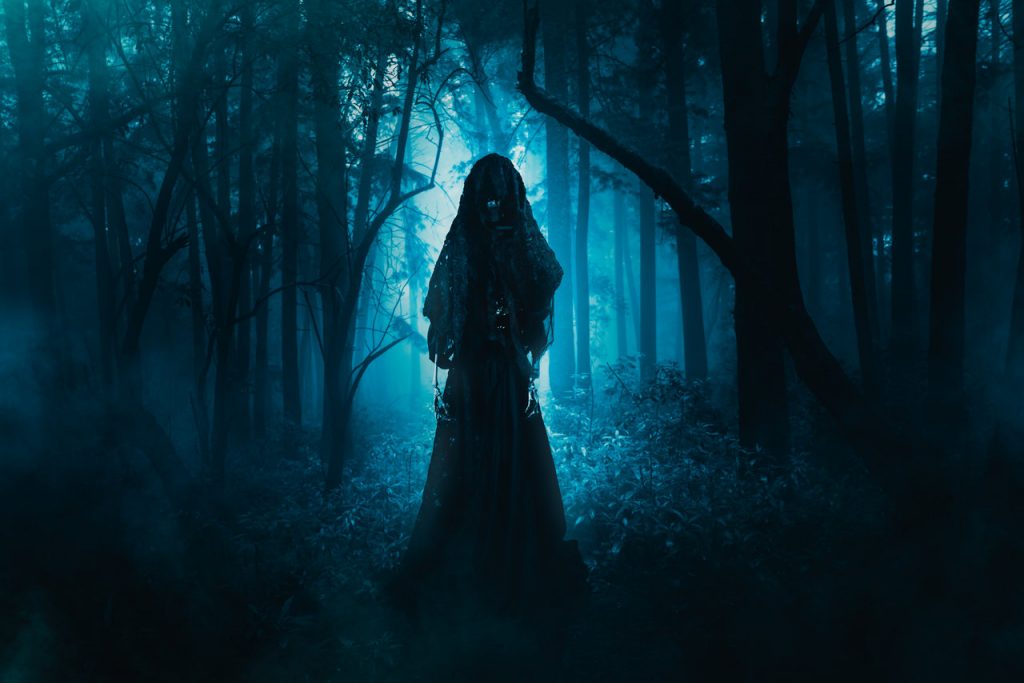
“It waits in the shadows, circling in silence,” his sister whispers.

They are sitting on the floor of his room, in the dark. Chandru knows she is lying to him. She must be.

“It waits patiently for years once it has found suitable prey, keeping its one bloody eye affixed on the target’s back at all times.  Following you, hoping – praying – for that day.” His sister’s voice goes even lower. He knows she is trying to be dramatic. He still gulps, struggling to find his voice.

“For what day?” he mumbles, because though he suspects she’s trying to scare him, he is still morbidly curious.

“The day you die,” she replies a matter-of-factly.

His stomach drops.

“It waits for the moment that last breath leaves your body so it can feast on your soul.”

This sounds ridiculous.

She shrugs. “I’m just telling you what I heard. You know Rita’s uncle? He told her that he saw the creature when their grandfather died. And then he died, a few months later.”

“How come Rita didn’t see it then?”

“Because,” his sister gets up from the floor, “you only see a chatthan if you’ve been chosen as its prey.”

Convenient. He frowns as his sister retreats to her own room. “Good night, squirt.” she mumbles, pulling the squeaky door of his room closed.

He flinches as the sounds cuts through the silence of room. He climbs onto his bed and under the covers, eyes darting across the room and lingering on the shadows.

He knows she is lying to him. But he can’t help the way his heart races and how he searches in the dark for a white figure with one eye, relieved when he does not see anything.

# # #

Chandru’s stomach drops when he sees the large, red ‘F’ on the top of his test. This is far worse than his sister’s ghost.

“Oh crap,” Ananya whispers when she spots his mark over his shoulder. He throws a glance at her paper – a D – not much better but at least a passing grade.

“It was good knowing you,” he sighs, cramming the pages into his backpack. “By tomorrow, my mother will have snuffed out my existence. You can have my prized soccer trophy.”

“Who wants that garbage? I want your skateboard.” She’s smiling, pushing her glasses into place. But the smile slides away as she looks down at her own test. “I mean, I’m unlikely to survive the night too, you know.”

“Probably true.” He aims his forced grin at her, bumping their shoulders together as they walk out of the classroom. His palms are sweaty and the lead in his stomach becomes heavier with each step he takes. He knows his mother will find out eventually. Might as well be brave and face his fears and all that.

It goes abysmally.

“I should have never bought you that skateboard!” and “It’s all because you waste so much time in the park instead of studying,” with some “Your siblings were never like this,” and with a dose of “Those kids you hang out with are such a bad influence.”

She does not scream. She just moans for the entire night. It is much worse this way, in his opinion (which obviously, no one asks for).

His gaze is resolutely fixed on the ground. He cannot meet her eyes. No matter how many times he hears it, her anger and her disappointment terrify him.

# # #
 

Chandru hides in his parents’ walk-in closet, his fear today more physical. Footsteps approach. His brother makes no effort to hide his rage, stomping into the room in search of him.

Why is it that when his brother is doing disappointing things his mother is never around?

“I told you not to touch my stuff, Chandru!” His brothers words are partly muffled by the their his father’s long coats which share the closet with Chandru.

He rubs his clammy palms on his shorts, trying to control his breathing as best as possible. He twitches his nose at the musty smell of the fur on the jacket he’s pressed against. He prays his urge to sneeze will subside.

And all this for a lousy cricket ball.

He waits for the inevitable moment his brother throws open the closet door.

But nothing happens. 

Miraculously, he hears the sounds of his brother receding. An errant yell sounds – an inquiry made to the other occupants of the house about the youngest troublemaker.

Chandru swallows. It’s time he made his escape.

He extracts himself from between the coats, cracks the door open to peek outside. The coast is clear.

He swings the door wide open and bolts out. Only to run straight into his brother – his brother, who is the picture of anger incarnate.

Chandru skids on the hardwood floor, his feet screeching from the friction. He twists out of his brother’s flailing reach and takes off towards the living room at full speed.

“Come back, you little brat!” His brother yells from behind him. But Chandru already knows he’s won – what he lacks in strength, he makes up with speed. His brother does not stand a chance.

As he bursts through the wide-open front door, he cannot help but embrace, with a loud whoop, the mixture of fear and euphoria coursing through him.

# # #

Fear is a strange thing, Chandru thinks as he stares down the dark path ahead of him.

Is it his mother he fears most, for staying out later than his curfew? Or is it that he fear his sister’s ghost may haunt the broken-down house in front of him? No, it’s definitely his brother’s rage if her can’t find his prized cricket ball.  

Chandru presses between the wooden boards as silently as he can, coming to a full stop at the sight of the overgrown backyard.

How in the world is he supposed to find the stupid ball in this jungle? The only light comes from the distant street lamp. The stars glimmer in the distance, the absence of the moon starkly noticeable.

Cursing at himself and his brother (because what is the point of his brother even having a ball if no one can play with it), Chandru makes his way in, flinching at the crunch of grass underneath his sneakers. He sifts between the tall green stalks, keeping one eye on the back door of the old house.

He is so sure the ball landed in this corner of the yard. He chances another look at the door. He freezes.

The door is open. A second ago it was closed.

He sinks to ground – the grass hides him well enough. He waits, the blood pounding in his ears. The doorway remains empty.

Inch-by-inch he rises.

Still no one. Interesting.

Maybe – maybe the door was always open and he didn’t notice? He wonders if someone found the ball. Maybe he should knock.

Taking a deep breath, he straightens up and moves towards the entrance.

Every step he takes feels wrong. A rising horror fills his chest as he approaches.

He almost turns back. Only, he has made it this far. How can he return empty-handed to his brother?

Damn his sister and her silly stories. As for his mother, he’ll figure out an excuse for breaking curfew on the way home. If he lives that long.

He steels himself by taking a deep breath, increasing the length of his stride for the last two steps. Finally, at the door, he raises a shaking fist to knock.

No answer.

Weird.

There is a faint light in the window, he now notices. Someone must be home.

He knocks harder.

Still nothing.

Maybe he’ll just peek in.

To his utmost horror, the door opens with screeching hinges. He stands at the doorway, frozen in terror.

No one approaches.

Puzzled, he crosses the threshold. He knows the inhabitants are an older couple and maybe they’re hard of hearing – some of his friends helped to mow their lawn, last summer.

Somewhere in the corner of his mind, it occurs to him that the backyard looks like it’s been untouched for years.

A few more steps and he can make out a kitchen – mostly clean, a few pots in the sink. His nose crinkles as he catches a whiff of something that’s most definitely going bad. Probably the pot on the stove.

He should to leave. He’ll just come back tomorrow morning and knock on the front door.

But his feet take him further inside, his accursed curiosity getting the better of him, as it always has. Something feels strange. He wants to know what. He ignores his clammy skin and rising heart rate and keeps going.

There’s light coming from the next room. He’ll just peek in, then make a mad dash to the door. Bracing himself against the wall, he slowly moves his gaze into the room.

His mouth falls open.

In the dim candle light, he can see a small study. A figure sits on a couch. Unmoving. And behind it, a white face, floating. He catches sight of a single eye trained on the still body.

Chandru’s eyes meet a single blood red iris.

# # #
 

Fear is a weird thing, Chandru thinks, over the din of his mother’s ranting and his brother’s yelling. He cannot understand how either of them could have inspired that feeling in him before.

He made it home that night, though he does not remember the journey back. He did not find the ball.

His mother’s ire is now focused on his brother, their raised voices still not really reaching his ears. His sister frowns at him, silent but obviously concerned. Her grip on his hands is  probably painful but he feels numb. The irony of her concern almost makes him laugh.

His sister’s tales made him nervous as a child. But it was an abstract feeling that he pushed to the recesses of his mind, not something that took root and festered into palpable horror.

Until this day, fear – real fear – was a mere idea, a concept. But this terror, he knows, he will carry inside him for the rest of his life.

He glances back and sees his faceless, invisible companion, floating next to him. Ever patient and ever hungry.

Whatever is left of his life.

Renuka Raja is an aspiring writer that was born in Chennai, India. She moved to Canada in her youth, growing up in the GTA. She has a passion for music and visual and musical arts. She graduated from the University of Waterloo. Renuka spends her spare time volunteering around the community and playing with her cat, Louise.


See Brian Henry’s schedule hereincluding writing workshops, weekly writing classes, and weekend retreats in Algonquin Park, Alliston, Bolton, Barrie, Brampton, Burlington, Caledon, Collingwood, Georgetown, Georgina, Guelph, Hamilton, Jackson’s Point, Kitchener-Waterloo, London, Midland, Mississauga, New Tecumseth, Oakville, Ottawa, Peterborough, St. Catharines, Sudbury, Toronto, Windsor, Woodstock, Halton, Muskoka, Peel, Simcoe, York Region, the GTA, Ontario and beyond.