 |
Heartbreaker by Claudie Dey,
represented by CookeMcDermid |
Note: Don't ever miss a post on Quick Brown Fox. Add your email to the Follow Brian by Email box
to the right under my bio, and get each post delivered to your Inbox.
If you’re not yet on my newsletter
list, send me an email, including your locale to brianhenry@sympatico.ca ~Brian
CookeMcDermid was created in 2017 by the amalgamation of two preeminent Canadian
agencies, The Cooke Agency and The McDermid Agency. CookeMcDermid is a full-service literary agency representing authors of literary,
commercial and speculative fiction; a broad range of narrative nonfiction;
health, wellness and lifestyle resources; and middle-grade and young adult
books.
CookeMcDermid represents more than 300 writers, among them Man Booker nominees, Giller and Governor
General’s award–winning authors, prize-winning journalists, New York
Times bestsellers and some of the literary world’s most notable names.
Paige
Sisley is an associate agent at
CookeMcDermid. She is currently seeking well-written commercial fiction that
both entertains and has something to say, and she is always on the lookout for nonfiction
in the memoir, lifestyle, and health & wellness areas. In addition to
developing her own list, Paige oversees CookeMcDermid clients’ film, TV and
merchandising rights and handles marketing and publicity for the agency.
Previously, she was a rights assistant for Cooke International, an agency
that specializes in foreign rights management for a diverse group of publishing
clients.
Paige has her Master of Arts from
Ryerson University's Literatures of Modernity program and a Bachelor’s degree
in English from the University of King's College and Dalhousie
University. A born and bred Torontonian, she loves a good adventure and
has also lived in LA, New Zealand and Halifax. She's on Twitter at @paigesisley.
Paige agreed to be interviewed by Quick Brown Fox….
Quick Brown Fox: Do you have suggestions about getting manuscripts in shape before
writers start the submission process?
 |
| Paige Sisley |
Paige: Fiction writers should have a complete, polished manuscript ready to
submit before they start querying, and they should make sure that it starts off
strong.
CookeMcDermid’s submission guidelines ask that the author only send the
first four pages of their manuscript alongside their query letter. People
frequently call to ask if it needs to be the first four pages
or if they can send more. The right questions to be asking are “why am I not
confident in the first few pages of my manuscript, and what can I do to change
that?”
Start with action. Don’t lead with your character waking up or gazing at
the sky; these activities are universal, but they’re not particularly
interesting. Establish the voice, key characters and ground rules of the world
early on so that the reader’s questions don’t pull them out of the story.
Nonfiction books are queried and sold on proposal, but much of the same
advice applies. The full proposal should also be polished and ready to send
upon request, and it must hook the reader immediately.
QBF: What sort of books are you especially looking for?
Paige: Right now I'm hungry for commercial and upmarket women's fiction.
Psychological suspense and mysteries are very welcome! I love a twisty
plot so long as the story is satisfying, and I'm a sucker for sharp dialogue.
Bonus points if the novel is also asking difficult questions about society. I
like it when the ways I think about institutions and relationships are
challenged through new points of view.
Elements
that particularly excite me include but are not limited to: good food writing,
cults and other social phenomena, the southern US, exotic locales and travel
narratives, mythology, POVs tinged with synaesthesia, fast-paced dialogue and
unexpected romances.
I can
point to these published novels as examples of the kind I'd love to rep: Big
Little Lies by Liane Moriarty, The Seven Husbands of Evelyn
Hugo by Taylor Jenkins Reid, The Interestings by Meg
Wolitzer, I Take You by Eliza Kennedy, Into the Water by
Paula Hawkins, Sweetbitter by Stephanie Danler and, on the
more literary end, Fates and Furies by Lauren
Groff.
I also represent nonfiction in the lifestyle, health and wellness and
cookery categories, where I’m always looking for a new perspective and/or
unique skill set that can help improve people’s lives – whether that’s through
better food or a new mindset. For example, I’m working with a client right now
who is changing the way women in particular think about aging by celebrating
the power and beauty that come with time and experience. Her message is so
positive and vital – I can’t wait for the book to be out in the world.
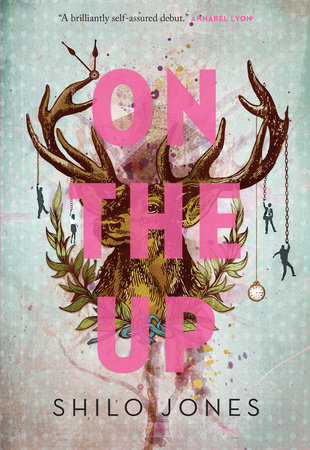 |
On the Up by Shilo Jones
represented by CookeMcDermid |
QBF: Can you tell us about your process when you’re considering a project?
Paige: The first thing a manuscript has to do is grab me. I'm not going to know
the full scope of the story until near the end, but I have to be drawn in by
the first fifty pages or else I won't make it to that point; there are too many
manuscripts in my queue, and most readers feel the same with so much else
competing for their time and attention.
QBF: What grabs your attention when you’re reading a query letter?
Paige: A well-written summary is crucial. This should read like jacket copy,
not a blow-by-blow of the plot. Agents are just booklovers shopping their
inboxes instead of the local bookstore. We’re constantly searching for that
tingly feeling – you know, when a book just speaks to you? The query letter’s
goal is to get agents excited to request and read the full manuscript. If I’m
excited, I’m reading more.
Also, I don’t think I pay as much attention
to authors’ publishing histories as some agents do, but if I’m interested in a
submission then I am going to google that author and scroll through all of
their social media platforms. I’m not necessarily looking at the number of
followers they have or their level of engagement with the writing community,
but I want to know how they carry and present themselves.
QBF: What makes you decide to represent a manuscript?
Paige: Gut feeling is not to be underestimated in this subjective business
we’re in! If the book sparks something in me, that can’t and shouldn’t be
ignored.
Next, though, I do have to think about the market.
Agents sometimes fall in love with books that they don’t offer to rep because
they think it will be a hard sell for whatever reason – the genre has an
oversaturated market, the author’s platform isn’t big enough, etc. This is when
I’ll bring my colleagues in. I’ll gauge their reaction to my pitch, and then
talk through questions like: Are people buying this kind of book? Who would I
submit it to? What are some appropriate comps {comparable titles}, and what do those tell me about the market?
In the end, I need to get a green light from at least one other agent at
CookeMcDermid in order to be able to make an offer of representation. This
team-based approach ensures that the author will feel well-supported by the
agency as a whole. We know that a publisher’s in-house enthusiasm can impact
how successfully a book launches, so we start building buzz within the agency
and hopefully it grows from there.
QBF: Besides a great book, what else do you look for in a client?
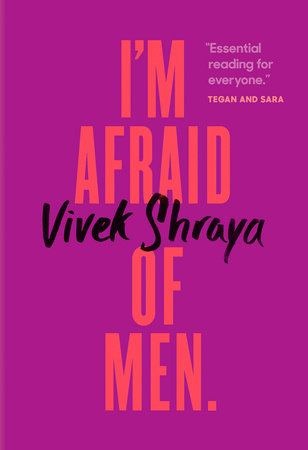 |
I'm Afraid of Men by Vivek Shraya
represented by CookeMcDermid |
Paige: It’s important to get along with your clients. We have to trust and
respect one another in order for the relationship to work. I like to meet or at
least have a call with potential clients so we can get a better sense of one
another before we sign anything.
If the client writes nonfiction books, then their platform is also
important. When you claim to be an expert of some sort, you need to be able to
demonstrate authority on that subject. That doesn’t necessarily mean you need
to have a lot of Twitter followers, but being able to point to accreditations,
publications, achievements and relationships with other key figures in the
field is essential for lifestyle and prescriptive nonfiction authors.
QBF: What writing advice do you give most to your clients?
Paige: For fiction it would have to be “show, don’t tell.” It’s a cliché for a
reason! And it’s still some of the hardest advice to follow.
Writers: every time you state something, think about whether there’s a
way to demonstrate it through action instead. This will feel so much more
organic and immersive for the reader. It will also eliminate distance between
you and your own manuscript, forcing you to answer questions about your
characters and world that you may not have considered otherwise.
For nonfiction – at least in the categories I rep – it would be to
understand what you’re promising readers, and be clear about how you will help
them get there.
QBF: Can you tell us something about how you pitch to
publishers.
Paige: With passion!
I’ve taken to drafting one-sheets for my clients’ books before I pitch
them to editors. These are used internally at publishing houses and agencies to
communicate important information about a book at a glance for marketing,
publicity and sales purposes. They include the cover, title, author, format,
print run, etc., but also, importantly, key selling points.
How are publishers going to be talking about this book to booksellers?
How are booksellers going to be talking about this book to customers? I try to
anticipate that and nail down some of the key points in advance, to fuel my
pitches and give editors a clear idea of how the book could be talked about in
the “real world.” I find that by using the publisher’s own marketing tools at
this early stage, I can better understand what they need in order to be able to
build excitement and make an offer.
Each time we go out with a project, it’s to a curated list of editors we
think would be a good fit based on past conversations and their recent
“shopping” history. We’re always talking to editors and keeping track of who is
looking for what kind of books – and sharing that information with the rest of
the agency – so we can play cupid when the time comes.
If I can’t see the editor I’m submitting to in person, I’ll often call
them first so they hear directly from me why I’m excited to share this
particular work with them. Then I’ll follow up with my submission letter and
the materials by email.
 |
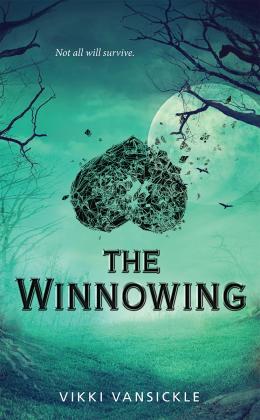
The Winnowing by Vikki Vansickle
represented by CookeMcDermid |
QBF: What would you like writers to know about the publishing industry?
Paige: The decisions agents make are, at the end of the day, informed by our
knowledge of how the industry works. Publishing is effectively one long sales
chain that looks like this:
The author has to “sell”
the book to the agent via their query and materials. (To be clear: no money
changes hands at this point. The agency gets paid strictly on commission. In
other words, we don’t make money unless the author makes money.)
The agent has to “sell”
the work to their coworkers to build enthusiasm and gain support (or at least
we do at CookeMcDermid).
After signing an author
and working with them to revise their work, the agent then tries to sell it to
editors.
If an editor is
interested, they in turn have to “sell” the work to their coworkers.
Sales, publicity and marketing teams are often asked to weigh in at this
point.
After buying the book,
the publisher’s sales department has to sell it into bookstores while the
marketing and publicity teams have to “sell” it to the media.
Once the book has
published, book retailers have to sell it to book buyers.
Finally, and ideally,
readers of the book will feel compelled to “sell” it to other book buyers
through word of mouth.
So that’s what’s going through our minds while assessing a
manuscript. We know how many yeses it takes for a book to be successful, and we
need to be realistic about how far we believe a manuscript can go, no matter
how much we may personally love it.
QBF: What would you like to say to aspiring authors?
Paige: Decide what you want to get out of publishing your book, do your
research, and figure out the best plan to get what you want. Don’t take
rejection personally. Be open to constructive criticism. Taste is subjective,
but publishing is a business.
We’re all just trying to get more people to read more books, and that
starts with you. Please know that agents, publishers and booksellers are so
grateful for the work you do. We know how hard it is, and we are very much
aware that we wouldn’t have jobs that we love as much as we do without your
blood, sweat and tears. And heart! So much heart. So I would also like to say:
thank you.
In the subject line, you must include “Author Query,” and you're welcome to
include the first 4 pages of your manuscript pasted into the query. No
attachments. Please do not send any further material unless invited. Full
submission guidelines here.
Read more about CookeMcDermid here.
 |
| Literary agent Stephanie Sinclair |
If you’re interested in getting published, soon or
somewhere down the road, don’t miss the upcoming How to Get Published workshop Saturday, Nov 17, in Mississauga with
literary agent Stephanie Sinclair (see here).
For updated listing of How to Get
Published workshops see here (and scroll down).
For people interested in Writing for Children & for Young Adults, Brian Henry will lead a mini-conference with Yasemin Uçar, senior editor at Kids Can Press, children’s author Kira
Vermond, and YA author Tanaz Bhathena, Saturday, Sept 22, in Oakville
(see here).
Brian will also lead a Writing Kid Lit weekly course on Friday afternoons, Oct 5 – Nov 30
in Toronto (see here) and
a Writing for Children & for Young
Adults workshop Saturday, October 13,
in Sudbury (see here).
For updated listings of Writing for
Children & for Young adult workshops and for weekly Kid lit classes,
see here (and scroll down).
Also coming soon: Writing and Revising, Saturday, Sept 29, in
St. Catharines (see here), How to Build Your Story, with author Hannah Mary McKinnon, Saturday, Oct 20, in
Kitchener (see here),
and How to Write
a Bestseller with New York Times #1 bestselling author Kelley Armstrong (see here).
Two weekend writing retreats :
November at the Briars Writing
Retreat, Friday, Nov 2 – Sunday, Nov 4: two nights and three precious days of writing bliss. Details here.
Algonquin Writing Retreat, Friday, May 31 – Monday, June 3, 2019: four
days in the luxurious isolation of Arowhon Pines Resort to get down to some
real creative growth. Details here.
In both these retreats, you’ll
recharge your creative batteries and get some great writing tips – all in the
supportive company of your fellow writers.
 |
| Fox kits in Algonquin |
Starting soon, Brian is leading a full roster of
courses, Introductory to Intensive (Details of all 6 courses here):
Welcome to Creative Writing, Thursday, afternoons, Sept 27 - Nov 9, in Oakville.
See here.
Writing Personal Stories, Thursday evenings, Oct 4 – Nov 29, in Burlington.
See here.
Writing Kid Lit, Friday afternoons, Oct 5 – Dec 6, in Toronto.
See here.
And Intensive
Creative Writing, offered
in three locales:
Tuesday afternoons, Sept 25 – Dec 4 (first
readings emailed Sept 18), in Burlington. See here.
Wednesday evenings Sept 26 – Dec 5 (first
readings emailed Sept 19), in Georgetown. See here.
Friday mornings Sept 28 – Dec 6 (first readings
emailed Sept 21), in Toronto. See here.
See details of all six courses here.
Read reviews of Brian’s courses,
retreats, and workshops here.
See Brian’s complete current schedule here, including Saturday writing workshops, weekly writing classes, and weekend retreats in
Algonquin Park, Alliston, Bolton, Barrie, Brampton, Burlington, Caledon,
Collingwood, Georgetown, Georgina, Guelph, Hamilton, Jackson’s Point,
Kitchener-Waterloo, London, Midland, Mississauga, New Tecumseth, Oakville,
Ottawa, Peterborough, St. Catharines, Sudbury, Toronto, Windsor, Woodstock,
Halton, Muskoka, Peel, Simcoe, York Region, the GTA, Ontario and beyond.
Navigation tips: Always check out the Labels underneath a post; they’ll lead you to various distinct collections of
postings. If you're searching for more interviews with literary agents or a literary agent who represents a
particular type of book, check out this post.