Saturday, January 11, 2020

"On cultural appropriation, some answers for worried writers" by Brian Henry

The identities of most of the people in this photo are unknown, but the little girl on the far left was Hanka Lamet.
She perished in the gas chambers at Majdanek 

I'm reposting this piece, because there's been some interest in my take on the topic of late.  ~Brian

I meet many writers these days who dread that they might be accused of “cultural appropriation.” Are they allowed to write about Indigenous characters if they’re not Indigenous; black characters if they’re not black?

As I’ve often said, writers are allowed to do whatever they want; it’s a perk of the job. Indeed, writers are obliged to write what they want, even if it pisses people off; it’s a responsibility of the job.

I do get the indignation over cultural appropriation. Currently, I’m seeing endless memes comparing the Trump administration’s separation of children at the American-Mexican border to the Holocaust. This is an appalling comparison. The Nazis killed 1.5 million Jewish children. American immigration control has murdered none. As Amy Rosenthal points out on Facebook:

Children being separated from their parents at the US border is horrible and disgusting and anyone reasonable would oppose this practice 100%.
So, too, is comparing this solitary act (and everything wrong or immoral) to the Holocaust. Here is a short but by no means exhaustive list of terrible things Jewish children endured in concentration and extermination camps during WWII:
Starvation
Summary execution
Rape
Disease (typhus, dysentery, etc)
Medical experimentation
Severe beatings
Slave labor
Burying dead bodies
Digging *their own grave* before being shot and thrown in
Stop appropriating one of the worst things that ever happened to the Jews to suit you. You people will try and take anything from us, including our tragedies.

I agree with Amy on almost everything here, particularly her disgust at the Holocaust being used to score political points – I agree with everything, except the term “appropriation.”

Novelist Lionel Shriver
For Jews, the Holocaust was a unique and overwhelming catastrophe. But Jews don’t own this catastrophe. The Holocaust was an historical event, not property. So while people regularly trivialize the Holocaust and they make ridiculous comparisons to it so often that it’s become a law of online discussions, people cannot actually appropriate the Holocaust.

Similarly, no one owns any bit of history, whether it’s the residential school system in Canada or the history of slavery, segregation and prejudice in the U.S.

By all means, Indigenous people and black people and all sorts of people should write from their own perspectives. However, this doesn’t mean anyone else should stop writing or should try not to stray outside their own narrow cultures. As Lionel Shriver points out (here), if we follow that logic, we’ll all end up writing autobiography.

Just as it’s nonsense to talk about some people owning a bit of history, it’s just as nonsensical to talk of people owning any aspect of a culture. If Koreans own Korean food, who should I apply to for permission to try my hand at making kimchi? Can I just ask a friend or is there a ministry of the North Korean government which handles this sort of thing, and if I make kimchi without permission should they throw me into a labour camp?

The simple fact is that humans imitate each other. The impulse is older than humanity (animals do it, too), and it’s the reason we’re not all standing around in caves naked and grunting at each other. Can you imagine how much appropriation of each other’s utterances it took to get the whole language thing going?

Indeed, without appropriation, we’d each be in a solitary cave, all alone, because this imitation thing is at one with our social nature. It’s not merely that as social animals we imitate each other, but also it’s mutual imitation that binds us together.

Alan Kurdi, child of Syrian refugees, drowned 4 Sept 2015 
Imitation is also adoption; we feel our kinship to one another through our shared cultures. We gather in cafés to shout at the TV because that’s “our” team playing in the World Cup – and it’s “my” team even if I’m cheering for Iceland that day. And when we see a photo of a Syrian toddler washed up dead on the shore of the Mediterranean, we weep, because that child also is ours.

So to be clear: making cultural appropriation a crime is a way of criminalizing our shared humanity.

Yet sometimes when people complain of cultural appropriation they have a legitimate complaint; they’ve just misnamed it. So, for example, it’s wrong to make spurious comparison to the Holocaust because this falsifies history, dishonors the dead, and may cause needless grief to survivors and their descendants.

Speaking more to the point for writers, it’s wrong to write characters who perpetuate negative stereotypes or to write a novel that gets someone’s culture wrong. Not because of “appropriation” but because it’s disrespectful or may even be racist, and it makes for a bad book – or at least a book that’s not as good as it should be.

When writers are dipping into any area they’re not intimately familiar with, they’re always well advised to have a beta reader who is. You’re writing a YA novel? Having a teen reader look over your manuscript is a good idea. You have an Indigenous character? Having an Indigenous beta reader would be a good idea. Even better if your reader comes from the same First Nation or perhaps the same milieu. (If your Indigenous character grew up in Toronto, that urban environment might be more relevant than the specific First Nation your character belongs to.)

Novelist Angie Abdou
That said, writers do need to keep in mind that it’s their novel. “Sensitivity readers” as they’re called can’t become censors. I think the story of Angie Abdou (best known as the author of The Bone Cage) serves as an excellent example of how not to do things.

For her most recent novel, In Case I Go, Abdou hired an Indigenous consultant and rewrote her novel according to his advice, changing it from a ghost story to a story about her character’s relationship with a flesh and blood Indigenous character. 

Then she consulted with the cultural liaison for the First Nation people she was writing about, and following the liaison’s advice, rewrote her novel again, bringing in residential schools. Then Abdou asked the elder council for their okay for her representation of their Nation. Finally, after all this, once her book came out, she was still attacked. 

Jonathan Kay tells the whole sorry tale here.

What lessons might a writer learn from this story? First, perhaps it’s better to use a fictional name for the specific First Nation you’re writing about – just in case. Second, there’s a danger in being overly sensitive. A writer’s job is not to act as some group’s P.R. agent. It’s not your job to write the novel someone else wants to see written. You’ve got to remember it’s your book.

More generally, don’t pay attention to people with an axe to grind. The cry of “cultural appropriation” is a political attack, rooted in a peculiar ideology. Cultural appropriation is a made-up crime and simply has nothing to do with the art of writing.

Brian Henry is an editor, writer, creative writing instructor and the publisher of the Quick Brown Fox blog.

See Brian’s schedule hereincluding writing workshops, weekly writing classes, and weekend retreats in Algonquin Park, Bolton, Barrie, Brampton, Burlington, Caledon, Collingwood, Cambridge, Georgetown, Guelph, Hamilton, Kingston, Kitchener-Waterloo, London, Midland, Mississauga, Oakville, Ottawa, Peterborough, St. Catharines, Saint John, NB, Sudbury, Toronto, Windsor, Woodstock, Halton, Muskoka, Peel, Simcoe, York Region, the GTA, Ontario and beyond.

Friday, January 10, 2020

“The Ride” by Nicoletta Korstanje


The air was heavy, suffocating, the humidity enveloping her body with a thick dampness that took her breath away. She considered retreating into the comfort of her air-conditioned home. But stomping and banging noises that came from the second floor stopped her. The heat was a better option.
     In haste, she’d run out of the house without her purse, which meant without her car keys. Her only thought had been to get as far away from the house as possible and walking wouldnt take her quickly enough. In the yard, her daughters bike caught her eye. At first she was annoyed - she'd told her daughter time and time again not to leave it out in the driveway like this - but annoyance quickly subsided as she determined the bike was better than nothing.
     She hopped on the banana seat and pedalled down the driveway. Sweat soaked through her tank top, but something about being on the bike was invigorating. It had been years since her last bike ride, perhaps even since she was her daughters age. It surprised her how easily riding the bike came back, a feeling of freedom began to outshine the discomfort of the heat, and she threw her arms out into the air. Tossing her head back, embracing the breeze that it created.
     The stench of the argument that pushed her out the door shed her body allowing a release from the stress that awaited her back in the house. The bills she didnt know how to pay didnt matter, the angry stares from her husband couldnt reach her, and her children tattling on each other didnt exist. This moment was just for her.
     Hot, humid summer nights like this had always been a secret delight. She’d loved sitting on a patio with a cold drink, the scalding sun long ago set but the heat of the day still hanging in the air. It had been a hot summer just like this one when she had first met her husband. They were both working long hours and most of their dates began after the sun went down. For years after she’d associated every hot summer with falling in love - late night drinks, sneaking onto the beach after dark, swimming under the light of the moon. Their first summer had felt like magic.


     Now that seemed as far away as her last bike ride. Somehow time had worn down the magic between them, and a routine of resentment took precedence. Her newest game had been to pinpoint where things had gone wrong between them. Their ten years together played over and over like a recording stuck in a loop, but the answer never revealed itself 
   Riding along the pavement prompted her to play the tape back further then she usually did, thinking as far back as the little girl she once was riding around her neighbourhood all day. She was adventurous and did things specifically because she had been told not to. Her father calling her his little firecracker. The spark within her faded so slowly, from a passionate young girl to a run-of-the-mill wife and mother, it was as hard to spot the exact moment she lost her passion for life as it was the moment her marriage ceased to fulfil her. 
     Even her marital problems were mundane. There had been no affair, no moment of discovery that shattered the illusion of a happy life. Routines of everyday life had worn down their desires and left them with soccer practices, play dates and date nights that felt more like a weekly check-in about “to-do” lists than a chance for romance.
     If she had thought to grab her purse, she would have hopped in her car and never returned. Running away from it all. But she had forgotten her purse and pedalling along her cul de sac was a reminder of that first summer together. A reminder of the feelings they had once had for each other. It gave her a sense of hope that perhaps they could find their way back to those feelings.
     The pink streamers hanging from the handlebars slapped against her hands as she slammed her foot down on the breaks. Deciding there was still something worth fighting for and deciding that she was still that little girl ready to put up a fight, she turned the bike around and headed towards home.

Nicoletta Korstanje is a writer from Grimsby, Ontario. After obtaining a "practical" career in education she returned to her passion for writing and not taking herself too seriously. She is currently working on a collection of short stories focused on the experiences that shape our relationships with those around us. 


See Brian Henry's schedule hereincluding writing workshops, weekly writing classes, and weekend retreats in, Bolton, Barrie, Brampton, Burlington, Caledon, Collingwood, Georgetown, Georgina, Guelph, Hamilton, Jackson’s Point, Kingston, Kitchener-Waterloo, London, Midland, Mississauga, Oakville, Ottawa, Peterborough, St. Catharines, Southampton, Sudbury, Toronto, Windsor, Woodstock, Halton, Muskoka, Peel, Simcoe, York Region, the GTA, Ontario and beyond.

Wednesday, January 8, 2020

Histria Books has acquired Addison & Highsmith, seeks adult fiction, books for children and young adults, and books on various academic topics

Lafayette – Courtier to Crown Fugitive
by S.P. Grogan, published by Histria
under their new Addison & Highsmith imprint

Histria Books has acquired Addison & Highsmith Publishers in order to expand into fiction. Originally established in 1997 as an independent, academic publishing house, Histria Books has offices in Las Vegas and Palm Beach.
Histria Books imprints currently include:
Vita Histria, an imprint dedicated to academic books on a wide-range of subjects
Gaudium, an imprint dedicated to books on contemporary lifestyle, culture, sports, and politics, as well as biography and autobiography
Center for Romanian Studies, books on the history and culture of Romania
With the acquisition of Addison & Highsmith, Histria Books adds works of adult fiction to its catalog. The titles acquired by Histria Books through this acquisition include S.P. Grogan’s bestseller, Vegas Die: A Quest Mystery, a Las Vegas murder mystery story.
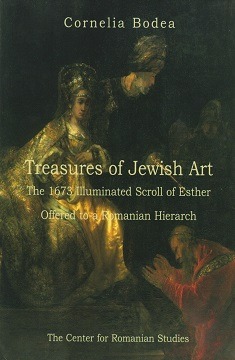
Treasures of Jewish Art by Cornelia Bodea
from Histria's Center for Romanian Studies
Addison & Highsmith will become an imprint of Histria Books, dedicated to works of adult fiction, including historical fiction, science fiction, detective novels, and other categories of fiction. 
In addition, Histria books also has a new imprint dedicated to books for children and young adults – Histria Kids. 
They need books for these new imprints!
Titles published by Histria Books are available worldwide through Ingram Lightning Source Wholesale Distribution.
Query Histria at: info@histriabooks.com
Your query should include a brief biography, a description of the proposed book, the book’s intended audience, and 2-3 sample chapters. If the book is to be illustrated, please include some sample illustrations as well.
Submission guidelines here.

If you’re interested in getting published, now or sometime in the future, don’t miss our upcoming How to Get Published workshop with literary agent Martha Webb of the  CookeMcDermid agency, Saturday, April 25, 2020, in Guelph (see here).

In the meanwhile, starting this month, a full range of weekly courses is on offer:
Burlington: Exploring Creative Writing, Thursday afternoons, Jan 23 – March 19. Details here.
Oakville: Writing Personal Stories, Thursday evenings, Jan 23 – March 19. Details here.
Burlington: Next Step in Creative WritingTuesday afternoons, Jan 21 – March 31. Details here.
Burlington: Intensive Creative Writing, Wednesday evenings , Jan 15 – March 11. Details here.
Toronto: Intensive Creative Writing, Friday mornings, Jan 17 – March 13. Details here.
    See details of all winter courses here.
To reserve a spot, email: brianhenry@sympatico.ca

Also in the new year, check out Writing ConflictFight scenes, Dialogue scenes & Love scenes,  Saturday, Jan 18, in Oakville (see here), Raising the Stakes: How to Increase Your Story's tension, Saturday, Jan 25, in Toronto (see here) and Saturday, Feb 22, in Kitchener (see here), and Writing & Revising, Saturday, Feb 29, in Mississauga (see here).


Plus …
Algonquin Writing Retreat, Friday, June 5 – Monday, June 8, 2020. Four days of luxury and writing in one of most beautiful spots in Ontario. This is the area that inspired the Group of Seven; come and let it inspire you, too. Still lots of room. Details here.


Windsor International Writers Festival, Friday, July 10 – Sunday, July 12. Brian will lead a Round Table critiquing your opening pages on Friday morning, will give a talk about writing query letters, and will meet attendees one-on-one to help them write a query that will get a yes. Details here. More details of the conference here.

Southampton Art School: How to Build Your Story, Saturday, July 25 {details to come} and How to Write Great Characters, Sunday, July 26 {details to come}.

To reserve a spot in any upcoming weekly course, weekend retreat, or Saturday workshop, email Brian at: brianhenry@sympatico.ca
Read reviews of Brian’s courses, retreats, and workshops here.

See Brian Henry’s schedule hereincluding writing workshops, weekly writing classes, and weekend retreats in, Bolton, Barrie, Brampton, Burlington, Caledon, Collingwood, Georgetown, Georgina, Guelph, Hamilton, Jackson’s Point, Kingston, Kitchener-Waterloo, London, Midland, Mississauga, Oakville, Ottawa, Peterborough, St. Catharines, Southampton, Sudbury, Toronto, Windsor, Woodstock, Halton, Muskoka, Peel, Simcoe, York Region, the GTA, Ontario and beyond.

Navigation tips: Besides checking out the buttons across the top of the page under the banner and the buttons in the right-hand column under More Content, always, check out the Labels underneath a post; they’ll lead you to various distinct collections of postings. If you're searching for book publishers, click here; for children’s and YA publishers, click here {and always scroll down}.

Tuesday, January 7, 2020

Next Step in Creative Writing course, Tuesday afternoons, Jan 21 – March 31, in Burlington; 1st readings emailed Jan 14


Next Step in Creative Writing
10 weeks of growth as a writer
Tuesday afternoons, 12:30 – 2:45
New: January 28 – March 31, 2020 
{Changed from starting January 28}
St. Elizabeth's Anglican Church, 5324 Bromley Rd, Burlington, Ontario (Map here.)
Note: Also starting in January – Exploring Creative and Writing Personal Stories. Details here.

The Next Step in Creative Writing is for people who have been writing for a while or who have done a course or two before and are working on their own projects. Over the ten weeks of classes, you’ll be asked to bring in five pieces of your writing for detailed feedback. All your pieces may be from the same work, such as a novel in progress, or they may be stand alone pieces. You bring whatever you want to work on. 
Besides critiquing pieces, the instructor will give short lectures addressing the needs of the group, and in addition to learning how to critique your own work and receiving constructive suggestions about your writing, you’ll discover that the greatest benefits come from seeing how your classmates approach and critique a piece of writing and how they write and re-write. This is a challenging course, but extremely rewarding.
Fee: $184.96 + 13% hst = $209
To reserve your spot, email: brianhenry@sympatico.ca

Instructor Brian Henry has been a book editor and creative writing instructor for more than 25 years. He publishes Quick Brown Fox, Canada's most popular blog for writers, teaches creative writing at Ryerson University and has led workshops everywhere from Boston to Buffalo and from Sarnia to Saint John. But his proudest boast is that he’s has helped many of his students get published. 
Read a review of Brian's various courses and workshops here (and scroll down).

See Brian’s complete current schedule hereincluding writing workshops, weekly writing classes, and weekend retreats in, Bolton, Barrie, Brampton, Burlington, Caledon, Collingwood, Cambridge, Georgetown, Georgina, Guelph, Hamilton, Jackson’s Point, Kingston, Kitchener-Waterloo, London, Midland, Mississauga, Oakville, Ottawa, Peterborough, St. Catharines, Saint John, NB, Sudbury, Toronto, Windsor, Woodstock, Halton, Muskoka, Peel, Simcoe, York Region, the GTA, Ontario and beyond.

Monday, January 6, 2020

Congratulations to Dale, Dave, Sandra, and Johanna!


If you’ve had a story (or a book!) published, if you’ve won or placed in a writing contest, if you’ve gotten yourself an agent, or if you have any other news, send me an email so I can share your success. And be sure to let know if you're looking for a writers' group or beta readers; a notice in Quick Brown Fox, will help you find them. 


Yay, Dale!
Hi, Brian.
Just had an email from Commuter Lit... they are going to publish my Morning Coffee Story!!!! I will let you know when and the link when I have it. Thanks for encouraging us to submit there.
Dale Margery Rutherford
In fact, Commuter Lit has now published two of Dale’s stories: “Morning Coffee” {see here} and “The Gypsy’s Promise” (see here}.
For information on submitting to CommuterLit, see here.

Yay, Dave!
Hi, Brian.
The twenty-minute exercise you had us do in the writing for children and young adults is now a full manuscript. I have it out with Beta readers at the moment but should be looking at revisions in the next couple weeks. I titled it, FOR HEAVEN"S SAKE. I hope to have a forward thank you for your help through the workshop.
Dave Wickenden

Hi, Brian.
Just thought I'd drop you a line to tell you that I just finished self publishing the sixth book in my Spirit Series. It's called Spirit of Family.
Your comments and guidance were such a huge help to me when I first started out so thank you so much again. I am receiving so many people calling me wanting to market my second book Spirit of the Game that my head is still spinning.
Sincerely
Sandra J. Smale
Yay, Sandra!

Yay, Johanna!

Hi, Brian! 
This is just a note to let you know that my short piece “Do I speak English?” was published in The Globe and Mail, First Person section. 
I worked this piece on one of your courses last spring. 
Thank you once again for all your input and encouragement.
All the best! 
Johanna.
P.S You can read my piece here
For information about submitting a First Person essay to the Globe and Mail (and to 21 other places), see here.
Note:  Introductory, Writing Personal Stories, Next Step, and Intensive creative writing courses are starting this month. Check out the details here. ~Brian

See my full schedule hereincluding writing workshops, weekly writing classes, and weekend retreats in, Bolton, Barrie, Brampton, Burlington, Caledon, Collingwood, Georgetown, Georgina, Guelph, Hamilton, Jackson’s Point, Kingston, Kitchener-Waterloo, London, Midland, Mississauga, Oakville, Ottawa, Peterborough, St. Catharines, Southampton, Sudbury, Toronto, Windsor, Woodstock, Halton, Muskoka, Peel, Simcoe, York Region, the GTA, Ontario and beyond.

Sunday, January 5, 2020

Intensive Creative Writing, Wednesday evenings January 11 – March 11, in Burlington


Intensive Creative Writing
9 intense weeks of writing & critiquing
Wednesday evenings, 6:45 – 9:00 p.m.
January 15 – March 11, 2020
St. Elizabeth's Anglican Church, 5324 Bromley Rd,  Burlington, Ontario (Map here.)
See details of all course starting in January here.
Intensive Creative Writing isn't for beginners; it's for people who have been writing for a while or who have done a course or two before and are working on their own projects. Over the nine weeks of classes, you’ll be asked to bring in four pieces of your writing for detailed feedback. All your pieces may be from the same work, such as a novel in progress, or they may be stand alone pieces. You bring whatever you want to work on. 
Besides critiquing pieces, the instructor will give short lectures addressing the needs of the group, and in addition to learning how to critique your own work and receiving constructive suggestions about your writing, you’ll discover that the greatest benefits come from seeing how your classmates approach and critique a piece of writing and how they write and re-write. The class will be a small, tight group for this challenging, but extremely rewarding course.
Fee: $184.96 + 13% hst = $209
To reserve your spot, email: brianhenry@sympatico.ca

Instructor Brian Henry has been a book editor and creative writing instructor for more than 25 years. He publishes Quick Brown Fox, Canada's most popular blog for writers, teaches creative writing at Ryerson University and has led workshops everywhere from Boston to Buffalo and from Sarnia to Saint John. But his proudest boast is that he’s has helped many of his students get published. 
Read reviews of Brian's various courses, retreats, and workshops here (and scroll down).

See Brian’s complete current schedule hereincluding writing workshops, weekly writing classes, and weekend retreats in, Bolton, Barrie, Brampton, Burlington, Caledon, Collingwood, Cambridge, Georgetown, Georgina, Guelph, Hamilton, Jackson’s Point, Kingston, Kitchener-Waterloo, London, Midland, Mississauga, Oakville, Ottawa, Peterborough, St. Catharines, Saint John, NB, Sudbury, Toronto, Windsor, Woodstock, Halton, Muskoka, Peel, Simcoe, York Region, the GTA, Ontario and beyond.

Saturday, January 4, 2020

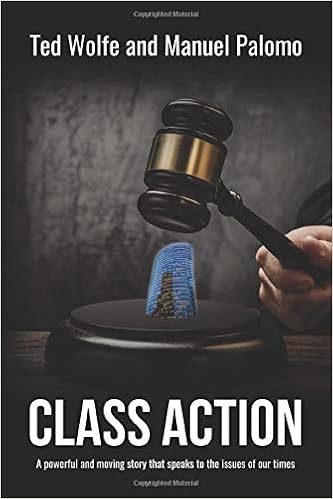
Class Action, by Ted Wolfe and Manuel Palomo, reviewed by Miriam van Schie


Self published, 2019, 395 pages available for $14.36 in paperback or free in Kindle edition from Amazon.ca here.

Ted Wolfe and Manuel Palomo’s debut novel follows the lives of two young men, Mark Scherillo and Sandeep Patel, and their attempt to obtain justice for their deceased fathers, after wrongful and racially based dismissals from the large tech corporation CEMI. As the two begin their investigation into the company, they discover a shockingly similar pattern of dismissals among numerous non-white employees.

Realizing that a class action lawsuit is the only way to approach this David vs. Goliath challenge, Mark and Sandeep assemble a diverse and unique group of legal minds, techie geniuses and company insiders, all determined to expose CEMI’s racist practices. The group’s use of novel and unorthodox methods, measured against CEMI’s malicious actions in attempting to hide their company secrets makes for an interesting and suspenseful read.  

The author includes a significant number of characters in this novel, and not all characters are well developed. As a result, the dialogue is at times overstated and comes across as somewhat forced.

The novel is set in Canada, and one could naively suppose that the convictions held by the upper management of CEMI and the subsequent actions of the company based on these beliefs could never happen in this country. However, I fear that the biases exposed in the book may be sadly reflective of the mentality that remains prevalent in the minds of individuals and in the attitudes of corporations.

Recent exposure of the use of racist language in the sports realm, and inflammatory comments made about “those people” on national television illustrates that divisive attitudes and racial biases lurk dangerously close to the surface in the minds of powerful individuals in current society. Wolfe and Palomo’s ‘Class Action’ will hopefully inspire the reader to be more aware of the subtle and not so subtle barriers that still exist in our society.
***
Miriam van Schie is a retired elementary school teacher and teacher-librarian. She has been a lifelong reader and is always hoping to discover new and innovative authors.


See Brian Henry’s schedule hereincluding writing workshops, weekly writing classes, and weekend retreats in, Bolton, Barrie, Brampton, Burlington, Caledon, Collingwood, Cambridge, Georgetown, Georgina, Guelph, Hamilton, Jackson’s Point, Kingston, Kitchener-Waterloo, London, Midland, Mississauga, Oakville, Ottawa, Peterborough, St. Catharines, Saint John, NB, Sudbury, Toronto, Windsor, Woodstock, Halton, Muskoka, Peel, Simcoe, York Region, the GTA, Ontario and beyond.
Wednesday, January 1, 2020