Saturday, April 17, 2021

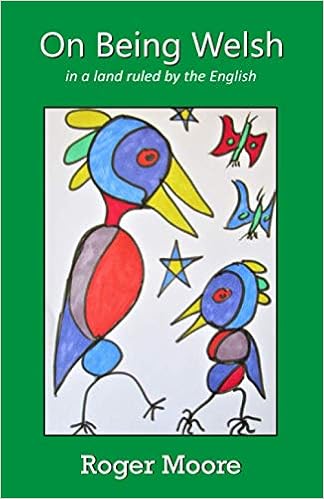
On Being Welsh by Roger Moore


To be Welsh on Sunday

To be Welsh on Sunday in a dry area of Wales
is to wish, for the only time in your life,
that you were English and civilized,
and that you had a car or a bike and could drive or pedal
to your heart's desire, the county next door, wet on Sundays,
where the pubs never shut  and the bar is a paradise
of elbows in your ribs and the dark liquids flow,
not warm, not cold, just right, and family and friends
are there beside you  shoulder to shoulder,
with the old ones sitting  indoors by the fire in winter
or outdoors in summer,  at a picnic table under the trees
or beneath an umbrella that says Seven Up and Pepsi
(though nobody drinks them) and the umbrella is a sunshade
on an evening like this when the sun is still high
and the children tumble on the grass playing
soccer and cricket and it's "Watch your beer, Da!"
as the gymnasts vault over the family dog till it hides
beneath the table and snores and twitches until
"Time,  Gentlemen, please!" and the nightmare is upon us
as the old school bell, ship's bell, rings out its brass warning
and people leave the Travellers' Rest, the Ffynnon Wen,
The Woodville, The Antelope, The Butcher's, The White Rose,
The Con Club, the Plough and Harrow, The Flora, The Pant Mawr,
The Cow and Snuffers – God bless them all, I knew them in my prime. 
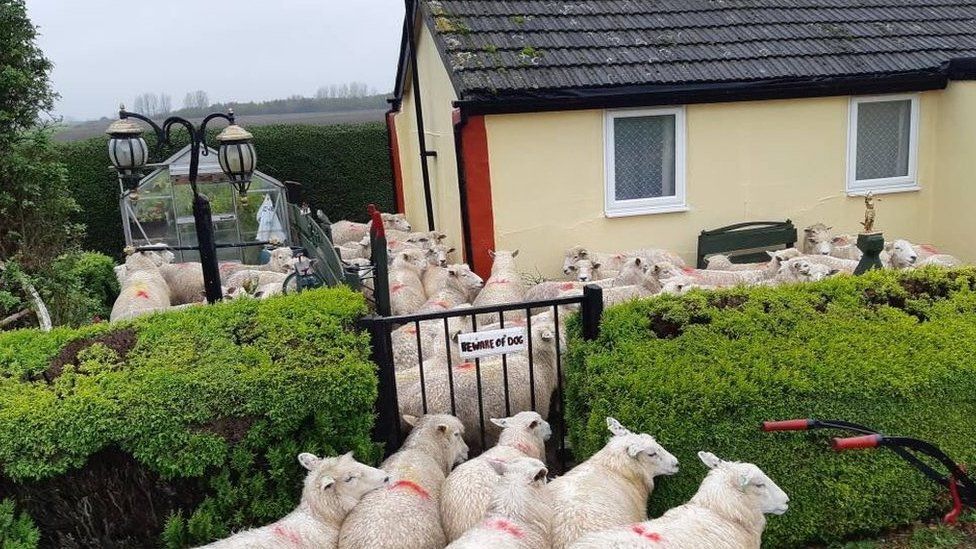

Sheep

Wales is whales (with an aitch) to my daughter
 who has only been there once on holiday,
very young, to see her grandparents,
a grim old man and a wrinkled woman.

They wrapped her in a shawl and hugged her until
she cried herself to sleep suffocating
in a straitjacket of warm Welsh wool.

So how do I explain the sheep?  They are
everywhere, I say, on lawns and in gardens.
I once knew a man whose prize tulips
were eaten by a sheep, a single sheep
who sneaked into the garden on market day
when he left the gate ajar. They get everywhere,
I say, everywhere. Why, I remember riding in
a passenger train and seeing five sheep travelling
on a coal truck leering, like tourists travelling
God knows where and bleating fiercely
as they went by.

In Wales, I say, sheep are magic.
When you travel to London on the train,
just before you leave Wales at Severn Tunnel Junction,
you must lean out of the carriage window and say
"Good morning, Mister Sheep!" And if he looks up,
your every wish will be granted.

And look at that poster on the wall: a hillside
of white on green, and every sheep as still as a stone,
and each white stone a roche moutonnée.


Swansea

To be Welsh in Swansea is to know
each stop on the Mumbles Railway:
Singleton, Blackpill, the Mayals, West Cross,
Oystermouth, the Mumbles Pier.

It's to remember that the single lines turn double
by Green's ice-cream stall, down by the Recreation Ground,
where the trams fall silent, like dinosaurs, and wait,
without grunting, for one to pass the other.

It's to read the family names on the War Memorial on the Prom.
It's to visit Frank Brangwyn in the Patti Pavilion
and the Brangwyn Hall. It's to talk to the old men
playing bowls in Victoria Park.

It's to know that starfish stretch
like a mysterious constellation, at low tide,
when the fishnets glow with gold and silver,
and the banana boats bob in the bay,
waiting to enter harbor, and the young boys dive from
the sewer pipes without worrying about pollution.  

But when the tide turns, the Mumbles Railway has been sold
to a Texan, the brown and yellow busses no longer run
to Pyle Corner, Bishopston, Pennard, Rhossili, sweet names
of tide and time, where I see my father fishing still
for salmon bass, casting his lines at the waves
as they walk wet footprints up the beach
to break down the sand-castle walls I built
to last forever on the Swansea sands.

 

In the cave
(Brandy Cove, Gower)

No: I do not understand these things.
I have had few visions.
No bush has actually burned for me.  

Though I have sat in this cave for many a day
I have heard no thunder, no earthquake,
and no thin, small voice has called my name.

I have only heard the wind and the waves
and the sigh of the seabirds endlessly flying.

Who set the curlew's cry between my lips?
Who dashed the salt taste from my tongue?

I will never forget the wet sand foaming
between my toes nor the cracked rock
crumbling under my hand... yet I never fell,
nor was I trapped by the sea below.

 ***

Roger Moore is an award-winning poet and short-story writer. Born in the same town as Dylan Thomas, he emigrated from Wales to Canada in 1966. An award-winning author, CBC short story finalist (1987 and 2010), WFNB Bailey award (poetry, 1989 & 1993), WFNB Richards award (prose, 2020), he has published 5 books of prose and 25 books and chapbooks of poetry. 

These four pieces are all from his latest book: On Being Welsh in a land ruled by the English. Read more here. Available from Amazon here.

Over 150 of his poems and short stories have appeared in 30 Canadian magazines and literary reviews, including ArcArielThe Antigonish Reviewthe Fiddlehead, the Nashwaak Review, Poetry TorontoPoetry Canada Review, the Pottersfield Portfolio and The Wild East.  He and his beloved, Clare, live in Island View, New Brunswick, with their cat, Princess Squiffy, but they live on the far side of the hill from the St. John River, with the result that there is not an island in view from their windows in Island View. Visit Roger’s website here.

See Brian Henry’s schedule hereincluding online and in-person writing workshops, weekly writing classes, and weekend retreats in Algonquin Park, Alliston, Bolton, Barrie, Brampton, Burlington, Caledon, Collingwood, Georgetown, Georgina, Guelph, Hamilton, Jackson’s Point, Kingston, Kitchener-Waterloo, London, Midland, Mississauga, Oakville, Ottawa, Peterborough, St. Catharines, Southampton, Sudbury, Toronto, Windsor, Woodstock, Halton, Muskoka, Peel, Simcoe, York Region, the GTA, Ontario and beyond.

Thursday, April 15, 2021

“Voice in my Head” by Lisa Reynolds


Voice in my Head - by Lisa Reynolds

(For Vicki)

Look in the mirror. Ignore pale skin and dark circles. Apply lipstick. Pucker. Smile.

At the therapist’s office, share that your best friend died.

If she asks, tell her I was forty-nine.

Mention a few tidbits.

How we met at work.

Took turns on breaks, microwaving popcorn in the staffroom; burning more than a few bags.

Remember how the smell lingered?

Drove everyone nuts.

Don’t forget to tell her how we used to hang out at that bar on Yonge Street – you know the one.

I’d drink Bordeaux while you sipped tomato juice, pretending it was a Cesar.

We’d laugh at the ridiculous, share horror stories about relationships, then laugh some more.

Tell her other stuff too.

Like when I was admitted into hospital, how I ditched my gown, and met you in the lounge

wearing jeans and a t-shirt.

We ignored the code blues, hogged comfy seats in a corner, and swapped secrets;

the box in my dresser drawer, the one you hid under your bed.

Before you leave her office, tell her you wore bright colors because I suggested you do.

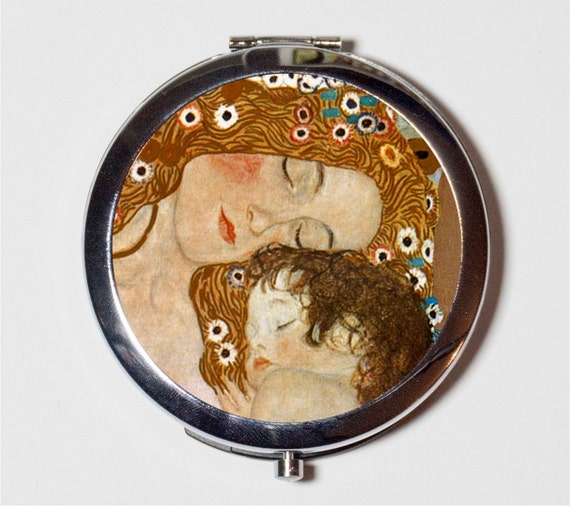
On your way out, check your face in your compact mirror.

Reapply lipstick. Pucker. Smile.

*** 

Lisa Reynolds is a Canadian writer of poetry and short stories whose works are published internationally in anthologies, literary journals, and magazines. She lives in a waterfront community east of Toronto, Ontario. She is writing her first book of poems, reflections on living with chronic illness.

“Voice in My Head” was originally published in WordCity Monthly Literary Journal – Nov 2020 Issue3. See more of Lisa’s poetry in WordCity here.

For information on submitting to WordCity, see here.

See Brian’s complete current schedule here,  including online and in-person writing workshops, weekly writing classes, and weekend retreats in Algonquin Park, Alliston, Bolton, Barrie, Brampton, Burlington, Caledon, Collingwood, Georgetown, Georgina, Guelph, Hamilton, Jackson’s Point, Kingston, Kitchener-Waterloo, London, Midland, Mississauga, Oakville, Ottawa, Peterborough, St. Catharines, Southampton, Sudbury, Toronto, Windsor, Woodstock, Halton, Muskoka, Peel, Simcoe, York Region, the GTA, Ontario and beyond.

Tuesday, April 13, 2021

Contests and Markets for your short stories, memoirs, personal essays, book reviews, poerty, and kid lit

Note: Don't ever miss a post on Quick Brown Fox.  Fill in the "Follow Brian by Email" box to the right under my bio and get each post delivered to your Inbox.  

Also, you can hang out and chat with quick brown foxes and vixens on my Facebook page (here). Just send a friend request to Brian Henry

Finally, if you’re not yet on my newsletter, send me an email, including your locale, to: brianhenry@sympatico.ca ~ Brian


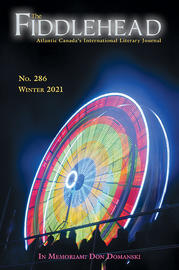
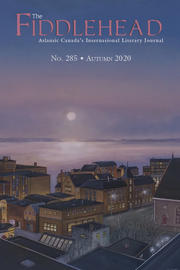
The Fiddlehead is open to good writing in English or translations into English – usually from all over the world – but until April 30, 2021, only from Canadians. 

"Our editors are always happy to see new unsolicited works in fiction, including excerpts from novels, creative nonfiction, and poetry. We also publish reviews, and occasionally other selected creative work such as excerpts from plays.”

Like everyone, The Fiddlehead particularly welcomes submissions from "Indigenous writers, writers of colour, writers with disabilities, LGBTQQIA+ writers, and writers from other intersectional and under-represented communities. If you are comfortable identifying yourself as one or more of the above, please feel free to mention this in your cover letter.” 

Pays $60 per published page, plus 2 complimentary issues; $200 for cover artwork, plus 2 complimentary issues.

Submission periods: Feb 15 – Apr 30 and Sept 15 – Nov 30. Guidelines here.

The Fiddlehead has three annual contests:

  • Creative Nonfiction: opens March 1. Deadline June 1. Winning piece to be published in fall issue. 
  • Short Fiction: opens June 1. Deadline September 1. Winning story to be published in winter issue.
  • Poetry: opens September 1. Deadline December 1. Winning poem to be published in spring issue.

The Nonfiction Contest is currently accepting entries. Maximum 6,000 words. Entry fee $35, includes a one-year subscription. In addition to (an undisclosed prize) the winner will receive publication payment of $60 per page.

Guidelines here.


Sutra Press is an independent micro-press dedicated to poetry. Sutra publishes limited edition, hand-stitched chapbooks. 

Submit chapbook manuscripts of 12 – 32 pages.

Pays $200 per manuscript.

Reading period: February 1 – April 30. Guidelines here.


WordCity Monthly (issue 7 here) promotes literary activism and the arts. It seeks poetry, fiction, memoir, essays, and book reviews and often gives preference to works related to human rights, equality, tolerance, and peace-building. 

Submissions:

Poetry – 3 short or one long poem (aprox 60 lines, but flexible)

Short stories – maximum of 3,000 words

Memoir or Personal essays – maximum of 3,000 words

Flash fiction – maximum of 1,000 words  

Book reviews – maximum of 1,000 words

Deadline: the 21st of each month. Guidelines here. Guidelines here.

Quick Brown Fox Quick Brown Fox welcomes your book reviews and your short stories, poems, and essays about reading, writing, favourite books, and libraries. Read a few essays on the blog to get a taste of what other writers have done (see here and scroll down). Quick Brown Fox also welcomes reviews of any kind and of anything, anywhere or anybody. If you want to review your favourite coffee shops or libraries, babysitters or lovers (no real names please), go for it. See examples of book reviews  here (and scroll down); other reviews here  (and scroll down).

Submit to: brianhenry@sympatico.ca

Include a short bio at the end of your piece and attach a photo of yourself if you have one that’s okay.

Entropy is a website featuring literary and related non-literary contents.  

“We like to think of ourselves as more than just a magazine or a website, but also as a community space. We seek to create a space where writers can engage with other writers, can participate in a literary community, where thinkers can collaborate and share both literary and non-literary ideas, and where writers can feel included.

“We also seek to provide a diverse platform for content and interests, including topics such as small press literature, video games, graphic novels, interactive literature, science fiction, fantasy, music, film, art, poetry, and other topics in addition to literary reviews, interviews, conversations, essays, and articles on experimental literature, translation, small press practices, and performance. We appreciate diverse beliefs and perspectives and want to encourage open discussion through a variety of opinions.”

Submissions always open. Guidelines here.


CANSCAIP's Writing for Children Competition for unpublished writers aims to encourage and promote not-yet-published kid lit writers across Canada.  

Entries for the Competition are by reading age: Picture Book, Chapter Book, Middle Grade or Young Adult.   

Previously submitted entries can be re-submitted. Maximum length of an entry is 1,500 words.  

Written feedback for every entry is a unique benefit of the Competition. Every entry gets a paragraph of written evaluation, and sometimes more.  All entries get evaluations from the first round of reading. Entries that proceed to second round also get evaluations from those readers. Entries proceeding to the longlist get evaluations from each jury member. 

Sarah Ground-Water Law who some readers
will know from the Friday morning Intensive class,
was a finalist in 2020

The Competition's volunteer readers and juries are published CANSCAIP Members. The readers and jurors evaluate entries in the categories of their books; e.g., picture book authors evaluate picture book entries.  The evaluation comments and suggestions can be very helpful for writers working on their craft. Many writers enter the Competition every year for feedback on the stories they're working on.     

Four writers receive $500 for the winning entry of a Picture Book, Chapter Book, Middle Grade, and Young Adult; two finalists in each of these categories are also selected.

The winners and finalists are sent to Annick Press, Kids Can Press, and Scholastic Canada for consideration. These entries also get the publishers’ evaluations.  Although over the years writers have had their work published, being a finalist or winner is not a direct path to publication.

The entry registration fee is $30 for 1 entry, $50 for 2 and $75 for 3.

Deadline May 31, 2021. Guidelines here.


See Brian Henry’s schedule hereincluding online and in-person writing workshops, weekly writing classes, and weekend retreats in Algonquin Park, Alliston, Bolton, Barrie, Brampton, Burlington, Caledon, Collingwood, Georgetown, Georgina, Guelph, Hamilton, Jackson’s Point, Kingston, Kitchener-Waterloo, London, Midland, Mississauga, Oakville, Ottawa, Peterborough, St. Catharines, Southampton, Sudbury, Toronto, Windsor, Woodstock, Halton, Muskoka, Peel, Simcoe, York Region, the GTA, Ontario and beyond.
Monday, April 12, 2021

“The Travel Bug,” by Chantal Switzer

I sat in the dimly lit room of the hospital in Verona, a stark contrast to the Roman amphitheatre where only a few hours earlier we had watched the opera.

I was waiting for the doctor. I assumed I’d been told by the nurse that the doctor would see me when she showed me into the small room with a gurney in the middle of it. Assumed, because my Italian didn’t stretch much beyond Ciao, Prego, and Grazie. By now it was about 2:00 in the morning and I was feeling groggy.

The opera had finished at around midnight, and our dinner reservation was for 12:30 a.m. Never had we had a dinner reservation for 12:30 a.m. But judging by the full cafes and restaurants, this was perfectly normal.

Now as I sat in the small room waiting for the doctor, the chattering and laughing of the after-opera crowd seemed a fantasy.

For months, my husband and I had spoken about our Italian trip. To be fair, it was mostly me who kept raising the subject. He was excited but I was exploding with anticipation.

Planning the trip had become almost impossible for me. There were so many options and not enough time. We were going for three weeks, but my itinerary kept growing and stretching across the Italian landscape.

Should we head south to Amalfi and drive along the winding coast and breathe in the glorious blue sea below us, or should we go to the stunningly beautiful countryside of Tuscany which has been the backdrop of so many movies? We could visit the historical city of Florence and gaze upon Da Vinci’s David. 

Of course, Northern Italy tugged at me too with visions of reclining in a gondola while meandering through narrow canals in Venice, the city sophisticated travellers like to slander. But not me, I will sip Bellinis at Harry’s Bar along with the hoi polloi in St Mark’s Square and find it all enchanting.

The itinerary I settled on saw us fly into Rome (an hour behind schedule) and from there a train to Florence. With widened eyes, I took in the rolling hills and villages as they appeared and disappeared, determined not to miss a moment. I need not have worried, as one beauty was soon replaced by more.

In Florence, the owner of our rental apartment met us. Brimming with excitement, she insisted she immediately take us on a quick tour of the area to familiarize us with our surroundings.

We walked quickly along cobbled streets while she dashed into her favourite coffee shops and little grocery stores with fruit spilling out of containers onto the sidewalk. Along the way we stopped at a fish monger and marvelled at fish with huge heads in colours that we had never seen before.

One of our first trips outside of Florence was to Verona to watch the opera Carmen performed in Verona’s ancient amphitheatre.

At about 8:30 that night we entered the amphitheatre along with thousands of other spectators. The excitement was contagious as visitors from all over the world chattered and made noises of appreciation when words proved to be inadequate. People bumped into each other as parties stopped abruptly to admire the pink and white stone structure, not quite believing that they were in this ancient place, where thousands of years ago gladiators had fought to the death.

Once the sky had started to dim, a hush crept across the amphitheatre.

For three hours we watched and listened as the story of love and betrayal floated up to us.  And then it was over, and we realized how ravenous we were.

Good thing we had our after-midnight reservation. At the restaurant, seated at an outside table, my husband leaned towards me and looked into my eyes. It wasn’t a romantic gesture. 

“I don’t want to worry you,” he’d said. “But I think we have to get you to a hospital.”

Apparently, my face had been completely swollen, with lumps and bumps appearing rapidly as we sat drinking red wine.

Now I sat in the dimly lit hospital room, scared and worried about what was happening to me. For some reason, the staff wouldn’t let my husband come into the room with me, and so imagination ran wild – maybe I had something dangerously contagious!

Finally, an English-speaking doctor arrived. After examining me, he discovered that the lumps were on other parts of my body as well.

“Bed bugs,” he pronounce. “You’ve been bitten by bed bugs.”

“What?” I said.

He told me to lay on the gurney, at which point I was injected with something in my thigh. I’m still not sure what, but it was to bring the swelling down. I was given a prescription with multiple refills for an antihistamine and told to tell the owner of the apartment to fumigate for bed bugs.

Once back in Florence, we phoned the apartment owner who didn’t believe us. That night in bed, luckily and disgustingly, we found a bed bug which we promptly killed and kept.  The next morning, we called the owner again and while we waited for her to come to the apartment, we called the hotel in Sienna where we were due to visit next and changed our reservation to arrive earlier.

The owner arrived and we showed her the beg bug. She must have seen bed bugs before because she didn’t dispute our claim. The fact that my face looked like a volcano crater must should have added weight to our complaint. Instead, she accused us of bringing bed bugs from Toronto.

Our homeland had been cast with aspersions and we rose to its defence. “We don’t have bed bugs in Toronto,” I said with indignation. How dare she, I thought. 

We left in a huff and went to Sienna, where my face and body got worse before getting better. The bumps started developing into sacks of liquid which looked disgusting. People would stare at me and I felt like lepers must have done in olden days. The doctor had explained that not only was I dealing with bed bug bites but that I had a violent allergic reaction to them. This resulted in me looking like a bulbous pus-infected frog.

We had two more weeks in Italy, and I had several refills on my prescription. I was determined to enjoy the trip even though at times I felt like ripping my skin off as everything itched and hurt.

A day after we arrived home in Burlington, I opened the Toronto Star and read the headline: “Outbreak of bed bugs in Toronto continues.”  

Oh dear, did I feel sheepish.

*** 

Chantal Switzer has been telling stories since she was a child, and after retiring from a career in Human Resources, she’s returning to the practice of writing them down. Currently working on a memoir about coming of age, she enjoys gardening at her home in Penetanguishene and watching the boats on the lake with her husband, Shelly, and chocolate lab, Cody.

See Brian Henry’s schedule here,  including online and in-person writing workshops, weekly writing classes, and weekend retreats in Algonquin Park, Alliston, Bolton, Barrie, Brampton, Burlington, Caledon, Collingwood, Georgetown, Georgina, Guelph, Hamilton, Jackson’s Point, Kingston, Kitchener-Waterloo, London, Midland, Mississauga, Oakville, Ottawa, Peterborough, St. Catharines, Southampton, Sudbury, Toronto, Windsor, Woodstock, Halton, Muskoka, Peel, Simcoe, York Region, the GTA, Ontario and beyond.

Friday, April 9, 2021

Three contemporary haiku by Elizabeth Crocket


wild rose

how soon

the colour fades


after the storm

the smell

of cherry blossoms


surgical oncologist

this appointment

we chat about my writing


Elizabeth Crocket has had two books shortlisted for the American Haiku Foundation Touchstone Distinguished Books Award. Her haiku has been published in most of the leading Japanese short form journals. She has a collage haiga (collage paired with haiku) online gallery that will be included in the American Haiku Foundation online haiga gallery in July. You can find her on Instagram @elizabethcrocketauthor.

See Brian Henry’s schedule hereincluding online and in-person writing workshops, weekly writing classes, and weekend retreats in Algonquin Park, Alliston, Bolton, Barrie, Brampton, Burlington, Caledon, Collingwood, Georgetown, Georgina, Guelph, Hamilton, Jackson’s Point, Kingston, Kitchener-Waterloo, London, Midland, Mississauga, Oakville, Ottawa, Peterborough, St. Catharines, Southampton, Sudbury, Toronto, Windsor, Woodstock, Halton, Muskoka, Peel, Simcoe, York Region, the GTA, Ontario and beyond.

Thursday, April 8, 2021

Welcome to Creative Writing course, Thursday evenings, April 15 – June 24 ~ Online

Welcome to Creative Writing

10 weeks of discovering your creative side

Thursday evenings, 7 – 9 p.m.
April 15 – June 24, 2021 {no class June 10}
Offered online on Zoom and accessible from anywhere there's internet 

Note: See other online writing classes offered this spring here.

This is your chance to take up writing in a warm, supportive environment. This course will open the door to writing short stories and writing dialogue, writing in first person and writing in third person, writing just for fun and writing all kinds of things. 

You’ll get a shot of inspiration every week and an assignment to keep you going till the next class. Best of all, this class will provide a zero-pressure, totally safe setting, where your words will grow and flower.

Fee:  $176.11 plus 13% hst = $199

To reserve your spot, email: brianhenry@sympatico.ca

Instructor Brian Henry has been a book editor and creative writing instructor for more than 25 years. He publishes Quick Brown Fox, Canada's most popular blog for writers, teaches creative writing at Ryerson University and has led workshops everywhere from Boston to Buffalo and from Sarnia to Saint John. But his proudest boast is that he’s has helped many of his students get published. 

Read reviews of Brian's various courses and workshops here (and scroll down).

See Brian’s complete current schedule hereincluding online and in-person writing workshops, weekly writing classes, and weekend retreats in Algonquin Park, Alliston, Bolton, Barrie, Brampton, Burlington, Caledon, Collingwood, Georgetown, Georgina, Guelph, Hamilton, Jackson’s Point, Kingston, Kitchener-Waterloo, London, Midland, Mississauga, Oakville, Ottawa, Peterborough, St. Catharines, Southampton, Sudbury, Toronto, Windsor, Woodstock, Halton, Muskoka, Peel, Simcoe, York Region, the GTA, Ontario and beyond.